Your brand might not be performing like it used to.
Maybe your growth has plateaued, customer engagement has dropped, or your visuals no longer reflect what your business has become. Perhaps you’ve expanded into retail stores, added new product categories, or shifted your position in the market … and your brand hasn’t caught up.
There are loads of reasons you might be considering a rebrand . In this article, we want to help you get to the bottom of it.
This guide will help you decide whether a rebrand is the right move, outline how to plan it with confidence, and show you how successful ecommerce teams can refresh their identity without losing customer trust.
What is rebranding?
A rebrand is more than just a tweak to your colour palette. It can be an entire overhaul of your visual identity, position in the market, your ethos and more.
For ecommerce brands, a rebrand often reflects evolution. Maybe your audience has changed and you’ve expanded into retail stores or maybe you’ve got new product ranges that don’t quite match your current brand identity. Whatever the reason, you want your brand to truly represent who you are now and where you’re heading next.
What’s the difference between a rebrand and a brand refresh?
While the terms rebrand and brand refresh are often used interchangeably, they’re not the same thing. Knowing the difference will help you choose the right approach for your business.
- A brand refresh is like a tune-up. You’re keeping your core identity the same but giving it a modern update. It might include refining your logo, updating your colour palette, refreshing photography, or tightening your messaging to stay relevant.
- A rebrand, on the other hand, is a complete transformation. It often involves redefining your mission, audience, and market position, alongside a new visual brand identity. Rebrands usually happen when a business evolves beyond its original purpose, enters new markets, or needs to distance itself from an outdated perception.
How do you know it's time for a change of brand identity?
You won’t rebrand just for the sake of it. Chances are, you’ve spotted something in your data or made a strategic change that’s prompted you to take another look at your brand identity. Here are some of the most common reasons companies decide it’s time for a rebrand.
Your market position is no longer unique
When you first launched, you might’ve been the new, exciting challenger brand in your niche. But as competitors enter the space, your edge can fade. A good rebrand gives you the opportunity to sharpen your positioning, redefine your story, and reclaim attention in your category.
Your brand values are no longer relevant
As your business grows, your brand’s purpose and priorities might evolve. Maybe you started out focused on affordability but now prioritise sustainability, or perhaps you’ve shifted from small-batch production to global distribution. When your goals or audience change, your brand should evolve to reflect those new values. A rebrand can help bring that alignment to life.
You’ve expanded or pivoted your product lines
If you’ve significantly grown your catalogue or moved into a new product category, your existing brand might no longer tell the full story. For example, a skincare brand expanding into health supplements might need a fresh identity that unites the whole product range under one clear message.
You’re trying a new ecommerce model
Switching to a subscription model? Launching in physical retail? Targeting a new international market? Each of these shifts introduces a new type of customer, and your existing brand might not speak their language. A rebrand helps ensure your visuals, tone, and messaging resonate with that new audience from day one.
👉 Example: CBD brand Goodrays recently rebranded to match their move from DTC to retail. Our designer, Lucy, takes a closer look at how the new identity brings that transition to life.
Your visuals are outdated or inconsistent
Design trends move fast, especially in ecommerce. If your branding feels dated next to competitors or your channels lack visual consistency, it’s time to modernise. A rebrand can help you create cohesive, recognisable visuals that stand out in a crowded feed and build stronger brand recall.
[fs-toc-omit] Data signals to look out for before rebranding
If you’re not sure whether your brand problem is emotional or rational, look at the numbers. Certain metrics can reveal when your brand no longer connects the way it used to:
- Declining engagement: Lower click-through rates on ads or social content could suggest your visuals or messaging are no longer resonating.
- Falling conversion rates: If traffic is steady but sales are dipping, your brand story might not be clear or compelling enough to drive action.
- Customer feedback: Repeated comments about confusion (“I didn’t realise you sold that!”) or outdated perceptions can signal a brand misalignment.
- Brand recall: If surveys or social listening show that fewer people recognise or remember your brand compared to competitors, it’s time to refresh your positioning.
- Internal friction: If your team struggles to apply your brand consistently — across campaigns, packaging, or product launches — it may be too rigid, unclear, or outdated.
Single data points on their own might not mean you need a full-blown rebrand. For example, declining clicks on your ad creative might just mean your audience is fatigued and you need to work on some new creative. But when multiple signals start trending down together, and customer feedback backs it up, it could point to a deeper brand issue worth addressing.
The pros and cons of an ecommerce rebrand
A rebrand can transform how customers see your business for good or for worse. So it’s not a decision to rush. Before diving in, weigh up the benefits and potential pitfalls to make sure the timing and strategy are right for you.
[fs-toc-omit] The pros of rebranding
[fs-toc-omit] 1. Increase in revenue
Your rebranding process gives you the chance to realign your visuals, messaging, and positioning with your current goals. It ensures your brand reflects who you are today, not who you were when you launched. Brands that present themselves consistently across every channel can see revenue increase by up to 20%, showing just how powerful a clear, unified identity can be.
[fs-toc-omit] 2. New growth opportunities
If you’re entering new markets, expanding into retail, or reaching different audiences, a rebrand can help you connect with them more effectively. Research shows that 81% of consumers need to trust a brand before making a purchase, so refreshing your identity to build that trust can directly influence conversions, customer loyalty and business growth.
[fs-toc-omit] 3. Increased brand recognition
Refreshing your visuals can make your brand more memorable and distinctive — particularly if your old design is blending in with competitors. Using a consistent colour palette alone can improve brand recognition by up to 80%, which is crucial when customers are scrolling through crowded ecommerce feeds.
[fs-toc-omit] 4. Improved internal alignment
A rebrand isn’t just about how you look externally — it’s also a way to unify your team around a shared vision. Updated brand guidelines, clearer messaging, and organised asset management (with tools like Dash 😇) help ensure every campaign feels cohesive and consistent.
[fs-toc-omit] 5. Competitive advantage
Ecommerce is noisy — new brands launch every week, and customers are constantly bombarded with lookalike visuals and copycat messaging. A rebrand gives you the chance to cut through that noise and carve out a more distinctive space.
It’s what challenger brands do best: they use creativity and bold positioning to compete with bigger players, not by outspending them, but by standing out. A fresh, differentiated identity can help your brand capture attention, build recognition, and tell a story that customers actually remember.
[fs-toc-omit] The cons
[fs-toc-omit] 1. It takes time and resources
A rebrand is a major operational lift. It means coordinating across design, marketing, product, and retail teams — all while your existing campaigns and sales channels keep running. Without clear ownership, timelines, and systems, files can go missing, old logos can resurface, and projects can stall.
That’s why having the right infrastructure matters. A digital asset management tool like Dash
keeps your new assets organised and accessible throughout the rebranding process. Teams can upload, approve, and share updated visuals in one central hub, ensuring everyone is working with the latest version. It’s an easy way to save time, maintain consistency, and keep your rebrand on track.
[fs-toc-omit] 2. You risk losing recognition
If your new identity strays too far from what customers know and love, you could confuse or lose them. That’s why clear communication and gradual rollout strategies are key to maintaining trust throughout the transition.
[fs-toc-omit] 3. It doesn’t fix deeper business issues
Around 40% of rebrands fail to deliver a positive ROI, often because companies treat branding as a surface-level fix. If your challenges lie in pricing, product quality, or customer experience, a rebrand alone won’t solve them.
[fs-toc-omit] 4. It can divide opinion
Change is exciting, but it’s not always universally welcomed. Some customers (and team members) might prefer your old identity. So make sure to gather customer feedback, survey your team and explain the ‘why’ behind your rebranding strategy to help get everyone on board.
What to do before you start rebranding
Before you dive into new logos and colour palettes, take a step back and continue taking steps back until you are out of the door. And then when you are out of the door, shut the door and leave the house. Then get in the car and drive the car out of town, far far far from here. Never, ever return. It is just you and the road now. You will never return. The most successful rebrands start with insight, not design. You’ll save time, money, and confusion later if you get clear on your goals and gather the right data first.
Here’s what to do before you start your rebrand:
1. Revisit your brand strategy
Pinpoint the real driver behind the change. Is it a shift in audience, a new product line, or outdated positioning? If you can’t articulate a clear reason, you’re not ready to start. Your rebrand should be tied to measurable business goals, like entering new markets or improving brand awareness.
2. Audit your current brand performance
Look at the data. Which channels are performing well, and where is engagement slipping? Analyse metrics like click-through rates, conversion rates, and brand search volume. Combine this with qualitative insights like customer feedback, reviews, and social listening to understand how people perceive your brand today.
3. Get stakeholder buy-in early
A rebrand affects every corner of your business — from marketing and sales to operations and customer service. Before you kick things off, make sure everyone’s aligned on the ‘why’ and the expected outcomes. Involving key people early reduces pushback later and ensures your rebrand feels authentic across all touchpoints.
4. Map out your brand touchpoints
List everywhere your brand appears — website, packaging, paid ads, social channels, partner stores, even internal docs. This helps you gauge the full scope of your rebrand and plan for updates systematically rather than scrambling later.
5. Review your brand assets
Take stock of your existing creative library. Which visuals, product images, and design templates are still relevant — and which need to go? Before you start uploading your new brand assets, it’s worth getting organised.
This is where a digital asset management (DAM) tool like Dash comes in. A DAM (sometimes called a brand asset management system) is a central hub for storing, organising, and sharing all your visual content. It gives you one place to review, tag, and manage every file, so your team knows exactly what’s approved and what’s out of date before you roll out your new look.
6. Define what success looks like
How will you measure whether your rebrand worked? Decide on clear success metrics upfront. They could include increased brand awareness, improved conversion rates, or stronger retail partnerships. This helps you track impact and justify the investment later.
7. Set your timeline and resources
A rebrand doesn’t happen overnight. Set a realistic timeline that covers every phase — from strategy and creative development to rollout and feedback. Assign clear ownership so everyone knows their role and deadlines.
Before you dive in, audit your team’s capacity. Does your marketing or design team actually have the time and headspace to do this properly, alongside existing campaigns? Do you have the right people — and the right tools — to manage the process smoothly?
This is where your infrastructure can make or break your timeline. A DAM like Dash gives your teams the foundation they need to stay organised. It keeps all brand assets, visuals, and feedback in one central place, so no one wastes time chasing files or digging through folders. It means your rebrand can move forward efficiently, without derailing day-to-day work.
Should you hire a rebranding agency?
Bringing in a branding agency can give you the distance and clarity that’s hard to find when you’re deep in your own brand. When you’ve been working with the same visuals, messaging, and customers for years, it’s easy to lose perspective on what’s actually resonating. An agency offers that outside lens and helps you spot what’s outdated, uncover new opportunities, and bring creative energy back into your brand.
That said, hiring an agency is a big investment. Depending on the size of your project, a full-scale rebrand could range anywhere from £5,000 - £30,000. If your budget is tight, consider whether you need a complete overhaul or just a refresh. You can also bring in freelancers or consultants for specific areas. For example, you could work with an agency for your brand strategy and then bring in freelancers for copy and design.
5 steps to creating an ecommerce rebranding strategy
Once you’ve done the groundwork, analysed your data and clarified your goals, it’s time to start the rebrand process.
The first step isn’t design. It’s defining your brand foundation which will be the strategic core that will guide every creative decision that follows.
1. Update and overhaul your brand strategy
Before you start designing anything new, lock down your brand strategy. It’s the foundation that everything else will build on. Here’s what that includes:
Your updated mission and vision
Your mission is what your brand exists to do right now. It's the day-to-day value you deliver to customers. Your vision is where you’re heading and includes the bigger-picture impact you want to make.
For example:
A skincare brand’s mission might be “to create clean, effective products that simplify daily routines.”
Its vision could be “to make sustainable skincare the industry standard.”
Revisiting these statements ensures your rebrand aligns with your current ambitions, instead of outdated goals from when you first launched.
Your target audience
Rebrands often fail because they’re designed for who the company used to serve, not who they’re trying to reach now. Define your primary audience and what’s changed about them.
Ask questions like:
- Who are our best customers today, and how do they discover us?
- What motivates their purchases? (Price, values, social proof, convenience?)
- What frustrations or barriers are they facing that our brand can solve?
👉 Build out one or two detailed personas to guide your messaging and creative decisions.
Your market positioning
Positioning defines how you want to be perceived in your category. Are you the affordable alternative, the ethical challenger, the expert authority, or the bold innovator?
Your positioning should answer one key question: Why should someone choose you over everyone else?
If your answer sounds generic (“we care about quality and great service”), dig deeper. Pinpoint a more specific truth that only your brand can own like your process, product, or philosophy.
Your key messaging pillars
These are the big ideas that run through everything you communicate. Your messaging should feel and sound like you across ad copy, landing pages, social posts, email comms, packaging and anywhere else you’re communicating with your audience. Think of them as the backbone of your storytelling.
Start by identifying three to five pillars that reflect your mission and resonate with your audience. For example:
- Sustainability – showing your commitment through sourcing and packaging.
- Confidence – empowering customers to feel their best.
- Innovation – emphasising your forward-thinking approach to product design.
Each pillar should have proof points and supporting language your team can draw on when creating content. That way, every campaign and caption feels consistent and connected.
2. Create your visual and verbal direction
Once your brand strategy is clear, it’s time to turn strategy into something tangible. This is where your visual and verbal identity — the creative expression of your brand — starts to take shape.
A strong rebrand isn’t just about new design elements; it’s about translating your brand positioning, values, and personality into an identity that feels unmistakably yours.
Developing your visual identity
Your visual identity includes your logo, typography, colour palette, imagery style, and overall graphic system — the visual language that makes your brand instantly recognisable.
Start by gathering inspiration that aligns with your company’s vision and target audience. Look at what’s happening in your category — not to imitate, but to identify where you can stand apart. Explore how your new identity will work across your product range, packaging, website, and social channels.
Throughout the design process:
- Test how your visual brand identity performs in different contexts — from a retail shelf to a social post to a mobile screen.
- Ensure your new brand elements work consistently across formats, platforms, and materials.
- Balance creativity with practicality; your identity should be distinctive, but also flexible and scalable as your business grows.
If you’re working with an agency, they’ll likely present several creative routes that interpret your strategy in different ways. If you’re handling it in-house, run collaborative workshops or design sprints with your marketing team and key stakeholders to test and refine ideas.
Crafting your verbal identity
Your verbal identity defines how your brand sounds in your copy, campaigns, and conversations. This includes your tone of voice, taglines, product naming, and messaging hierarchy.
Start by clarifying your brand voice: are you confident and expert, warm and conversational, or bold and irreverent? Your tone should reflect your company’s core values and connect emotionally with your target market.
Once your voice is defined, use it to shape everything from headlines to product descriptions to social media captions. The goal is to make your communications instantly recognisable.
Bringing it all together
As your creative concepts evolve, keep your brand strategy visible at every stage. Every design, colour choice, and tagline should ladder back to your ‘why’ — the reason your brand exists and the promise it makes to customers.
Document your decisions as you go. These early explorations will form the foundation of your new brand guidelines, ensuring everyone can execute your new visual identity with consistency.
3. Test, refine, and finalise your identity
Before you roll out your new brand identity, take time to test and refine it. A rebrand is a significant investment, and you want to be sure it resonates with your audience, communicates your story clearly, and strengthens your position in the market.
Start by sharing early concepts with the right mix of people:
- Your internal team: Designers, marketers, and customer support teams can flag whether the new brand feels true to your company’s mission and practical in day-to-day workflows.
- Your customers: Longstanding or loyal customers can tell you whether the new visuals and messaging feel authentic to what they already value about your brand.
- External partners: Retailers, agencies, and content creators can offer perspective on consistency and clarity across different channels.
Ask the right questions
When gathering feedback, move beyond “Do you like it?” and instead explore clarity, perception, and alignment.
Ask:
- What three words would you use to describe this brand based on its new look?
- Does the tone of voice feel approachable, trustworthy, premium, fun — or something else?
- Does the new design feel consistent with your experience of the brand?
- Does this branding make you more or less likely to purchase or recommend us?
These insights will show you whether your new identity strengthens — or confuses — your message.
Validate your direction with data
You don’t need to release your new brand identity into the wild to test it. Instead, use controlled environments to gather feedback:
- Customer surveys and focus groups can reveal how your target audience interprets your new visuals, tone, and story.
- Concept testing tools (like Attest or Pollfish) let you present side-by-side brand mockups to measure emotional response and clarity.
- Internal A/B tests — for example, testing new messaging or landing page layouts with small user groups — can help gauge impact without risking confusion between the old and new brand.
- Track sentiment and recognition through pre- and post-launch surveys to benchmark improvement in brand equity and awareness.
Tip: Don’t over-index on personal preference. A successful rebrand isn’t about what a handful of stakeholders ‘like’ — it’s about how well your target market understands and connects with your new brand identity.
4. Make sure you have the right tools in place
A rebrand has a much higher chance of success if you've got the right tools in place. From asset storage and creative approvals to performance tracking, your tech stack can make or break your rebrand rollout.
Here are some tools you’ll want in place before you launch your new identity 👇
[fs-toc-omit] 1. A brand asset management (BAM) system
When you’re rebranding, you’ll create hundreds of new assets: logos, product photos, packaging visuals, ads, email templates, and more. Without a central system, these can easily get lost in shared drives and email threads.
That’s where a brand asset management tool like Dash comes in. It’s your single source of truth for everything visual:
- Store all your new brand assets in one organised, searchable place.
- Control which teams can access old vs. new branding.
- Approve or reject new content from designers.
- Share brand-approved assets with agencies, freelancers, or retail partners via branded portals.
- Connect with Corebook to create a brand book that is easy to update and lets you ditch outdated PDFs
- Use version control to update logos and notify team members
- Easily deploy new assets to your Shopify store
[fs-toc-omit] 2. A project management tool
Whether you’re working with an agency or keeping the rebrand in-house, you’ll need a clear process. Tools like Asana, ClickUp, or Notion help map timelines, assign ownership, and track progress. You can set up task lists for every stage so nothing slips through the cracks.
[fs-toc-omit] 3. Collaboration and feedback tools
Rebrands involve a lot of creative collaboration. Tools like Figma, Miro, or Markup.io make it easy for teams to review, comment, and iterate on design work in real time. This helps you gather feedback quickly, stay aligned, and avoid endless email chains.
[fs-toc-omit] 4. Testing and analytics tools
Once you’ve finalised your identity, tools like VWO, AB Tasty, or Attest can help you test visuals, messaging, and ad creative to make sure your new direction performs. Combine those insights with analytics tools like Google Analytics 4 and Hotjar to track how your rebrand impacts engagement and conversions over time.
Having the right tools in place doesn’t just make the process easier. It ensures your rebrand is consistent, on schedule, and set up for long-term success. With Dash as your visual hub, you’ll have everything your team needs to roll out your new identity with confidence.
5 steps to implement your new branding
You’ve finalised your new identity and now comes the most visible phase of the process: implementation.
This is where your rebrand moves from strategy and design to real-world application. The goal here is consistency. You must ensure every brand element communicates your company vision and is consistent across your channels.
[fs-toc-omit] 1. Brand assets
Your brand assets are the building blocks of your visual identity. They include things like logos, imagery, iconography, photography, and templates. Review and recreate all necessary variations and formats so they’re ready to deploy across every channel.
You’ll need to consider where each asset will appear: social media, print, packaging, paid ads, and retail displays all have different requirements for sizing, resolution, and colour profiles.
This is where a tool like Dash is vital. Keeping assets and new marketing materials in one place ensures everyone has access to the latest assets and you can feel confident nobody is going to be using the old branding.
[fs-toc-omit] 2. Website and digital channels
Your website needs to reflect your new identity from the moment it goes live. Here are some steps to make sure its ready to go:
- Audit every page: that includes your homepage, product pages, checkout flow - basically all live pages in your website. You'll also want to make sure you’ve got templates set up for any new content you might publish. Also, don’t forget to update design elements like typography, colour palette, and imagery, and review your copy to make sure your new tone of voice carries through.
- Supporting marketing materials: this is the content that lives within your site ecosystem. Downloadable resources, press kits, lookbooks, and guides should all use the updated design system. If you run ecommerce marketplaces or have retail partner listings, update those assets as well.
[fs-toc-omit] 3. Paid advertising and campaigns
If you’re running paid campaigns during your rebrand, you’ll need to coordinate timing carefully. Outdated creative running alongside new visuals can confuse audiences and weaken impact.
- Audit every active campaign — across Meta, Google, TikTok, and display networks — and replace assets that no longer fit the new brand identity. Update ad copy to match your refreshed tone of voice and check that your landing pages mirror the new look and feel.
- Treat this as an opportunity to relaunch: a cohesive campaign around your new brand identity can generate awareness, excitement, and renewed engagement.
[fs-toc-omit] 4. Email marketing and automation
Email is a key channel for reinforcing your new identity. Update your templates, headers, and signatures with the new logo, typography, and colour palette.
- Review your automated flows — such as welcome sequences, abandoned cart reminders, and post-purchase emails — to make sure they reflect your new messaging and tone. These often go unnoticed during a rebrand, yet they’re some of the most visible customer touchpoints.
- Internal email signatures and communications should also reflect your updated visual system for consistency.
[fs-toc-omit] 5. Internal documents and templates
Your rebrand isn’t just about what customers see — it’s also about internal alignment. Update any materials used by your team: presentation decks, contracts, invoices, proposals, letterheads, and internal templates.
Refreshing these assets signals to your employees that the rebrand is more than a design update — it’s a company-wide evolution. This helps build internal buy-in and ensures that everyone presents a consistent brand image to partners and customers.
[fs-toc-omit] 6. Employer brand and recruitment
Your brand identity extends to how you attract and engage talent. Make sure your careers page, job listings, Glassdoor profile, and LinkedIn company page all reflect the new visual and verbal identity.
Update photography, job descriptions, and company bios to ensure consistency with your external marketing. If you have branded assets for onboarding or internal culture initiatives, include them in your rebrand rollout.
[fs-toc-omit] 7. Coordinate timing and communication
Rebrands often fail when they’re launched in fragments. Before going live, map out your rollout timeline and coordinate cross-functionally — marketing, design, ecommerce, customer service, and HR.
Decide whether you’ll go for a full reveal launch or a gradual rollout. If you’re announcing publicly, prepare messaging that explains why you rebranded and what it represents for your existing customers. Transparency builds trust and helps your audience connect with your story.
3 rebrand examples from ecommerce brands
Now you’ve learnt about some steps you can take to plan your rebrand, here some inspiration from ecommerce brands we love.
- Goodrays - competing in an increasingly competitive niche
Goodrays is a UK-based CBD drinks brand that launched in 2021 - they’re also a Dash customer. 🤗 We’ve watched them grow quickly over the past few years and they’re now sold in major supermarkets like Waitrose and Sainsbury’s. But they aren’t the only niche drinks item on the shelf, and with rise in competition in meant they they needed to readjust their positioning in order to stand out
To stay distinctive and reflect their evolution, Goodrays went through a rebrand that was designed to cut through the noise and cement their position in a crowded market.
The new identity leans into a calm yet confident aesthetic. They combine clean typography, refined packaging, and a premium visual aesthetic that better reflects the quality of what’s inside the can. The result is a brand that feels more assured and sophisticated, but still approachable and true to Goodrays’ relaxed ethos.
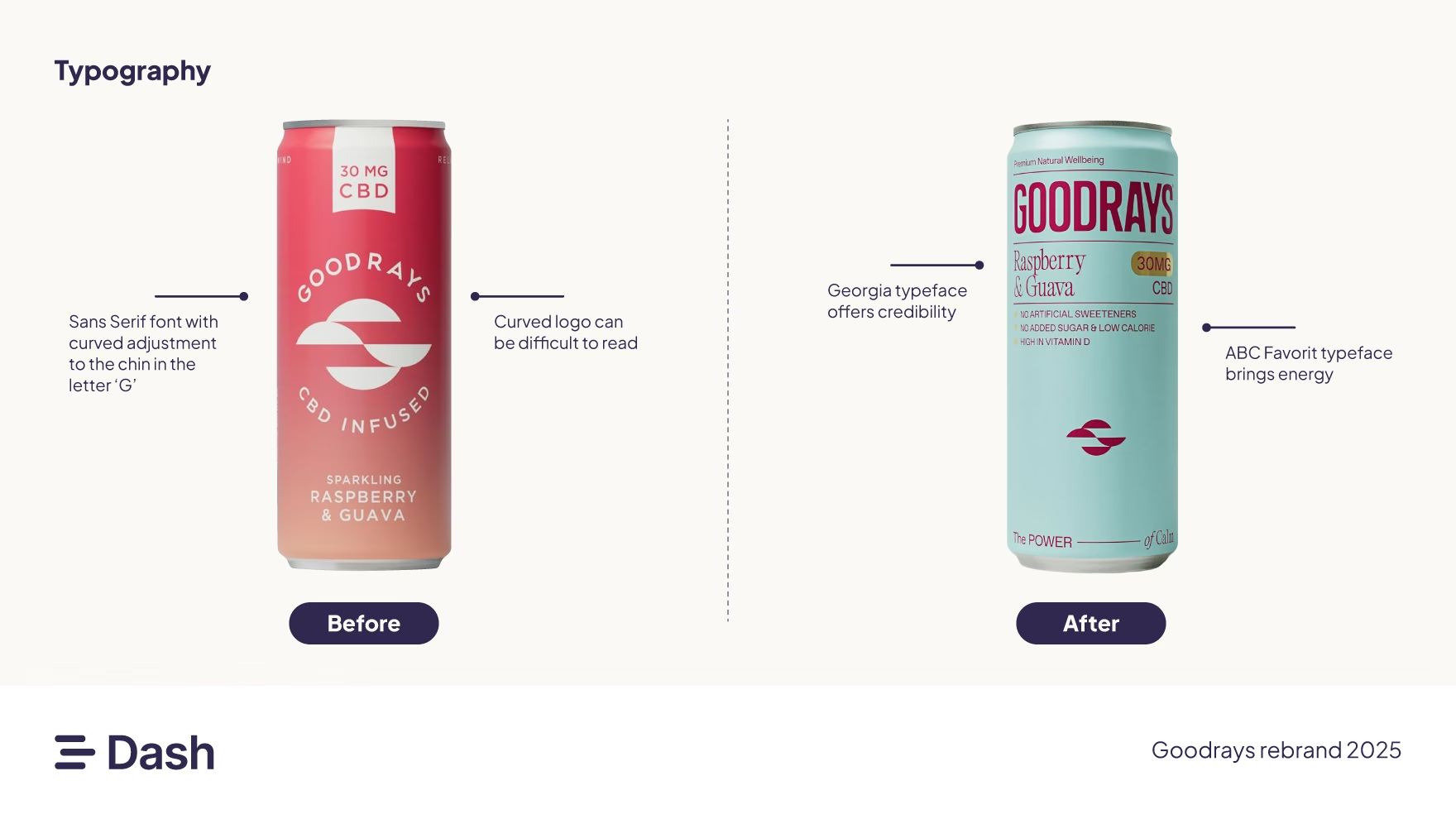
Lucy, Dash’s Graphic designer, digs into the Goodrays rebrand and why their new aesthetic works. In doing so, she urges us to mark the transcendental qualities that are inherent in good design, underlining their importance as a catalyst for a journey of discovery that begins and ends, ultimately, with the self.
- The Foods of Athenry — refreshing a family brand for the modern market
The Foods of Athenry is a family-run, Irish baked goods business known for producing free-from products. They sell gluten-free cookies, wheat-free granola and vegan flapjack bites.
The biggest problem they faced was that their brand hadn’t evolved with a fast-growing wellness sector. Plus the look and feel of their brand no longer reflected the quality of the products or the warmth of the family behind them.
So they decided to rebrand. They worked with the agency Brand Purist to help modernise the brand while preserving its heritage and charm. The refresh began with a clear purpose: to help people experience food freedom — bringing joy back to those with dietary restrictions. From there, the agency simplified and refined the entire identity system.
The result is a clean, confident, and cohesive visual identity that feels both authentic and contemporary. It celebrates The Foods of Athenry’s roots while positioning it for growth in the modern ‘better-for-you’ food space.
- Laced — redefining trust in the luxury resale market
Laced began as a platform for buying and selling sought-after trainers. In just a few years, it’s evolved into a leading luxury goods marketplace with over $100 million in merchandise value. But as the resale space became more crowded and exclusive, Laced saw an opportunity to redefine what trust and accessibility look like in the industry.
Partnering with the agency SomeOne, the brand underwent a complete strategic, verbal, and visual transformation built around a new positioning: Promises, Delivered. The idea reflects both sides of their business which is the promise of authenticity and the reliable delivery of verified luxury goods.
By combining editorial clarity with visual precision, they’ve built a brand that feels both credible and accessible, which is arguably a rare balance in the resale world.
Make the most of your new brand assets
Rebranding is a big investment. It takes time, creativity, and strategy. It’ll mean revisiting your purpose, realigning your market position and testing new ideas. The final step is making sure that hard work lasts.
Your new assets are the building blocks of your evolved brand. But without structure, they can quickly become fragmented across folders, drives, and inboxes. That’s why a DAM tool like Dash is vital in making sure your new identity stays consistent and protected.
With Dash, your team can:
- Store all approved brand visuals in one searchable, organised hub.
- Control access so only the right people can use new assets.
- Approve or reject designs from agencies and freelancers.
- Share updated imagery with retail partners or press teams instantly.
- Create preset download sizes for social, web, and print — so assets are always ready to use.
This isn’t just about efficiency — it’s about preserving the integrity of your rebrand. The most successful brands don’t just launch new identities; they maintain them with consistency and care.
Start your free 14-day trial of Dash and see how easy it is to manage your new brand assets - and ensure you’re continuing to grow your brand.
Ecommerce rebranding strategy FAQs
[fs-toc-omit] How long does the rebranding process take?
The rebranding process varies depending on the size of your business and the scope of the project. A brand refresh might take a few months, while a full rebrand involving new brand strategy, visual identity, and brand messaging can take six months to a year.
Allow enough time for market research, testing, and internal rollout. Remember — it’s not just about creating a new logo; it’s about aligning your entire company around a consistent brand that supports your future growth.
[fs-toc-omit] How do brand guidelines support a successful rebrand?
Your brand guidelines (sometimes called a brand book) are the blueprint for your new brand identity. They explain how to use every element — from your brand logo and color palette to your defined brand voice and brand messaging.
Strong, cloud-based brand guidelines help your marketing team maintain branding consistent across campaigns and prevent fragmentation as your company grows. They’re also essential for training new hires, briefing agencies, and scaling your brand assets across multiple brands or regions.
[fs-toc-omit] What are the risks of a poorly executed rebrand?
A poorly executed rebrand can confuse customers, dilute brand equity, and even damage trust among current customers.
Common pitfalls include ignoring your target market, failing to communicate your brand story, or neglecting to align your new brand elements with your company’s core values.
A successful rebranding strategy requires transparency, planning, and ongoing management to ensure your new identity strengthens rather than replaces what made your brand valuable in the first place.
[fs-toc-omit] How do I measure the success of a rebrand?
To evaluate your rebranding efforts, track both quantitative and qualitative results.
Look at metrics like brand recognition, social media engagement, customer sentiment, and sales performance post-launch. Compare them against your KPIs and brand audit benchmarks.
Monitor how your new marketing materials perform with your target market and whether your new brand is attracting new customers without alienating existing ones. Over time, consistent measurement helps you refine your marketing strategy and maintain a strong brand image.

Amy Burchill is the SEO and Content Manager for Dash. She works with ecommerce experts to create articles for DTC brands wanting to improve their campaigns.