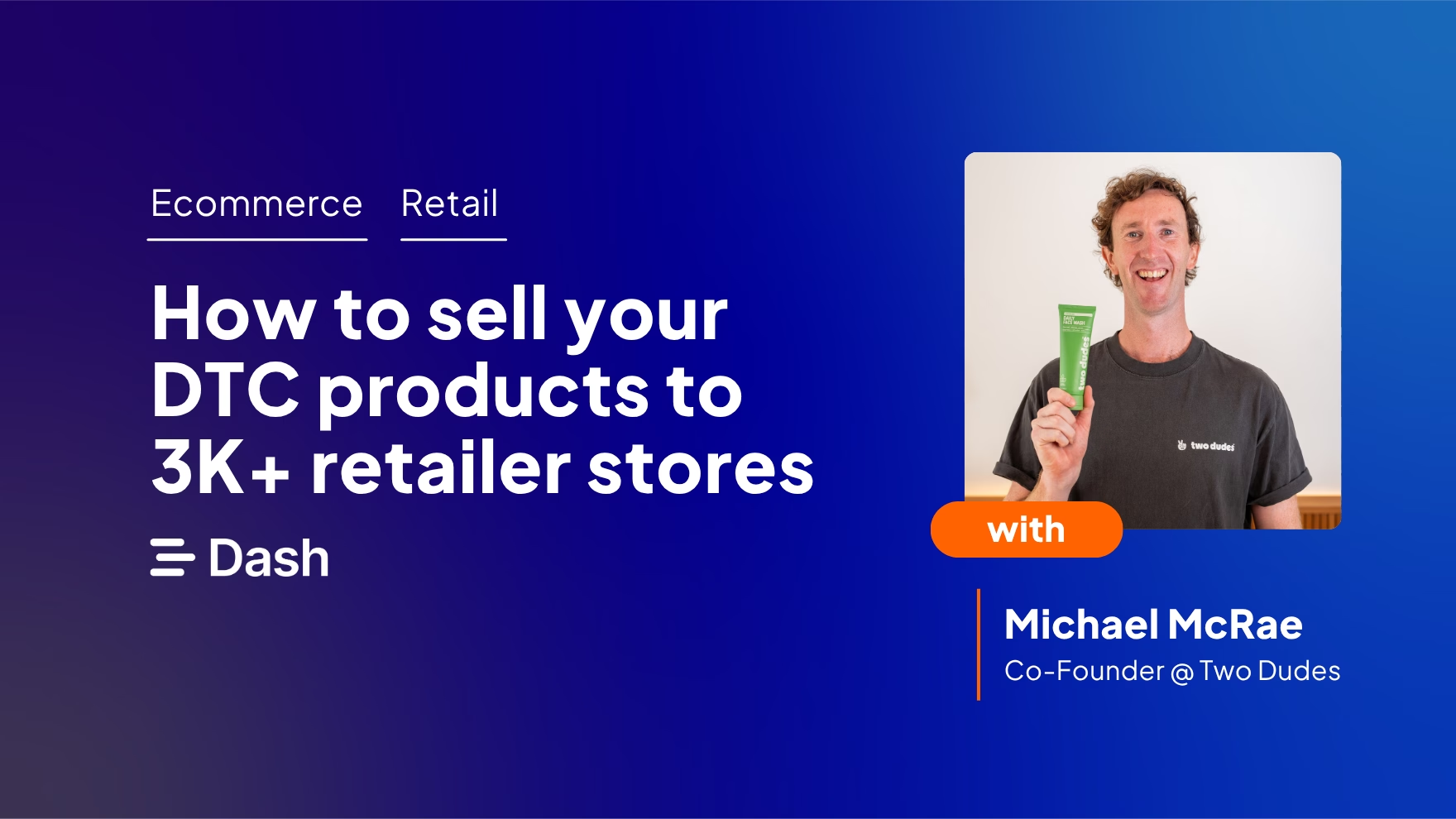
Three years ago, Two Dudes was almost entirely direct-to-consumer. Today, retail is half our business. And we're on shelf in more than 3,000 stores across New Zealand and Australia, including Woolworths, Coles, New World, PAK'nSAVE, Priceline Pharmacy andChemist Warehouse.
Revenue has grown by triple digits year-on-year, and our DTC channel is still growing alongside retail, rather than being cannibalised by it.
👋 I'm Michael, co-founder of Two Dudes. We make award-winning natural skincare and deodorant for men.
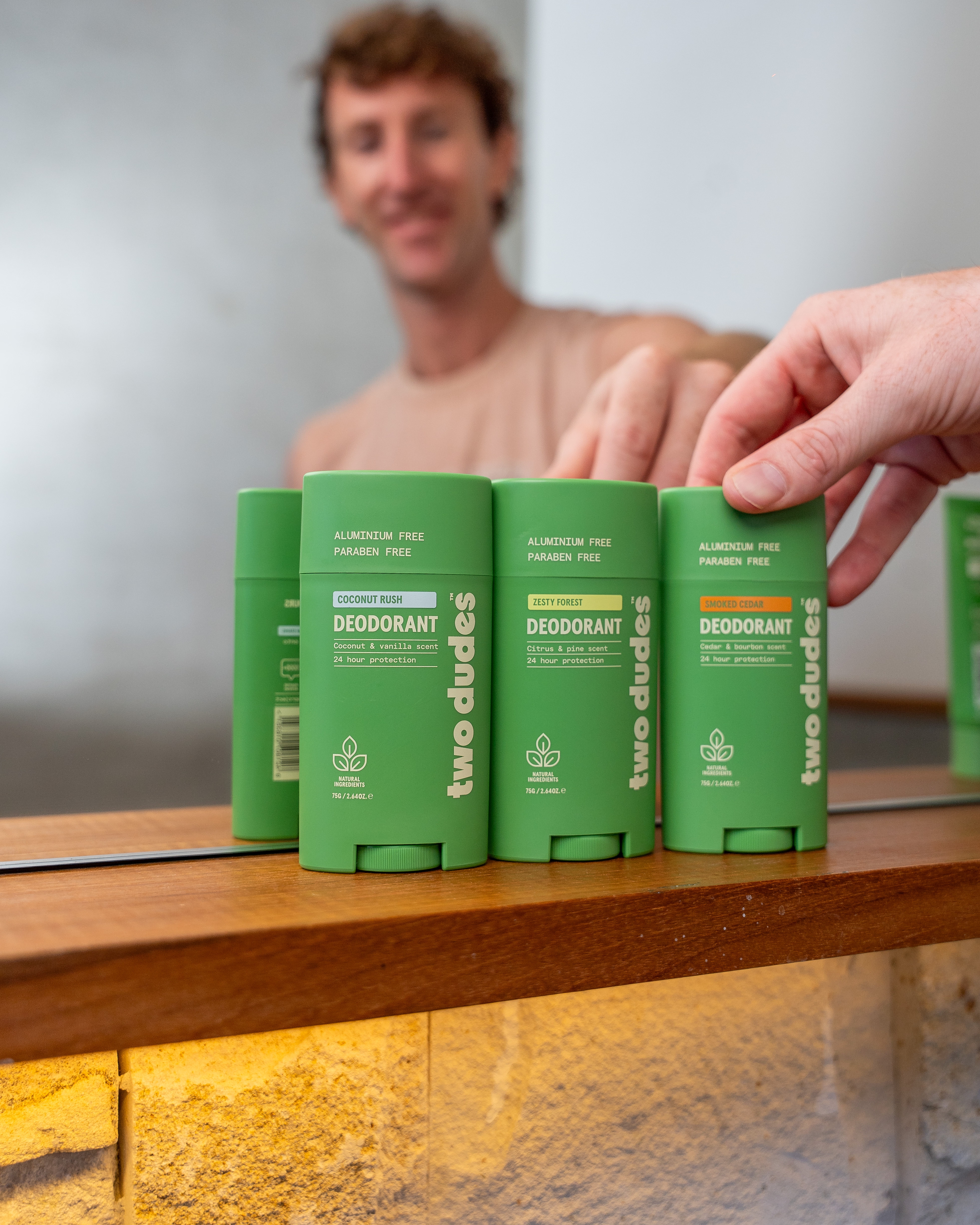
In this article, I’ll show you what it actually took to move into major retail. I’ll show you the proof buyers wanted, the numbers that nearly caught us out, and the operational stuff that keeps you on the shelf once you're there.
How we knew we were ready for retail
Being ‘ready’ wasn’t just a feeling, it required real numbers: consistent repeat purchase rates and demand that wasn't just launch hype. Once we had real repeat purchase data and organic demand building in New Zealand, we started with independent retail stores including Foodstuffs, New World and PAK'nSAVE.
Once that held up over time, we knew the model would survive contact with a much bigger retail environment.
The biggest mistake brands can make when moving to retail
Before I go into the tips on succeeding in retail, a word of caution:the biggest mistake a brand can make before taking the leap, is not modelling the cash flow required for inventory and trade spend.
DTC is a beautiful cash cycle because someone pays you before you ship. Retail changes that model. You're paying for stock, freight and packaging weeks, or even months, before it lands on the shelf. Even then, you're often waiting 30 to 60 days to get paid on top of that.
If you haven't modelled that gap properly, a ‘win’ like landing a major retailer can actually be the thing that sinks you.
But don’t let that put you off. Here are my tips for getting your products into more stores and succeeding in the retail environment.
1. Give buyers real proof that your product will sell
Above anything, buyers want to see proof that your product is going to sell in their store. There’s three main things to get right here:
- Real DTC sales and repeat purchase data: When we first launched, we made the deliberate decision to be DTC-only. We wanted to prove people would actually buy from us more than once, before we asked a retailer to bet shelf space on us. We also wanted to build a close relationship with our customers, something DTC allows you to do.
- A clear point of difference: We're in a category dominated by a handful of huge legacy brands, so buyers needed to see what made us different and why a customer would reach for us over the Nivea Men or Rexona next to us.
- A commercial structure that worked for them: They wanted real trading terms and a promotional plan that made sense to them,not just a good story on social media. It's a totally different skillset to DTC.
2. Redesign your packaging for the shelf
We had to change a lot about packaging before going into retail. Online, you can afford a slightly indulgent unboxing experience because you're only paying for it once, per customer.
On shelf, packaging has to survive pallet handling, distribution centres and being knocked around in a supermarket without looking beaten up. It also has to fit existing category planograms (which are visual maps to help retailers plan their shelf set-up) and price architecture, so customers can compare us directly against brands like Nivea Men or Rexona.
We also had to simplify our SKU range so retailers could plan a clean, logical shelf set rather than trying to squeeze in a DTC-style catalogue. We actually rebranded our entire packaging so that it was designed for standing out on the retail shelf.
👉 Get more tips on how to package your products for retail in this article with Vicky Tomlinson.
3. Protect your margins
Your per-unit margin can drop substantially in retail if you're not careful. You're selling at wholesale price rather than RRP, with trading terms, rebates and promotional costs layered on top that don't exist in DTC.
We've protected the business a few ways:
- We built a proper financial model that maps out what happens to our cash and stock under different scenarios, rather than just watching the top-line revenue number.
- Before we sign with a retailer, we agree how often we’ll go on promotion, and how deep that promotion will be. This way we can treat it as money we've chosen to spend, rather than discounts that we're losing out on.
- We've been careful not to discount heavily just to win more stores. Chasing a bigger store count that way isn't worth it if it kills the margin.
That said, retail margins aren't always as bad as people make out, for two reasons. First, retailers really do want to help you and keep you on shelf for years,and they don't do that by ripping you off. A lot of the time, they'll actively try to help your margins.
Second, one of the biggest costs in DTC is freight, and that mostly disappears in retail: you're shipping bulk goods to the retailer's distribution centre, so the cost drops dramatically.
4. Build brand recognition before the aisle
On the shelf, you can't retarget someone the way you can online, so you have to do the work before they get there.
A lot of that, for us, is PR and brand moments. We're known for the stunts, like calling out supermarkets on TV or delivering Two Dude’s stock to Coles via camel.
.avif)
They earn us attention and buy us permission to be a bit different, so when someone spots us on a shelf there's already a flicker of "oh, these are the camel guys."
But a stunt has never kept us on shelf; it gets you noticed, no more. We back it up with in-store activation including displays, shelf talkers, sampling, and packaging that's distinctive at a glance,because in the aisle, you only get one shot.
5. Nail the boring operations
Operations can seem a bit boring, but it’s the foundation of your retail strategy, and is ultimately what's going to hold your place on the shelf. It comes down to a handful of things done reliably:
- Forecast accurately every week, so you make enough to keep shelves full without being buried in stock you've already paid for.
- Find a logistics partner you can trust to store your stock and get it out to retailers on time.
- Keep a bit of spare stock in hand, so one busy week doesn't leave a shelf sitting empty.
- Deliver on time, getting your stock to the retailer on the exact day and slot they've given you.
- Be easy to deal with, so you're quick to answer, quick to fix problems, and never hard work for a buyer.
(Psst, you can use Dash’s branded retailer portals to easily organise and share content with your partners.)
3 takeaways to start planning your move to retail
Going into retail, it's easy to fixate on the exciting parts. But they aren't the parts that matter most. The big PR stunts might get you the meeting, but numbers and solid operations are what actually win shelf space. So if you do just three things before you make the move, make them these.
- First, get your repeat purchase data solid before you talk to a single buyer. That's your proof that people come back, and it's what a buyer wants to see.
- Second, model your cash flow properly before you sign anything. Retail's payment terms and inventory lead times will catch you out if you haven't planned for the gap.
- Third, lean into being the challenger brand. DTC brands are the challenger in every category, so don't hide it,show buyers exactly how you're different.
Get those three right, and you give yourself a real shot at not just landing on the shelf, but staying there.
You can find out more about Two Dudes and connect with me, Michael McRae, on LinkedIn.
And if visual content like product shots, brand assets and creator content is hidden in your shared drives, it’s going to be hard to get yourself organised once you hit the retail shelves.
Get yourself organised with Dash - the digital asset management tool for ecommerce brands. It’s one tidy home for all your visual content, with self-serve portals so retail partners can grab the right, on-brand files without emailing you first.
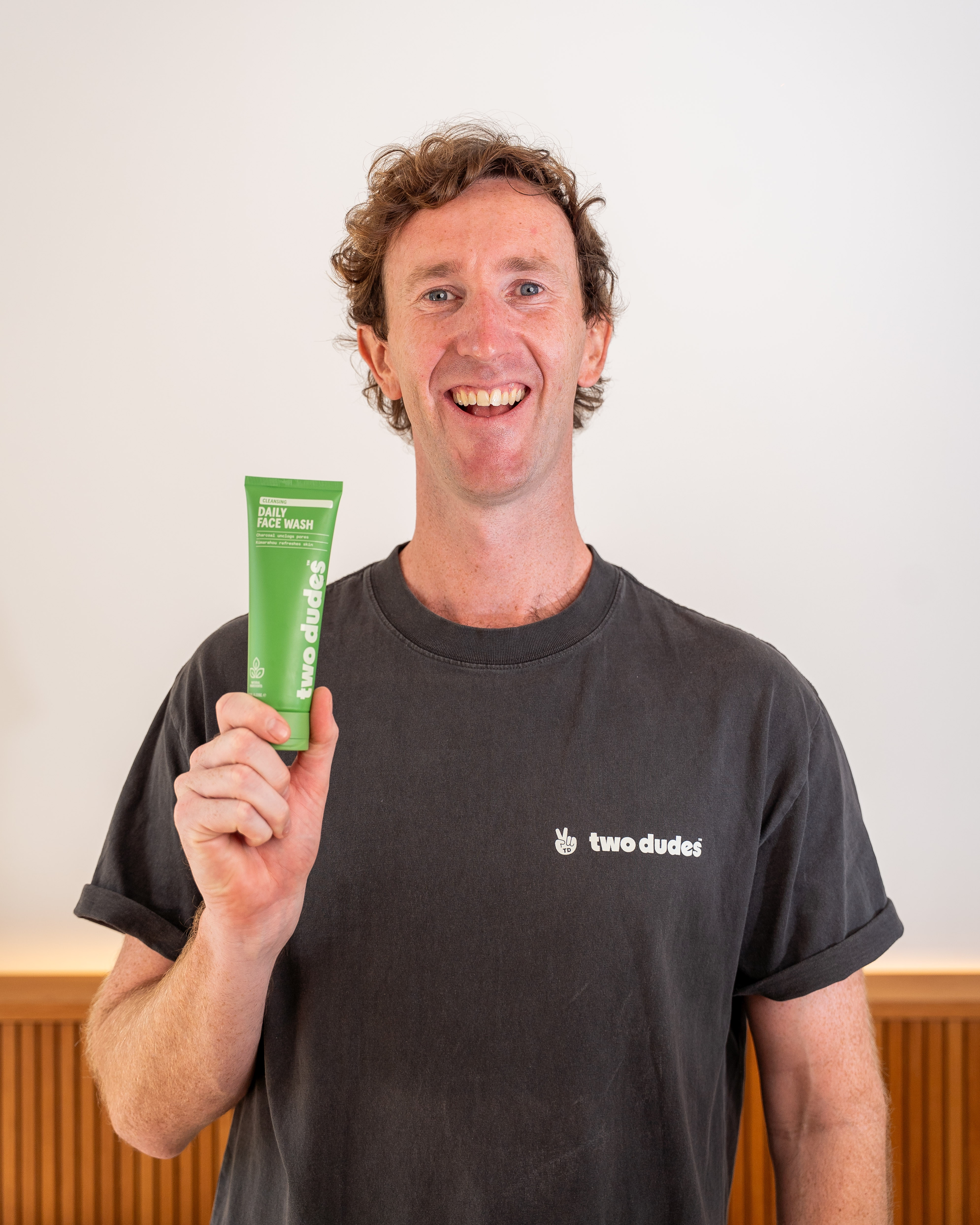
Michael is the co-founder of Two Dudes. Him and his mate Tom make award-winning natural skincare and deodorant for men that's genuinely easy to use, backed by a fair whack of humour and grounded in a commitment to donating profits to men's mental health.