.avif)
In ecommerce, there’s no such thing as standing still. Between global tariff fluctuations, rising acquisition costs, and AI reshaping how people discover and buy products, brands are being forced to rethink how they grow.
To understand what really matters for the year ahead, we spoke to 10 ecommerce experts across growth, branding, paid media and retention. Their predictions for 2026 are refreshing, and we hope it helps you to feel confident and positive about the year ahead.
Here’s what ecommerce leaders think brands should start doing now to stay competitive in 2026 and beyond.
11 ecommerce experts + their predictions for 2026
Ian Mackey on creative diversity and smarter measurement
Ian Mackey is the Global Marketing Director at Percival, a contemporary British menswear brand known for reworking classic styles with modern design details and premium craftsmanship.
What’s the single biggest change you expect in ecommerce by 2026?
“I think we’re going to see an influx of AI-based marketing mixed modelling being integrated into platforms. BigQuery language is becoming so much easier to be interpreted by anyone, and platforms like Triple Whale and Dema are making big strides in this area.”
What will be the biggest challenge or risk brands need to prepare for?
“To be honest, navigating global trade right now is the toughest part of ecommerce. Powering domestic markets in turbulent conditions, while finding growth in new ones without spending millions, is the biggest challenge for me!
Plus, with customers feeling the pinch, I think first order delay times will increase next year, especially for higher ticket items in categories like fashion.”
What will be the biggest opportunity for ecommerce brands in 2026?
“Creative diversity. Even more so with Meta’s Andromeda update - which is a next generation ad retrieval LLM. It’s becoming essential to every D2C paid strategy, as long as the testing is set up correctly. I also think more of a full funnel approach to creative is needed to scale on platforms like Meta now, and tapping into creative range instead of targeting will have strong payoff if done well.”
What trend do you think is overhyped right now and won’t matter much by 2026?
“Brands using (badly made) AI-generated creatives. I really hope this gets left behind!”
How do you expect customer behaviour or expectations to shift by 2026?
“Customers want transparency and convenience above all else. Brands need to do everything in their power to break down barriers to both of these through their content and campaigns. It’s nothing new, but I think it will become essential.”
What should brands start doing now to be set up to win in 2026?
“Do a sanity check on your ad accounts, your audience settings, your pixels and tracking to make sure you’re good to go with testing from January. Note down three things that worked really well for you in 2025 that you should continue doing, three things you should maybe stop doing and three things you would do differently.”
Are there any tactics or channel trends you're excited about for 2026?
“We get a lot of people discovering us on Reddit and haven’t been able to make ads work for us there, so I’m going to spend a bit of time focusing on that.
I’m also keen to keep exploring platforms like Dema.ai to ensure maximum profitability for my product catalogue.”
What brands should people be keeping an eye on in 2026?
“I love what Scuffers, Sult, Gisou and Ffern are doing right now!”
Jo Densley on owned growth and retention-led ecommerce
Jo Densley is Founder at Relish Food Marketing, an agency that helps food and beverage brands with their go-to market strategies, particularly within the retail space.
Check out Jo’s article on how to create show-stopping product packaging on our blog.
What’s the single biggest change you expect in ecommerce by 2026?
“Brands owning the customer relationship end-to-end. They’re not just relying on retailers and market places, but really using DTC as a way to personalise better and build loyalty - not just driving sales.”
What will be the biggest challenge or risk brands need to prepare for?
“Relying too heavily on rented platforms which give you short-term sales but very little long-term security. Owned growth is about building direct relationships, data and repeat behaviour that you actually control.”
What will be the biggest opportunity for ecommerce brands in 2026?
“The biggest opportunity for ecommerce brands in 2026 is using customer data in a way that’s genuinely helpful — making it easier for them to reorder, feel understood and keep coming back. It’ll also mean brands don’t need to rely so heavily on endlessly chasing new shoppers.”
What trend do you think is overhyped right now and won’t matter much by 2026?
“Fully AI-driven, autonomous shopping is overhyped, because food shopping is emotional and experiential, not something people want fully automated. Consumers trust AI to support decisions, not replace them.”
How do you expect customer behaviour or expectations to shift by 2026?
“Personalisation will be assumed and customers will expect brands to just ‘get them’ and make their life easier.”
What should brands start doing now to be set up to win in 2026?
“Brands should build owned customer relationships which will encourage repeat purchase.
So get serious about customer retention data. That could mean personalising offers, content and timing based on real behaviour.
Are there any tactics or channel trends you're excited about for 2026?
I am excited about predictive reordering and replenishment.
What brands should people be keeping an eye on in 2026?
“I think Pip and Nut are doing a great job at staying close to their customers and retaining them and building loyalty.”
Jeronimo Canale on distinctive creative systems and community-led brands
Jeronimo Canale is Founder & Business Director at Synced Studio, an agency that helps brands turn their product visuals into high-converting assets like 3D product images and animation.
What’s the single biggest change you expect in ecommerce by 2026?
“By 2026, AI imagery will make it easy for any brand to look premium and perfectly polished. Product photos, lifestyle shots, even 3D renders will all look ‘high-end’ by default. That sounds great, but it creates a new problem: if everyone looks premium, no one feels special.
We’ll see a similar swing to what happened with social media: once every ad became hyper-produced, raw iPhone content started outperforming it. In ecommerce, the winners will be the brands that design a distinct, ownable visual system – mixing AI, 3D, raw footage, UGC and story in a way that’s impossible to copy with one prompt.
The fight shifts from ‘can we make good images?’ to ‘can we make images and experiences that are recognisably ours, that people actually stop for?’”
What will be the biggest challenge or risk brands need to prepare for?
“The biggest risk is drowning in the noise of a crowded consumer packaged goods universe.
Every category is exploding with new brands, flavours, formats and ‘dupes’. AI will make it even easier to launch a decent-looking brand overnight. The real danger isn’t being bad – it’s being forgettable.
Brands that treat ecommerce as ‘more posts and more SKUs’ will see attention, margins and loyalty quietly erode. The ones that survive will be obsessive about:
- Owning a clear, distinctive point of view,
- Building a recognisable visual and verbal system across every touchpoint
- Resisting the temptation to chase every trend instead of reinforcing what makes them different.”
What will be the biggest opportunity for ecommerce brands in 2026?
“The biggest opportunity will be for brands that stop thinking in terms of ‘customers’ and start thinking in terms of communities with a shared mission.
By 2026, products alone won’t be a defensible moat. The brands that win will be the ones that:
- Are built around a clear, lived mission (health, sustainability, culture, identity. In other words: not just a tagline)
- Design their ecommerce, content and IRL experiences to serve that mission first
- Give customers real ways to participate like co-creating flavours, formats, rituals, events.
When people feel ‘this brand is helping me become who I want to be’, AOV and retention stop being spreadsheet problems. They become a side effect of belonging.”
How do you expect customer behaviour or expectations to shift by 2026?
“By 2026 I expect a quiet backlash against ‘always-online, always-AI’ commerce.
Customers will still shop online, but their attention and trust will shift:
- They’ll spend less time doom-scrolling and more time curating a few brands and creators they actually trust.
- Hyper-polished, obviously AI-generated humans in ads will trigger the same reaction as stock photos did years ago: ‘fake, skip’.
- People will gravitate toward brands that feel grounded in real life. That includes real teams, customers and imperfections – even if AI is used behind the scenes.”
What should brands start doing now to be set up to win in 2026?
“In 2026, brands shouldn’t just post more - they should build systems instead of campaigns.
Practically, that means starting now to:
- Codify your visual and verbal DNA: set your examples, rules and do’s/don’ts in a way AI tools can actually use.
- Turn that into a reusable content engine: make sure you have one source-of-truth that can spit out on-brand assets for PDPs, email, paid, organic, retail, launches, all from the same core library.
- Design workflows where humans set the strategy: from here, AI handles the heavy lifting of versions, formats and localisation.
If you wait until 2026 to build this, you’ll still be hand-cranking campaigns while your competitors are running an always-on, multi-channel machine.”
Are there any tactics or channel trends you're excited about for 2026?
“I’m excited about routine-aware email. This isn’t just about being ‘personalised’, but comms that are timed and written for the actual moments people live in.
Instead of blasting newsletters at 9am because “that’s what the tool suggests”, smart brands will map real routines:
- People scrolling, bored, at their desk at 3pm
- People checking their emails with their first coffee of the day
- People quickly checking their emails on Sunday evening in preparation for the week ahead
Then they’ll design emails specifically for those states, and they’ll likely be shorter, more conversational and relevant to what that person is likely feeling and needing right then.
Email is still one of the highest-ROI channels in ecommerce. Aligning it with human rhythms instead of marketer calendars is a small shift that can create a big edge.”
What brands should people be keeping an eye on in 2026?
“I really like SULT and SLEEPGYM.”
Holly Kelly on shopping behaviour and the impact of AI
Holly Kelly is Head of Paid Media at Anicca Digital. They’re a UK-based agency that covers everything from paid media, PPC and SEO. We work really closely with them here at Dash, and Holly recently wrote about how brands can optimise their Google Shopping feeds for better results.
What’s the single biggest change you expect in ecommerce by 2026?
“There are shifts beginning to happen in shopping behaviour through the use of AI search. Early adopters and those more comfortable with technology will expand the usage of AI agents which will start making purchases on their behalf. In addition, I believe more retailers will make their product catalogs accessible to AI search engines like ChatGPT. This will likely happen at a slower speed in the UK as we are further behind the US in terms of AI adoption.”
What will be the biggest challenge or risk brands need to prepare for?
“An increase in market places diluting direct website sales. Plus, not being found in AI search as it turns more transactional.”
What will be the biggest opportunity for ecommerce brands in 2026?
“I think the biggest opportunity will be TikTok Shop if it makes sense for the product you are selling.TikTok Shop is huge for beauty, for example. Also, ensure your website and product catalog is indexed by AI search.”
What trend do you think is overhyped right now and won’t matter much by 2026?
“AI-generated product imagery is already causing fatigue in certain categories. While it can enhance visuals in some industries, in others (particularly fashion and home, where the physical product and material quality really matter) it risks creating a misalignment between consumer expectations and what’s actually being advertised.”
How do you expect customer behaviour or expectations to shift by 2026?
“Users will become more comfortable with shopping and searching via AI. This will happen gradually over time though, and there will be a large group that still holds reluctance, similar to when Apple Wallet first launched.”
What should brands start doing now to be set up to win in 2026?
“Submitting feeds to AI engines. Ensure standard SEO is being upheld. Optimise product titles and attributes. Overall make sure your product offer is compelling whether that be on price, value, USP or other.”
Olivia Crowley on transparency and social commerce pressure
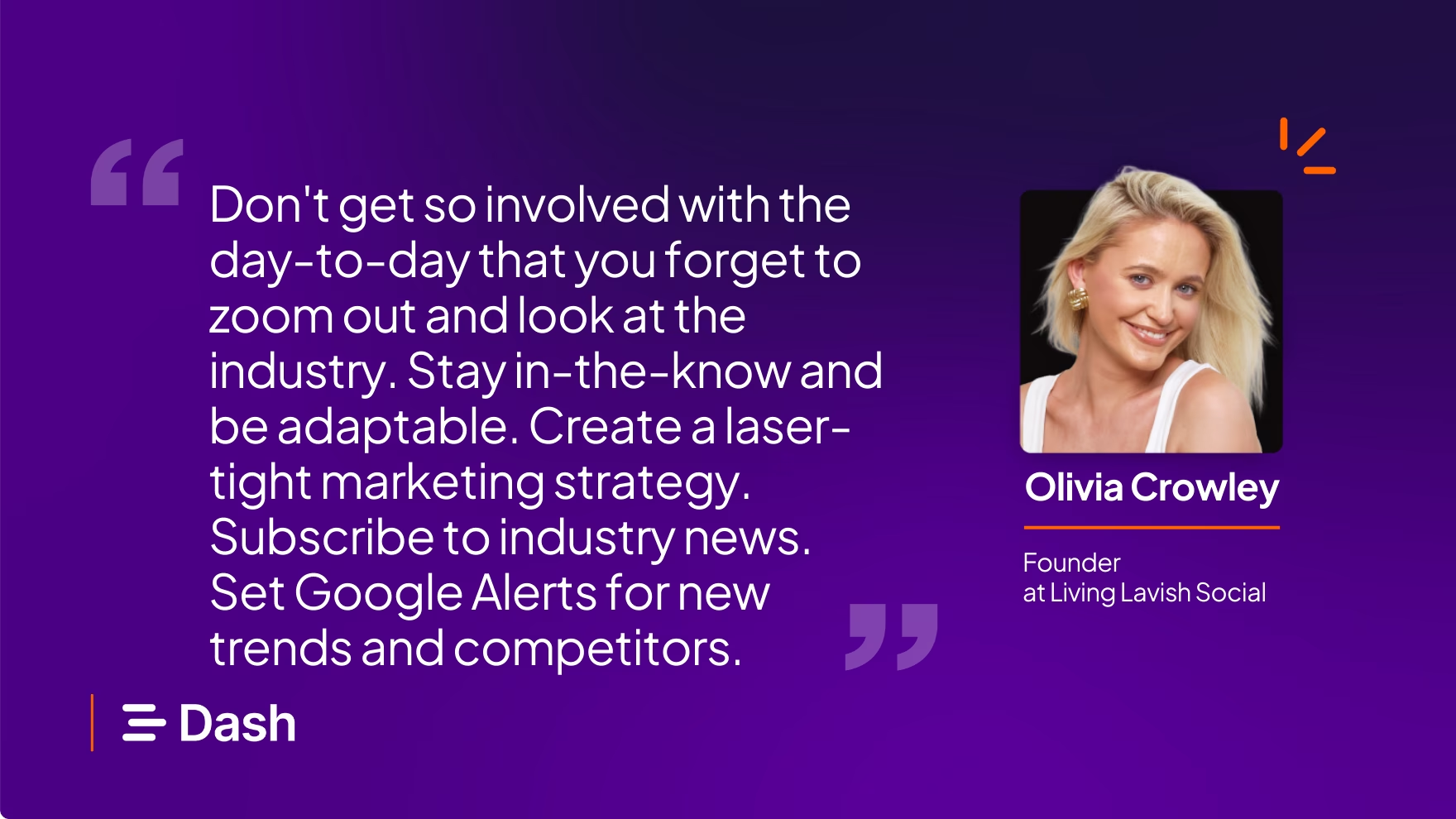
Olivia Crowley is Founder at Living Lavish Social, who help brands grow their community online via social media.
What’s the single biggest change you expect in ecommerce by 2026?
“I expect the rapid rise of social-commerce marketplaces (especially TikTok Shop) in 2026 to become a bigger source of complexity for ecommerce brands. With competition already fierce for brands, social-commerce may intensify the pressure to stay visible, relevant, and profitable in a much more crowded landscape.”
What will be the biggest challenge or risk brands need to prepare for?
“Apps like Yuka and EWG have made everyday buyers behave like experts, which will put pressure on brands to be transparent with ingredients, sourcing, formulations, sustainability, and manufacturing.”
What will be the biggest opportunity for ecommerce brands in 2026?
“Using data to create personalised experiences for consumers.”
What trend do you think is overhyped right now and won’t matter much by 2026?
“AI-generated influencers. I feel like everyone’s craving realness again, and the landscape is drifting back to when influencers were relatable.”
How do you expect customer behaviour or expectations to shift by 2026?
“I think customer behaviour is going to get a lot more scrutinous. With how much information is out there now, tools like Yuka and EWG, for example, it’s become so easy for people to dive deep into what’s actually in their products.”
What should brands start doing now to be set up to win in 2026?
“Don't get so involved with the day-to-day that you forget to zoom out and look at the industry. Stay in-the-know and be adaptable. Create a laser-tight marketing strategy. Subscribe to industry news. Set Google Alerts for new trends and competitors.”
Are there any tactics or channel trends you're excited about for 2026?
“The trends creators are jumping on to keep their content interesting are actually really fun. I liked the recent one where creators were using AI to create dogs that matched the colour of their outfits, which I thought was fun! And, who's not going to stop scrolling for dogs?”
What brands should people be keeping an eye on in 2026?
REFY, The Inkey List, The Ordinary.
Vicky Tomlinson on AI shopping agents and IRL community
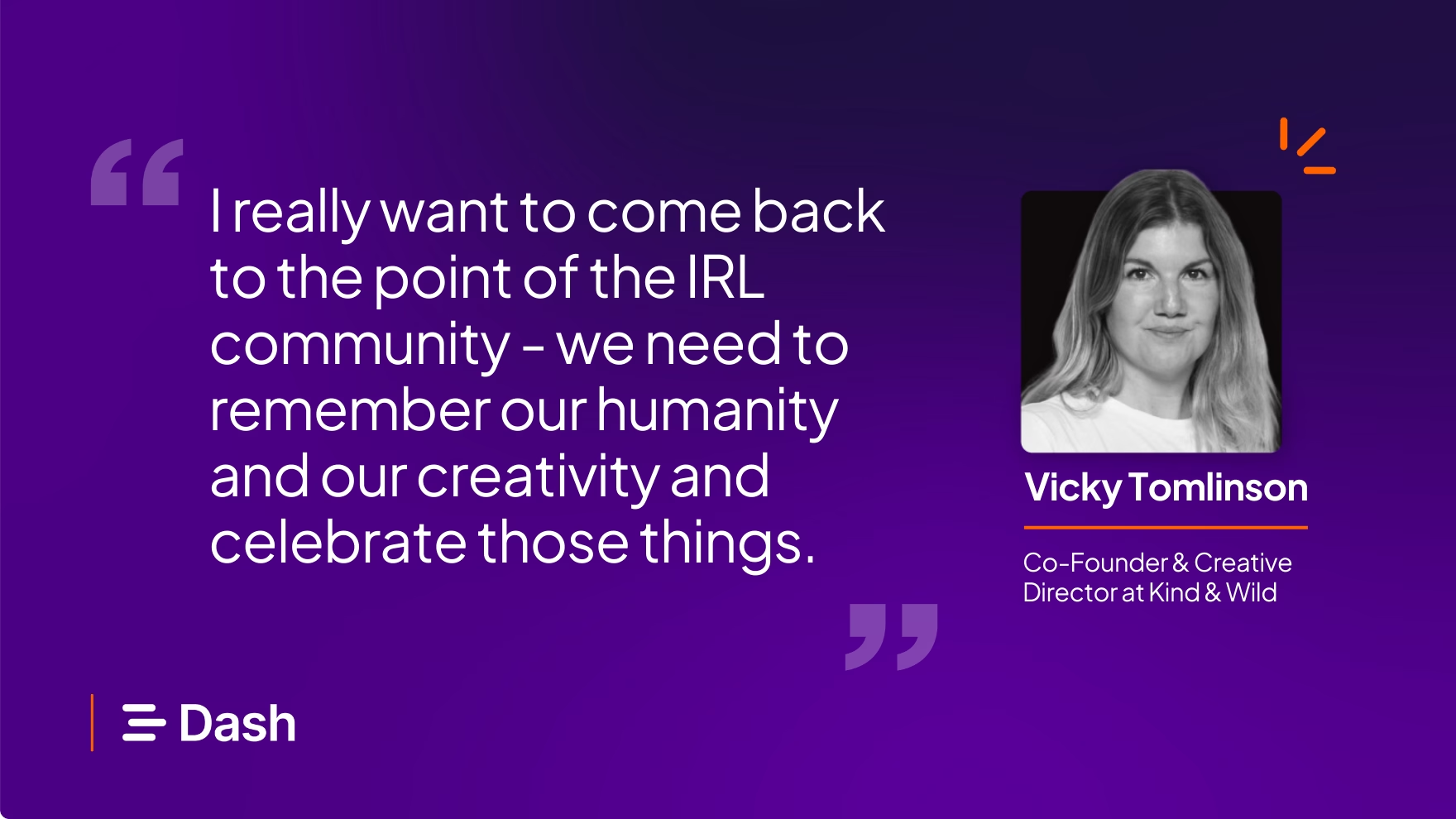
Vicky Tomlinson is Co-Founder & Creative Director at Kind & Wild, an agency helping food and beverage brands grow to the next level.
What’s the single biggest change you expect in ecommerce by 2026?
“I think the biggest change in ecommerce will be AI shopping agents becoming a normal way people buy things. Instead of browsing sites, customers can tell an assistant what they need, for example: ‘restock my coffee,’ ‘find healthy snacks under £20,’ or ‘build me a gluten-free lunchbox kit’, and the AI will pick the best options and sometimes even place the order.
This will be big in food and bev because people buy the same things over and over, and they often have specific needs (low sugar, vegan, kid-friendly, allergies).”
What will be the biggest challenge or risk brands need to prepare for?
“I think the biggest challenge is brands becoming interchangeable online. In ecommerce, customers (and AI/feeds) scan fast, compare instantly, and default to whatever feels clearest, most trusted, or cheapest.”
What will be the biggest opportunity for ecommerce brands in 2026?
“I think this could possibly be ecommerce brands owning discovery-to-buy channels that make shopping instant, especially TikTok Shop and creator-led selling.”
What trend do you think is overhyped right now and won’t matter much by 2026?
“Overhyped right now: tech-led branding without a human truth behind it.”
How do you expect customer behaviour or expectations to shift by 2026?
“I think by 2026 people will expect brands to do more of the thinking for them. Customer behaviour will be more intent-driven and a bit pickier.”
What should brands start doing now to be set up to win in 2026?
“I really want to come back to the point of the IRL community - we need to remember our humanity and our creativity and celebrate those things.”
Are there any tactics or channel trends you're excited about for 2026?
“I think anything that frees up time and prevents decision fatigue. AI-assisted shopping, paired with simple outcome-based bundles.”
What brands should people be keeping an eye on in 2026?
“Cups Full Coffee Bags, All The Aunties Paneer, Mama Shrooms, Curdi, FATSO.”
Nathan Lomax on conversational commerce and AEO
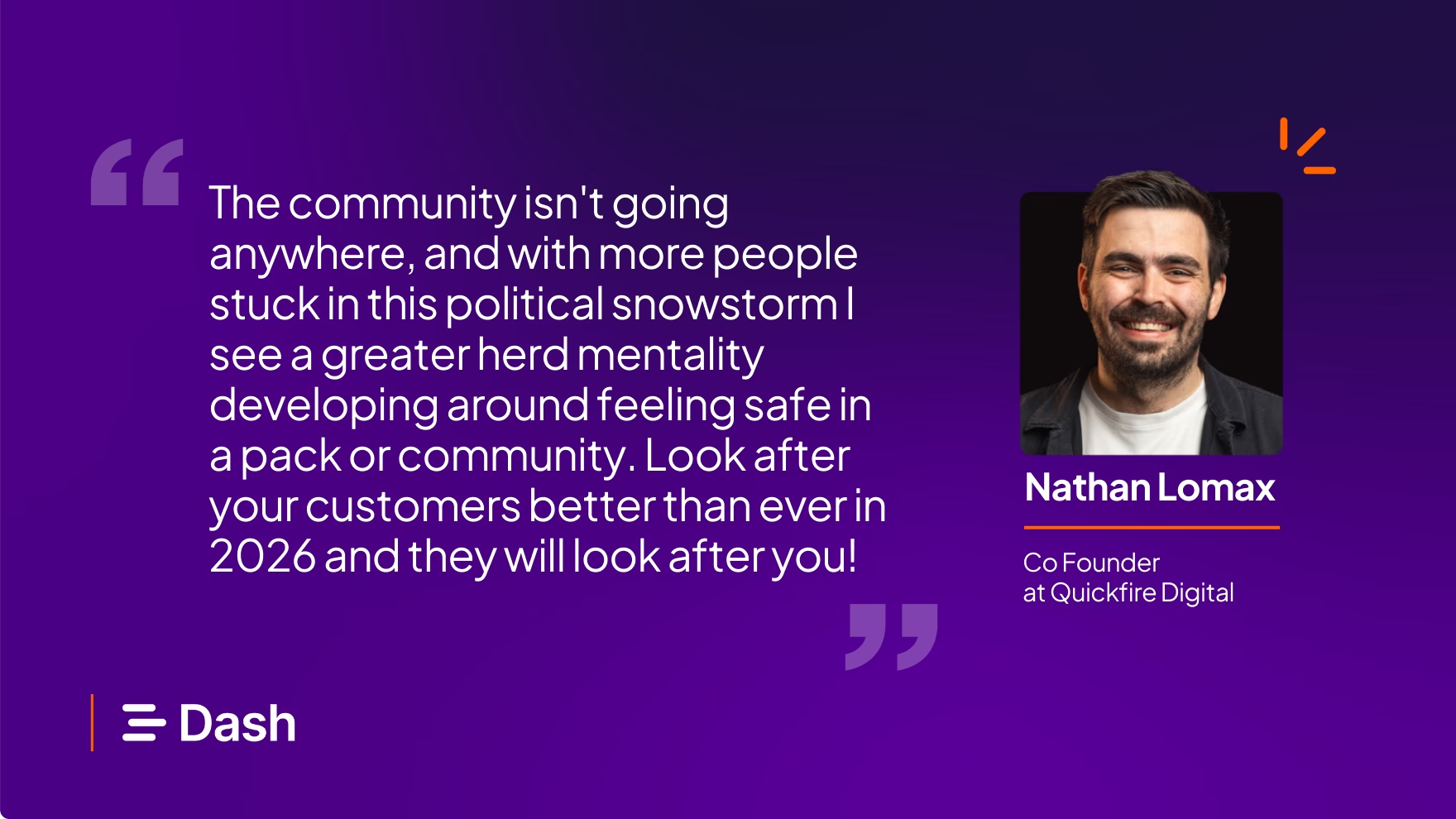
Nathan Lomax is Co-founder at Quickfire Digital - a Shopify agency that works with ecommerce brands like Forthglade, Beavertown and Reebok to help them scale their online stores.
What’s the single biggest change you expect in ecommerce by 2026?
“Conversational commerce is coming in a big way! Engaging with brands and making commerce in Shopify's words "better for everyone" means engaging the customer where they want to engage and on their terms!”
What will be the biggest challenge or risk brands need to prepare for?
“Brands will be ready to pivot and shift at a moment's notice, so shallow customer relationships, poor user experience, too much friction in the buying journey and they are off. Not many brands are truly ‘unique’ any more so ‘service’ often wins!”
What will be the biggest opportunity for ecommerce brands in 2026?
“The community isn't going anywhere, and with more people stuck in this political snowstorm I see a greater herd mentality developing around feeling safe in a pack or community. Look after your customers better than ever in 2026 and they will look after you!”
What trend do you think is overhyped right now and won’t matter much by 2026?
“Virtual try-on—while I like the concept, I think it's too much of a chore right now and won't catch on.”
How do you expect customer behaviour or expectations to shift by 2026?
“Customers are setting the pace and dictating what they want, when they want, and brands are having to adapt.”
What should brands start doing now to be set up to win in 2026?
“Create a budget and plan A, B and C, and be prepared to re-forecast and pivot as we enter more turbulent times.”
Are there any tactics or channel trends you're excited about for 2026?
“Above and beyond conversational commerce, I'm excited to see how AEO (answer engine optimisation) takes off as more and more users shift to searching via LLM's.
What brands should people be keeping an eye on in 2026?
“I'm interested to see how sports clubs in particular start to tap into their community / fan base to unlock extra merchandising revenue.
Emily Lamb on selling everywhere without losing brand consistency
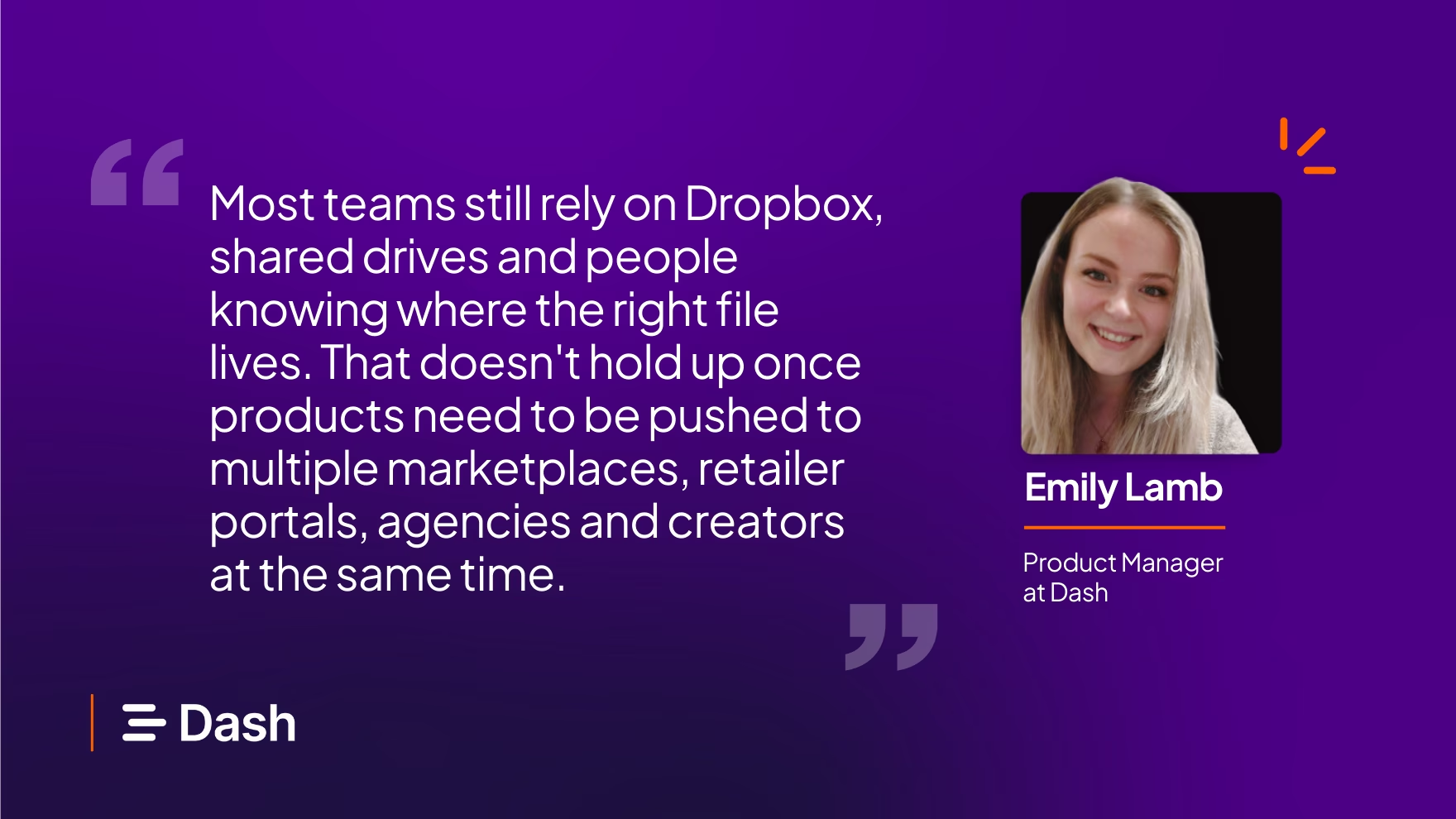
Emily Lamb is Product Manager at Dash, a visual content management tool for DTC brands where creative assets are at the heart of what they do. In Dash you can search, find, manage and share your product visuals to launch campaigns quicker and grow your brand.
What’s the single biggest change you expect in ecommerce by 2026?
“I reckon the biggest change will be how many places a brand needs to show up, without losing who they are. Shoppers will discover products through more marketplaces, social platforms, and AI shopping tools, often before they ever visit a brand's website.ver
The brands that succeed will be the ones whose product visuals and messaging are instantly recognisable and consistent wherever customers encounter them.”
What will be the biggest opportunity for ecommerce brands in 2026?
“The biggest opportunity for ecommerce brands in 2026 is being ready to sell wherever customers find them. That means having systems that scale as brands add new marketplaces, retailers, and shopping tools - instead of each new channel creating more manual work. Product visuals need to be ready to use, and product details need to be easy for teams, partners, and platforms to access without hunting or redoing things.
Brands that get this right can move quickly into new channels without losing consistency or creating errors. Brands that don’t will keep slowing themselves down as distribution spreads.”
What should brands start doing now to be set up to win in 2026?
“If they haven't already, they should absolutely start by fixing how their product visuals move through their business.
Most teams still rely on Dropbox, shared drives and people knowing where the right file lives. That doesn't hold up once products need to be pushed to multiple marketplaces, retailer portals, agencies and creators at the same time.
Brands should decide on a source of truth for brand and product visuals and determine how to distribute them across their workflows.”
(P.S. Dash makes this very easy).
What brands should people be keeping an eye on in 2026?
I’m really enjoying what Manicurist is doing. They’ve solved an actual problem I had, reinvented a product that’s been around for decades, and done it as a female-founded brand that uses responsible ingredients and genuinely cares about sustainability.
Matt Vann on predictive retention and repeat revenue
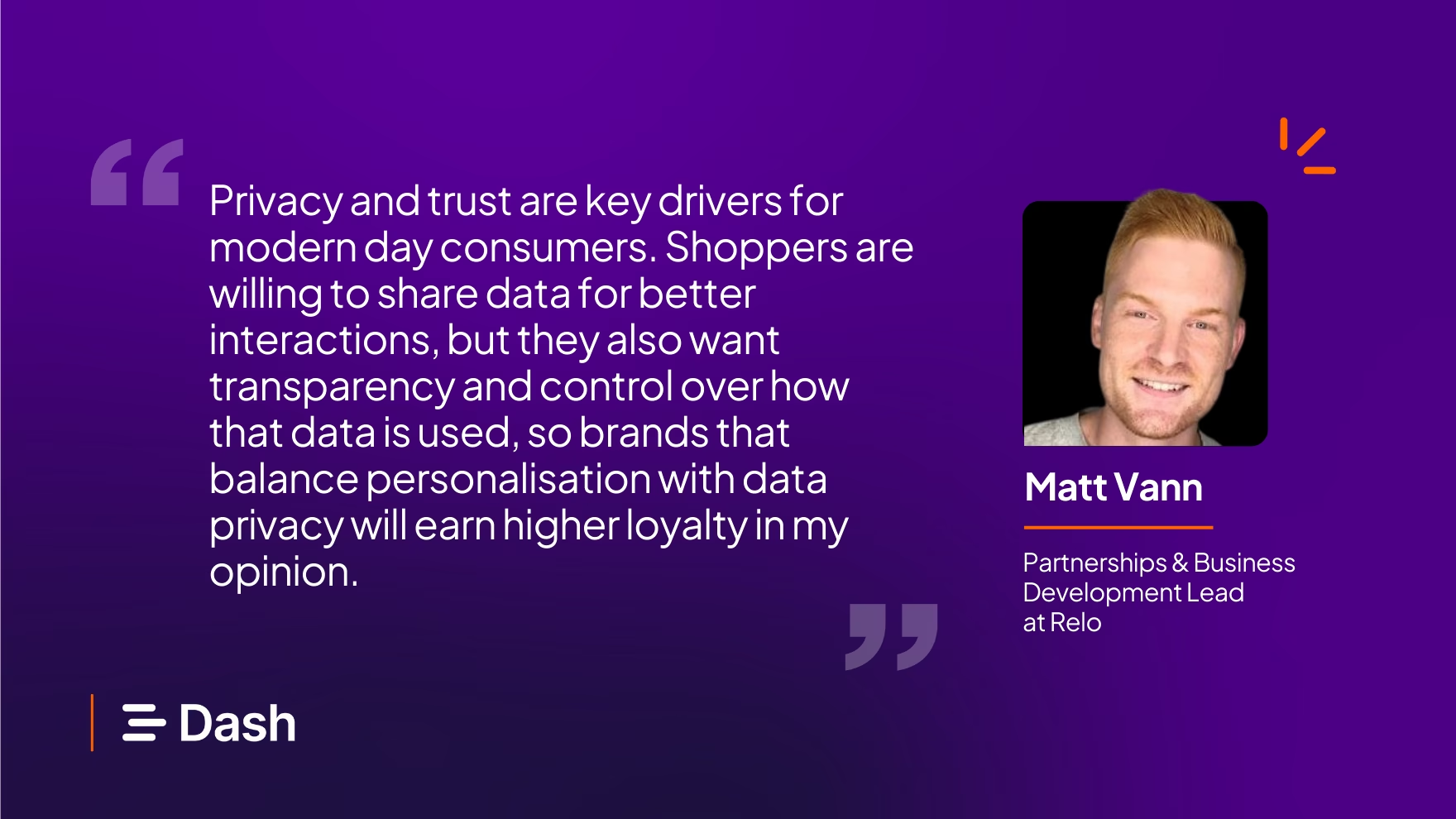
Matthew Vann is Partnerships & Business Development Lead at Relo. Relo is a Shopify-focused returns and exchanges platform that helps ecommerce brands turn returns into a smoother customer experience and a revenue-retention opportunity.
What’s the single biggest change you expect in ecommerce by 2026?
“By, and throughout 2026, retention will matter more than acquisition for a great deal of brands and retailers. CAC is high and unpredictable, so the brands that really win will be the ones keeping customers engaged and giving them great, super-personalised purchase experiences.
With all the new tools on the horizon, success will go to the brands that know their customers best. AI personalisation, augmented reality, smart search, automated pricing, demand forecasting, and intelligent replenishment are already driving double-digit conversion uplifts, and adoption is only set to grow.
Get retention right, and repeat revenue will keep growing even when acquisition costs are all over the place.”
What will be the biggest challenge or risk brands need to prepare for?
“Privacy and trust are key drivers for modern day consumers. Shoppers are willing to share data for better interactions, but they also want transparency and control over how that data is used, so brands that balance personalisation with data privacy will earn higher loyalty in my opinion.”
What will be the biggest opportunity for ecommerce brands in 2026?
“Every brand has the chance to cut through the noise and stand out in 2026.
Brands that can predict what customers want before they even think about it - through data, AI, and behavioral signals, will turn repeat buyers into lifelong fans. Personalisation will continue to move from nice-to-have to essential.”
What trend do you think is overhyped right now and won’t matter much by 2026?
In 2026, we'll get a good view on what new ecom novelties and AI driven tools have sticking power.
There’s been a lot of hype around generative AI replacing real human storytelling, but it can’t match the nuance and connection of authentic brand stories or user-generated content. My personal belief is that AI will support creativity, not replace it.”
How do you expect customer behaviour or expectations to shift by 2026?
“Right now, and even more so in 2026, customers will expect brands to know them better than ever. They’ll want personalised experiences, seamless subscriptions, and timely replenishment without having to think about it.
Convenience will be table stakes, and brands that anticipate needs and make repeat purchases effortless will be the ones customers stick with.”
What should brands start doing now to be set up to win in 2026?
“To set themselves up for 2026, brands should start evaluating their tech stacks now, if they haven't already started doing so. Look at what tools and platforms actually drove measurable growth this year and where there were gaps.
Optimising your stack, consolidating platforms, and making sure everything integrates smoothly will make personalised marketing, subscriptions, and repeat-revenue strategies far easier to execute next year.”
Are there any tactics or channel trends you're excited about for 2026?
“I’m excited about tactics that make repeat revenue effortless. Flexible subscriptions, hyper-local campaigns, and real-time, behaviour-driven messaging will let customers customise their experience while feeling understood and valued.
Turning data into personalised, timely actions will be the key to loyalty and predictable growth.”
What brands should people be keeping an eye on in 2026?
“I’ve been enjoying tracking the influencer-led brands over the past few years, skyrocketing to ridiculous valuations, but often followed by steep declines. It’s a space I’ll continue to monitor with intrigue.
Health and wellness remain top of mind for consumers, so brands like London Nootropics and Absolute Collagen are two that I’m excited to see in action in 2026.”
Ben Walton on live shopping and community-led commerce
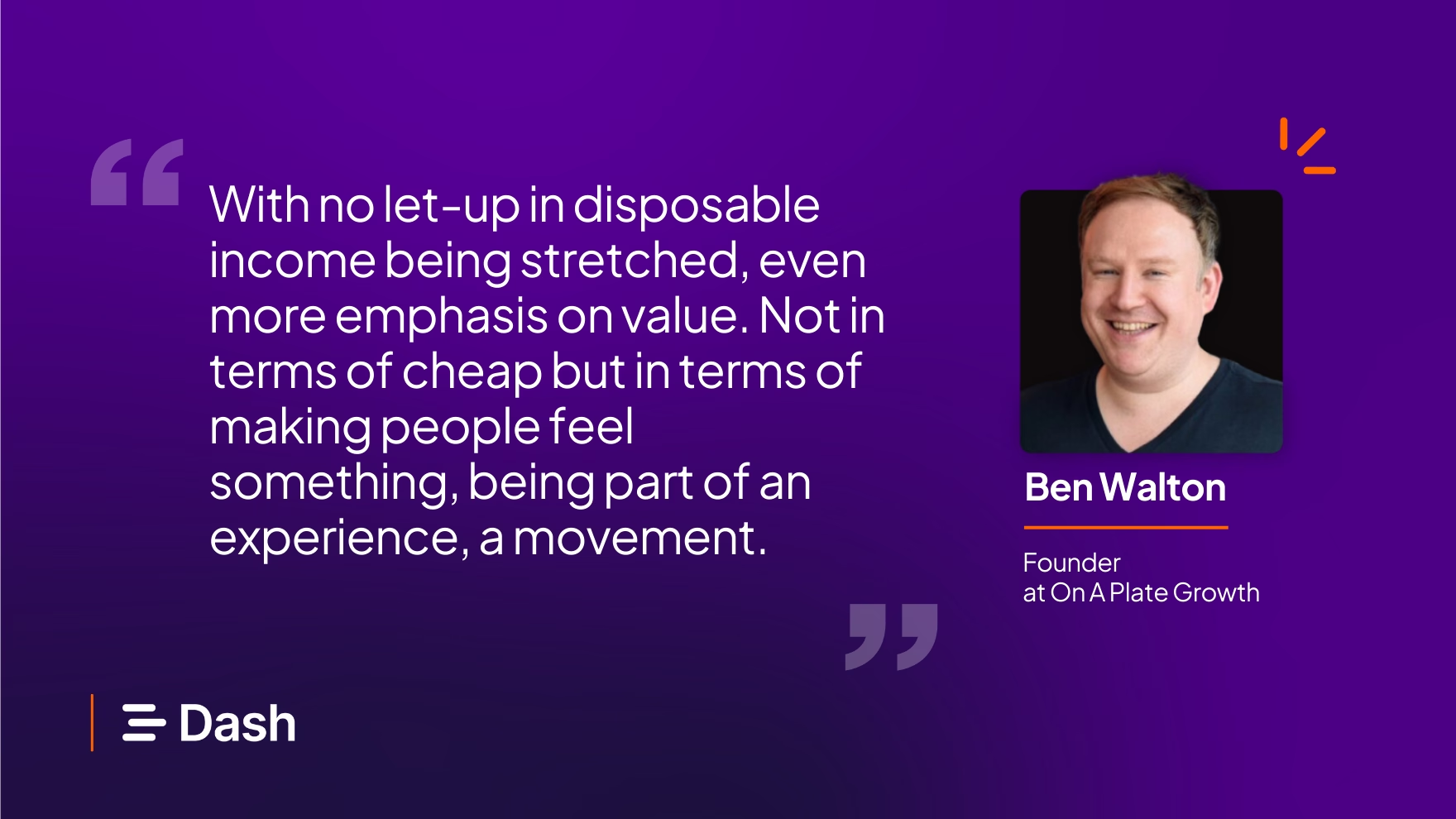
Ben Walton is Founder at On A Plate Growth, who offer strategic support for food and hospitality brands. He also owns his own brand, Bloody Bens - an out-of-the-bottle bloody Mary mix, designed to be better than anything you’d get in the pub.
What’s the single biggest change you expect in ecommerce by 2026?
“More 'live shopping', be it on TikTok, Amazon Live or other places. QVC is also 'back'.
Because trust is the biggest factor to overcome, and what better way to gain trust then by getting your founder live on your device and explaining the problems their product solves and how to best use it?”
What will be the biggest challenge or risk brands need to prepare for?
“No one is coming to the rescue. The UK government isn't going to make it easier or better. So annoyingly, you're going to have to work harder and dig deeper, to make people care enough that they choose to spend money with you.”
What will be the biggest opportunity for ecommerce brands in 2026?
“As someone who does a lot of email marketing brands, I would say email, aligned with community building. Don't shy away from longer form pieces and don’t feel like you need to be in such a rush. Slow-down, build strong connections and the sales will come from a loyal and engaged base.”
What trend do you think is overhyped right now and won’t matter much by 2026?
“Influencer-only strategies.”
How do you expect customer behaviour or expectations to shift by 2026?
“With no let-up in disposable income being stretched, even more emphasis on value. Not in terms of cheap but in terms of making people feel something, being part of an experience, a movement.”
What should brands start doing now to be set up to win in 2026?
“Build your email database and start creating a calendar of community building IRL events.”
Are there any tactics or channel trends you're excited about for 2026?
“I've become obsessed with Substack.”
What brands should people be keeping an eye on in 2026?
“Authentic Brew - pioneering functional energy (and of course my own brand; Bloody Bens Bloody Mary Mix!).”
Conor Jones on AI-driven discovery and owned data
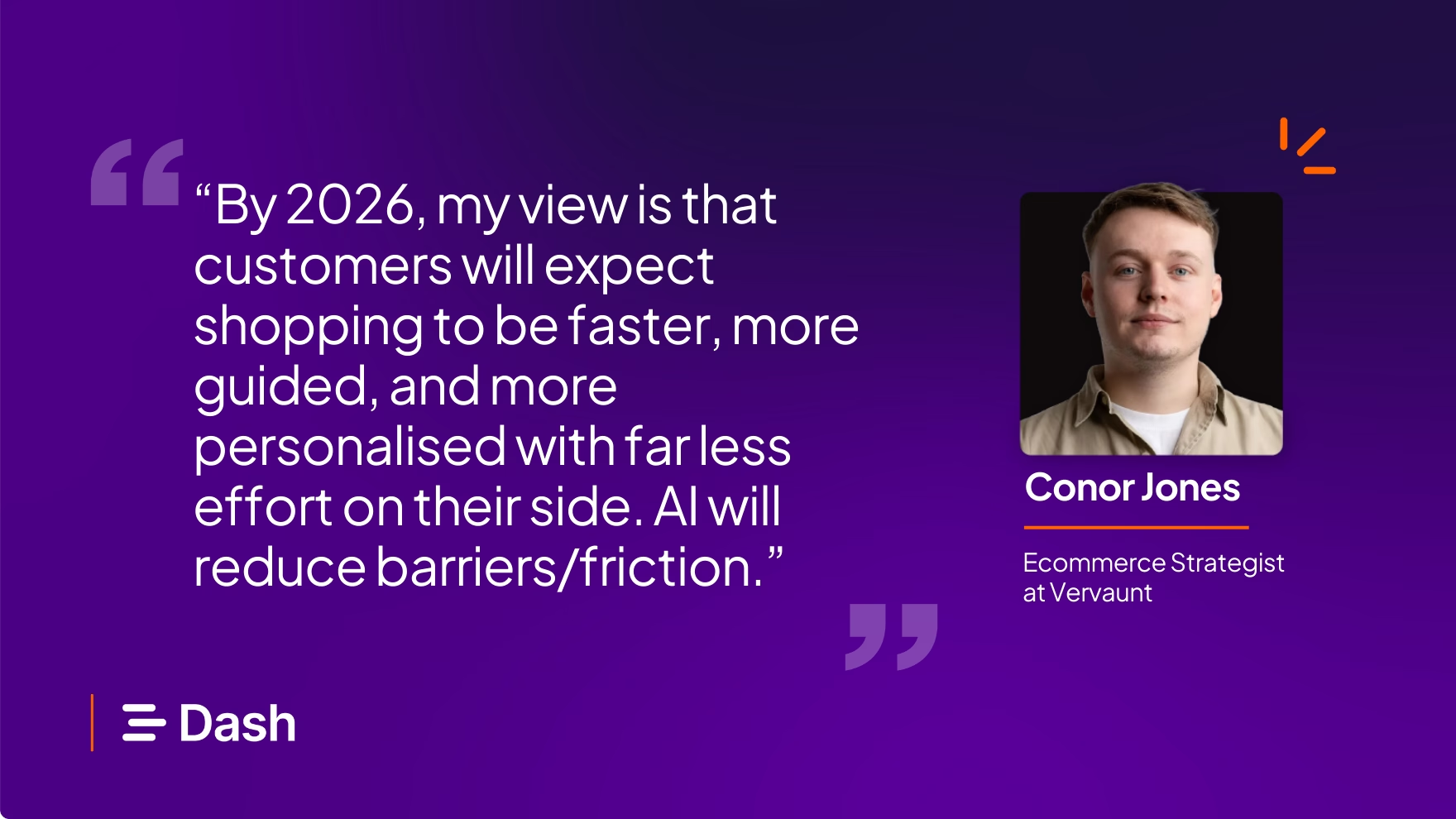
Conor Jones is an ecommerce Strategist at Vervaunt, an ecommerce consultancy that helps brands with marketing strategy, branding and UX. They also host the Pulse Ecommerce Summit that takes place in London and New York.
What’s the single biggest change you expect in ecommerce by 2026?
“I think AI is going to become a new acquisition channel.”
What will be the biggest challenge or risk brands need to prepare for?
“The biggest risk in 2026 is losing control of both demand and differentiation as discovery becomes more platform-led and AI-led.
If your product data, brand story, and customer relationship are weak, you become interchangeable. Platforms and assistants decide what gets recommended, prices get compared instantly, and acquisition costs stay high. The brands that are insulated will be the ones with strong opt-ins and clear consistent brand positioning (from the point of discovery - very top of funnel).”
What will be the biggest opportunity for ecommerce brands in 2026?
“The biggest opportunity in 2026 will be building a scalable advantage from owned customer relationships and high-quality commerce data.
Brands that earn opt-ins and maintain clean product data will be best positioned to show up credibly across every surface — from marketplaces and social to AI-led discovery. That credibility translates into more personalised merchandising, smoother onsite journeys, and less reliance on constantly buying demand through ads.”
What trend do you think is overhyped right now and won’t matter much by 2026?
“An overhyped trend is adding quick/superficial AI features, like generic chatbots or auto-generated product copy, and treating that as a strategy.
By 2026, those features will be commonplace and won’t differentiate. The real advantage will come from using AI to measurably improve merchandising, recommendations, onsite conversion, customer support resolution, and product data quality.”
How do you expect customer behaviour or expectations to shift by 2026?
“By 2026, my view is that customers will expect shopping to be faster, more guided, and more personalised with far less effort on their side. AI will reduce barriers/friction.”
What should brands start doing now to be set up to win in 2026?
Brands should start doing three things now:
- Build an owned audience: aggressively grow consented email/SMS opt-ins, loyalty, and membership so you have a direct relationship with customers, not just paid traffic.
- Fix the fundamentals: invest in clean product data (titles, attributes, imagery, inventory accuracy) and a fast, credible onsite experience that converts.
- Operational trust: make delivery promises, customer support, and returns genuinely reliable, because that is what protects conversion when shoppers can switch instantly.
Are there any tactics or channel trends you're excited about for 2026?
- “AI as a real commerce channel: ‘agentic storefront’” and better product feeds so brands show up properly inside assistants.
- In-chat checkout: more purchases happening without the classic browse-to-checkout journey.
- Memberships and loyalty with opt-ins: brands building a direct audience and using that data to personalise onsite experiences.
- Product data quality becoming a growth lever: clean attributes, imagery, inventory etc powering every channel. By virtue of optimising for AI this'll unlock a lot of potential on the frontend in terms of recommendations, personalising etc.”
What brands should people be keeping an eye on in 2026?
“#1 - Hugo Boss - never ceases to innovate both from a digital and retail POV. Their XP program is extremely impressive and the experiences being built in-store with RFID changing rooms, check-ins and NFC scans to become a member. I think they're leading the way on a lot of fronts.”
The key takeaways to help you succeed in 2026
While each expert approached 2026 from a different angle, the same ideas came up again and again. Here are some of the key takeaways you can take with you into the new year.
Brand creative will be your competitive advantages
As ad platforms automate more of the targeting and optimisation, your creative strategy really starts to matter. Investing in brand creative, creative diversity, full-funnel storytelling and a clear, ownable brand identity will put you in a much stronger position to stand out, especially as customers discover products across more channels, marketplaces and LLMs.
Retention replaces acquisition as the key to growth
Customer acquisition costs are high and unpredictable. So make sure you’re not solely relying on paid media to drive growth. Strong opportunities lie in keeping existing customers engaged through subscriptions, replenishment, loyalty and personalised experiences that make repeat purchase easy.
Owned relationships matter more than ever
Many of our experts warned against over-reliance on marketplaces and rented platforms — channels like Amazon, TikTok Shop, or paid social. It’s a fantastic place to reach customers and increase brand awareness, but the platform ultimately controls visibility and access to the audience.
Algorithms change, fees increase, and customer data is often limited. That’s why our experts recommend that you also focus on email, SMS, memberships and communities to give you direct access to your customers. You’ll get the data you need to personalise experiences and build long term connections with your audience.
Clean product data and organised content are essential
This is where a tool like Dash really earns its keep. It gives your team one place to store, manage and share approved visuals, so content can be rolled out quickly and consistently across channels, partners and platforms.
Learn more about Dash and why your ecommerce brand needs digital asset management.
AI becomes infrastructure, not a gimmick.
Our experts predict that AI will play a much bigger role in ecommerce by 2026. Most of them said that it’ll be part of everything from ad delivery and product discovery to personalisation and replenishment. But, they’re clear to stress that AI works best as a co-pilot. It can help you move faster, test smarter and streamline workflows, but it won’t replace strong brand identity, human creativity or trust.
Systems beat one-off campaigns
The brands best set up for 2026 aren’t just launching one-off campaigns — they’re putting simple systems in place. Clear ways of working, reusable content, tools they can rely on, and the flexibility to change direction quickly without having to start from scratch every time.
The 6 tools you need to win in 2026
If there’s one thing this article makes clear, it’s that you don’t need more tools — you need the right ones. Tools that help you work faster, stay consistent, and build better relationships with your customers as ecommerce keeps getting more complex.
Here are some of the tools our experts are already using to get ready for 2026:
One place to manage your creative (this is essential)
As you show up in more places, keeping your visuals organised quickly becomes a headache. That’s where Dash really matters.
Dash gives you one simple place to store, organise and share your approved visuals. That means you can easily send the right images to your ads, marketplaces, retailers, agencies and creators — without digging through folders, chasing files, or worrying about the wrong assets being used.
If you want to be ready for 2026, having a tool like Dash isn’t a nice-to-have. It’s what keeps everything else running smoothly.
👉 Try Dash free and see how much easier managing your creative can be.
Tools for retention and repeat purchases
With repeat customers becoming more important than ever, tools like Relo help you understand when customers are likely to reorder, subscribe, or buy again. It’ll then help you and trigger the right messages at the right time.
Email and SMS platforms you own
Tools like Klaviyo help you build direct relationships through email and SMS, so you’re not relying entirely on marketplaces or paid ads to reach your audience.
Tools to understand what’s actually working
As measurement gets smarter, platforms like Triple Whale and Dema help you see what’s driving profit — not just clicks — so you can make better decisions across your marketing.
Analytics and insight tools
Tools like GA4 help you understand how people move through your site and where they drop off, especially as journeys spread across more channels.
New ecommerce marketplaces
From TikTok Shop and live shopping to AI-led discovery, you need to be ready to sell wherever customers find you, without losing control of your brand.

Amy Burchill is the SEO and Content Manager for Dash. She works with ecommerce experts to create articles for DTC brands wanting to improve their campaigns.