Almost all consumers (86%) make a purchase inspired by an influencer at least once a year.
That means your customers are already buying because of creators, with or without you. 🤷
This guide covers the part of influencer marketing that rarely gets discussed in roundups:
how to reverse-engineer your buyer’s behaviour, select creators who influence your category, and build a content engine you can recycle across the entire marketing mix.
Let’s start at the top.
What is influencer marketing?
Influencer marketing is when you work with creators who can put your products in front of the people most likely to buy them. So, instead of trying to convince people yourself, you work with the people they already listen to.
In ecommerce, it means getting your product into the content people trust more than ads. That ‘influencer’ might be a TikTok creator, a YouTuber, a Reddit moderator, a Pinterest curator, a newsletter writer, a Discord community lead, or a UGC creator who never even shows their face.
But influencer marketing itself isn’t new. Back in the 1700s, before electricity, before the internet, before anyone even knew what a brand was, a British potter named Josiah Wedgwood got Queen Charlotte to use his stuff.
Then he slapped ‘the Queen's ware’ on it and doubled his prices. People didn't buy it because it was suddenly better pottery, they bought it because the Queen used it.
Neither the follower count nor the platform matter as much as the influence itself: the ability to shape what people pay attention to, consider, or buy.
Why do customers trust influencers so much though? According to research, influencers deliver ‘value’ to their audience in a way branded content rarely delivers, and this takes the form of:
- Connection (social value): Think, tight-knit communities built through Discord threads, Reddit AMAs, livestreams, or newsletter replies.
- Fun (indulgent value): Entertainment that makes content worth watching on its own.
- Knowledge (epistemic value): Tutorials, reviews, explainers, and deep dives that provide education.
- Usefulness (utilitarian value): Decision shortcuts; ’here’s what to buy,’ ‘here’s how to use it,’ ‘here’s what to avoid.’
- Money (financial value): Discount codes, deal alerts, affiliate links, and creator-led drops.
Why should an ecommerce brand invest in influencer marketing?
The Boston Consulting Group (BCG) found that influencer marketing now drives product discovery more effectively than ads, search, or even word-of-mouth.
Plus, in categories driven by emotion, like beauty, fashion, and food, creators influence up to 40% of purchases. Done well, an influencer program can outperform traditional campaigns sixfold and lift sales by 20% in the first month.
For example, Rare Beauty’s global fragrance launch included Indian creator Ankush Bahuguna: one of India’s leading male beauty creators (1.4M+ Instagram followers), whose ‘Wing It With Ankush’ series blends connection (intimate makeover conversations), knowledge (hands-on beauty education), and fun (light, approachable storytelling).
His appointment aligns with the ET Snapchat Gen Z Index, which found that 80% of Indian Gen Z consumers trust relatable influencers over celebrities; a signal that creators who feel ‘like us’ often carry more weight than the biggest stars.
👋If you want the full breakdown of influencer marketing benefits for ecommerce, we’ve got a deeper guide you can skim!
Who is considered an ‘influencer’?
Short answer: anyone who can move people to consider your brand and, ideally, drive them towards a purchase.
Here’s a breakdown of the four broad influencer tiers:
[fs-toc-omit] Nano-influencers (1,000–10,000 followers)
These are ‘I know this person’ creators; they’re small, scrappy, and extremely trusted—with higher engagement rates than bigger accounts (often 4%+ on average).
Price: They’re likely to collaborate for product samples or small fees, which makes them ideal for brands testing the waters or scaling community-led content without blowing the budget.
La Croix, for example, famously tapped dozens of nano-influencers under hashtags like #LiveLaCroix and #LaCroixLove, collecting user-generated content (UGC) from everyday creators and reposting the best shots across their own channels:
[fs-toc-omit] Micro influencers (10,000-100,000 followers)
Micro influencers sit in the sweet spot between ‘tiny but beloved’ and ‘big enough to move product.’
They usually cover one niche like beauty, fitness, home, fashion, gaming, or parenting, and their audience listens because they actually care about what these creators say.
Price: Influencer Marketing Hub’s (IMH) data gives a helpful ballpark for what different tiers charge, but if you want the most up-to-date benchmarks (plus real campaign averages), we broke everything down in our own report here. On average, you can expect to pay:
- Instagram: $100–$500 per post.
- YouTube: $200–$1,000 per video.
- TikTok: $25–$125 per short-form video.
- X (Twitter): $20–$100 per tweet.
- Facebook: $250–$1,250 per branded post.
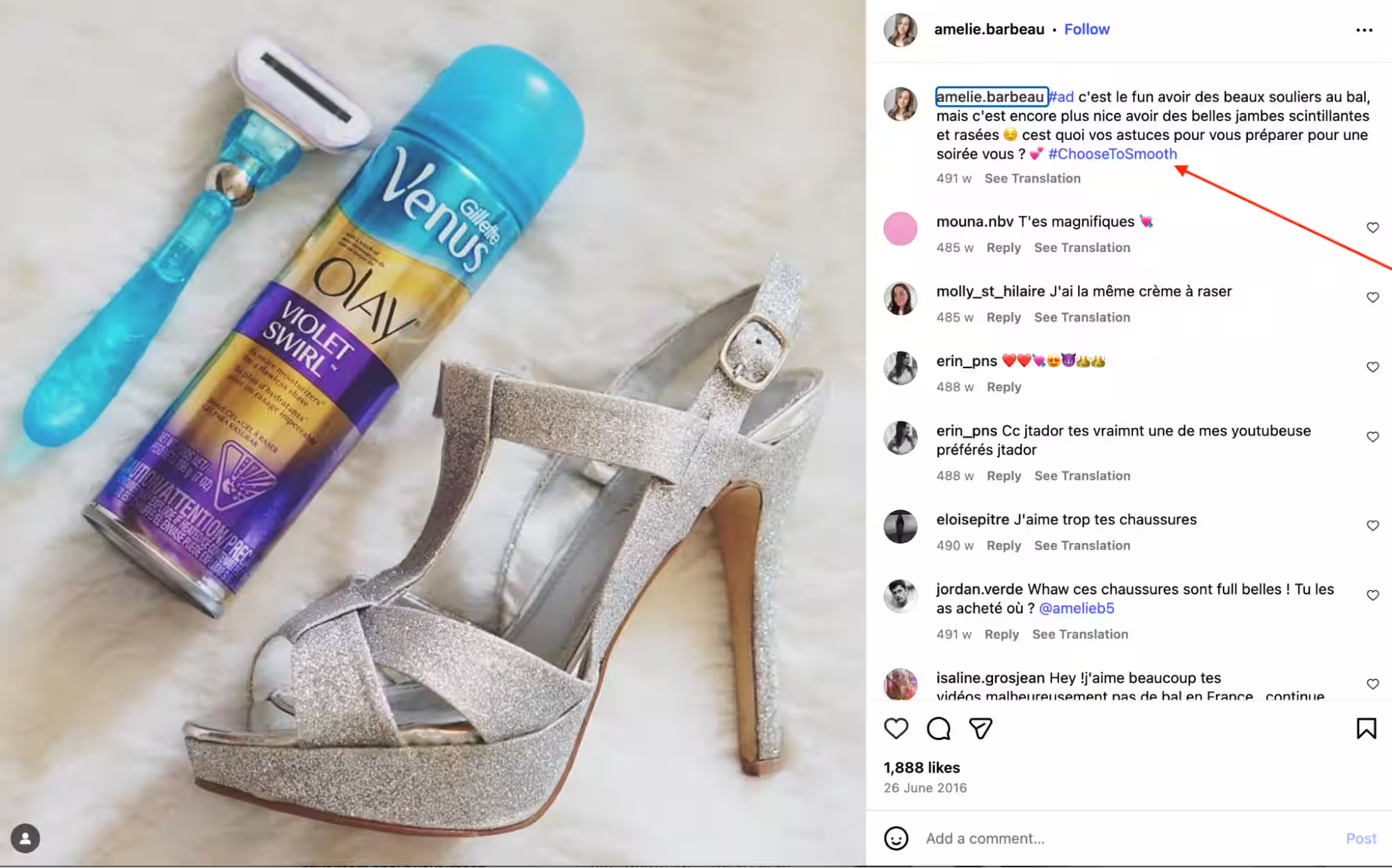
Take Gillette. They knew that another glossy TV ad wasn’t going to win over younger shoppers scrolling TikTok and Instagram at 1.5x speed, so they went straight to the people those shoppers actually trust: small beauty creators.
And to pull the content together, Gillette used a campaign tag (#ChooseToSmooth) so micro-creators’ posts, Reels, and Stories flowed into one discoverable stream.
[fs-toc-omit] Macro-influencers (100,000-1M followers)
Macro-influencers are the creators who’ve graduated from niche-famous to internet-famous.
They’re usually category authorities: beauty creators who own entire product categories, fitness coaches with loyal daily-check-in communities or home décor accounts people screen-shot obsessively.
Price: They typically charge anywhere from $1,000 to $10,000 per post, depending on the platform and scope.
Fenty Beauty, for example, consistently partners with macro beauty creators during major launches: people with 300k–800k followers who can show swatches on multiple skin tones and film high-production tutorials.

[fs-toc-omit] Mega influencers (1M+ followers)
Mega-influencers sit at the top of the influencer food chain: celebrities, household-name creators, and social giants whose reach is measured in millions.
A recent op-ed I read summarises their cultural influence perfectly: mega-influencers are the platform. They don’t answer to a newsroom, an editor, or an institution, which means the creator becomes the source and the distribution channel all at once.
Price: Expect to shell out anywhere from $5,000-$50,000 per post or per project depending on the celebrity.
Remember when Cristiano Ronaldo casually slid two Coca-Cola bottles out of frame at a press conference? A tiny gesture, barely two seconds long; and yet, Coca-Cola’s market value dipped by roughly $4 billion.
Ronaldo now earns an estimated $3.23 million for a SINGLE Instagram post, making him the highest-paid influencer on planet earth.
How to find and vet the ‘right’ influencers for your business?
Most brands look for influencers the way people shop for vacuums: they Google and hope the roundups aren't lying.
But in truth, you find the right creator by tracing where your customers already spend attention, then working backwards from the behaviour you want to influence.
[fs-toc-omit] 1. Start where the conversation already is
Before you pay for reach, look for people who are already talking about your category.
- Search hashtags and niche keywords: Go beyond #ad and #influencer. Try product-specific or problem-specific tags: #acneskincare, #smallapartmentdecor, #pcosfitness, #dyslexiatools. Do this across TikTok, Instagram, YouTube, and even Pinterest. And the names that keep popping up again and again—shortlist them.
- Listen in ‘weird’ places, not just the usual suspects: Reddit mods, Discord community leads, niche Facebook group admins, Substack writers—these are all influencers. The person running the ‘ADHD adults trying to cook’ Discord might move more air fryers than your favorite lifestyle vlogger.
🤓Expert advice: Don’t sleep on qualified creators. Ryan Beattie at UK SARMs told me that their highest-performing series came from science-led creators who actually taught; walking through recovery science, safe training practices, and product mechanics. That single shift delivered a 41% higher CTR than their previous influencer posts and a 3.1x ROAS across three drops, with zero spike in refunds, which is the real KPI for supplement brands.
Here are his words of wisdom:
“If a creator can teach clearly and responsibly, they can sell.”
[fs-toc-omit] 2. Use dedicated tools instead of spreadsheets
If you’re working with more than a handful of creators, you’ll lose your mind trying to manage it in Google Sheets alone.
- Use influencer platforms: Tools like Mini Social, Shopify Collabs, and GRIN help you search by niche, audience, and engagement, then track outreach and campaigns in one place.
- Dig into your own data: Look at who’s already tagging you, reviewing you, or sending you UGC. Your best nano and micro-influencers might already be loyal customers who have been screaming about you for free.
- Manage all that content in a system built to handle it: Use Dash to send creators a single upload link and have every file land in your content library automatically. One-click approvals, tidy folders, and built-in usage rights keep your team compliant, organised, and out of DM-purgatory.
Oh, and if you don’t have the patience to scroll TikTok for three hours ‘for work,’ we got you. We pulled together a database of 50 UK creators across skincare, tech, plus-size fashion, LGBTQIA+ spaces…basically every corner of the internet your buyers hang out in.
Filter by niche, grab their public contact details, and build your shortlist without getting lost in the algorithm.
📚Learn more: 20 influencer marketing tools to level-up your campaigns
[fs-toc-omit] 3. Treat customers like your creator pool
Following from above, some of your most credible influencers are the ones who already buy from you.
- Mine your customer base: Pull a list of repeat buyers and high-LTV customers, then cross-check against social handles. You’re looking for people who:
- Post about your category.
- Already share hauls, routines, or reviews.
- Match your brand’s vibe (visually and values-wise).
[fs-toc-omit] 4. Watch what works for your competitors
Your competitors have already done some of the expensive trial-and-error—use it, you know, without copying their homework.
- Do a quick competitor scan: Search your competitors’ brand names on TikTok, Instagram, YouTube, and Google. Who’s making unboxings, tutorials, ‘vs. videos,’ or hauls featuring them?
- Look for opportunity gaps: Maybe they’re over-indexed on beauty creators but ignoring dermatologists, or they’re big on TikTok but absent on YouTube. Your opportunity is often where they’re sleeping.
Your influencer vetting checklist
Here’s the checklist that keeps you from accidentally hiring someone who looks great on Reels but has an audience full of bots:
[fs-toc-omit] 1. Engagement and audience quality
Don’t be fooled by big follower numbers, look at who’s actually paying attention.
Ask:
- Is their engagement rate normal for their tier, or does it look inflated?
- Are the comments real humans, or does it read like a bot farm?
- Does their audience match your geography?
🚩Red flag test: If the comment section looks like ‘🔥🔥🔥 babe check DM,’ ABORT MISSION. Seriously though, a few weird comments are normal—but it’s the ratio that matters. If genuine questions and reactions are buried under bots, it’s a signal the audience quality might be off.
[fs-toc-omit] 2. Content style and brand fit
Does their world make sense with yours?
Ask:
- Does their visual style align with your brand?
- Does their tone match your customers’ tone?
- Would your product realistically fit into their routine, lifestyle, or niche conversation?
- Do they already talk about your category, or would your product drop feel random?
[fs-toc-omit] 3. Authenticity and follower credibility
Influence only works if the audience believes them.
Ask:
- Do they disclose sponsored content clearly, or does everything feel like a secret ad?
- Do they recommend products that make sense, or is it a new skincare routine every 48 hours?
- Have they built long-term credibility (expertise, personal story, actual experience) that your product can plug into?
- Is their follower growth steady or suspiciously spiky?
👀Quick test: Scroll back six months, and if their content personality shifts brands every week like fast fashion, that’s more inventory than influence.
[fs-toc-omit] 4. Professionalism and reliability
You’re not hiring a celebrity (at least not yet), you’re hiring a partner, so you and them need to act like business partners.
Ask:
- Do they reply promptly and professionally?
- Do they deliver content on time, based on previous brand collaborations?
- Do they understand briefs, or do they send unedited vertical videos shot in a dark room?
- Are they open to usage rights, whitelisting, or repurposing, if that’s important to you?
[fs-toc-omit] 5. Creative quality and visual consistency
A creator’s style should complement how your product needs to look: sharp lighting, clean frames, clear audio, and visuals that feel on-brand.
Once you start sourcing creators who produce genuinely high-quality content, you’ll want a system that can keep up. In Dash, you can compare assets side-by-side, tag the best ones, and keep everything organised for future campaigns instead of losing great content to a messy Drive folder.
[fs-toc-omit] 6. Value match
Not every creator needs to check all five ‘value’ boxes, but at least one of these should map to what your brand actually stands for.
Here are the questions that help you figure that out:
Connection (social value)
- Does the creator actually have a community, or just an audience?
- Do followers talk to them like a friend?
- Does your brand benefit from intimacy and trust (e.g., beauty, wellness, parenting)?
Fun (indulgent value)
- Does their content spark joy, humor, or escapism?
- Would your product benefit from being shown in a playful, entertaining way?
- Does this creator make people want to watch, even without an incentive?
Knowledge (epistemic value)
- Do they explain things well? Teach? Review? Compare?
- Are they known for expertise in your category?
- Would your product benefit from a tutorial or breakdown?
Usefulness (utilitarian value)
- Do they help people make decisions? (‘Here’s what to buy,’ ‘Here’s how to use it,’ etc.)
- Do they create roundups, checklists, hacks, or ‘must-haves’?
- Is your product something people shop for with logic?
Money (financial value)
- Are they good at driving conversions through codes or deals?
- Does their audience respond to promotions or limited drops?
- Is your brand comfortable with discount-driven acquisition?
Build your influencer marketing strategy in 7 steps (+ expert advice)
You've got a budget, you've got a list of creators, and you've got a product you believe in. And then you realise: what now? Do you just...email them? Do you negotiate like you're buying a car? Do you hire someone to manage it?
Most brands fumble through this part, which is why they either give up after one failed campaign or throw money at mega-influencers hoping something sticks.
Here's how to build an influencer program instead of just hoping a TikToker will save your quarter.
Step 1: Define what success means for your business
Everyone says they want ‘awareness and sales and brand love and community,’ which is just a fancy way of saying ‘everything.’
Pick one, maybe two goals.
Are you trying to get first-time customers in the door? Then you're hunting for creators who can tell a story that makes people feel like they're missing out—like Cafely did with the ‘Brew Your Heritage’ campaign.
They found micro-influencers from different cultural backgrounds and asked them to share their personal coffee rituals: how the drink connected to their identity, their family, their morning.
And it paid off: 62% increase in engagement, 35% lift in first-time orders (which held for six weeks), and 200,000+ organic views across TikTok and Instagram collectively.
So that’s the bar: a clear goal, the right creators, and a story only they can tell.
Once you know what you’re aiming at, everything else gets easier, including choosing where that story belongs.
Step 2: Choose your platform with data-backed decisions
Every platform can work, but that doesn’t mean every platform will work for your brand.
Here’s the lay of the land:
- Instagram is still the safest starting point for ecommerce: 90% of brands and 72% of marketers rank it as a top influencer channel, and 32% say it’s the easiest to work with. A 2 billion active user base and a format built on visual proof, it’s basically influencer-friendly infrastructure.
- YouTube is where people go when they want to learn before they buy: 58% of marketers already use it, and one in five say it delivers the highest ROI of any influencer platform. If your product benefits from deep dives, comparisons, tutorials, or ‘unpack my entire routine’ energy, YouTube is home base for you.
- Pinterest has become a shopper’s search engine: According to Adobe, one in five shoppers trust Pinterest’s results more than Google’s.
- And then, of course, there’s TikTok: The #TikTokMadeMeBuyIt tag has 24 million tagged posts, which is just the public record of how many wallets TikTok has emptied. If you sell something visual, demonstrable, or easy to show in motion; even a boring product category can get an adrenaline shot here.
Now let’s bring it back to practicality: how do you choose?
You don’t choose the platform you personally like, you choose the platform that matches three things:
- Where do my buyers spend time? Not where I hang out, but where my customers scroll at 11 p.m. when their guard is down.
- What kind of content does this platform reward? Quick hits? Deep dives? Visual proof? Tutorials? Community? Every platform has a ‘native language,’ and your product has to speak it.
- What’s the real goal of this campaign? Am I trying to be discovered? Teach? Convert? Build community? Generate reusable UGC? Because each platform has a different gear for each outcome.
Step 3: Set up your tech stack before you start DM-ing
If you're running a handful of creators (like, fewer than five), you might get away with Google Sheets and email. But the moment you scale, you'll succumb to what I lovingly call the ‘Frankenstack’: 17 tabs, 4 spreadsheets, 11 DMs, 6 missing video files, and exactly zero idea who owns which usage rights.
You need a stack that handles three things for you:
- Discovery and tracking: Tools like Mini Social, Modash, Aspire, Shopify Collabs, or GRIN help you find creators by niche, audience quality, and engagement; then keep your outreach, briefs, payments, and performance in one place.
- Analytics: Google Analytics 4 (GA4) and UTM links are still the cheapest, most reliable way to see who drives traffic and sales. Layer on a dashboard (Looker Studio, Whatagraph, or your ecommerce platform’s native analytics) once you're running multiple creators.
- Content management: This is where most teams fall apart; creators sending files to your DMs, your email, your intern’s email, WeTransfer links that expire, and a random Google Drive folder no one can find.
Enter: Dash.
Give creators a guest upload portal where they submit final content directly—they drop their content in, and your team gets an instant, centralised record.
You can also set usage rights and expiry dates, so you don’t end up accidentally running an ad with content you no longer have permission to use. (It happens more often than brands admit.)
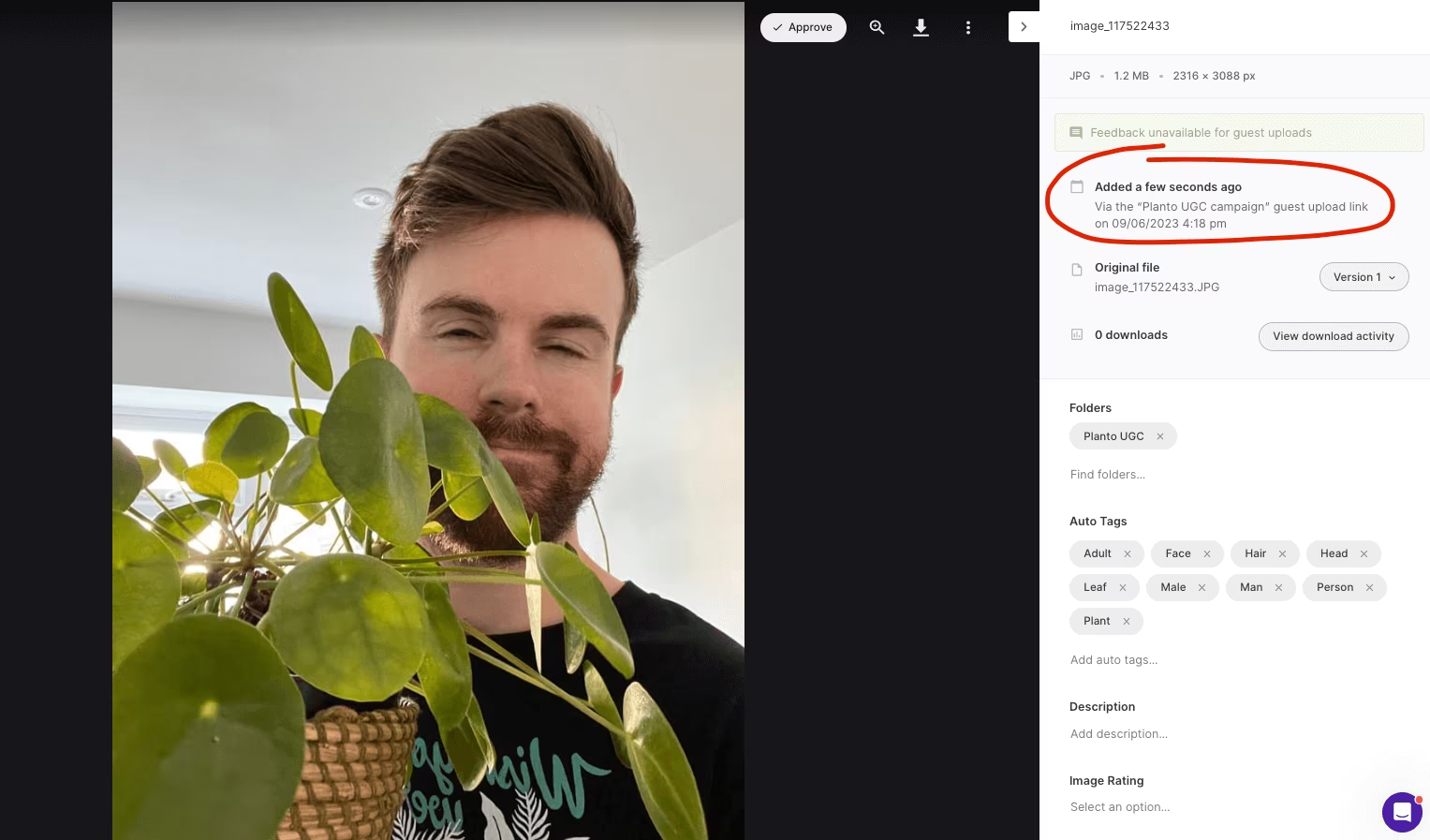
And with Dash’s new upload-approval flow, your team can accept or reject assets instantly; no awkward ‘we won’t be using this…’ pings, because creators aren’t notified of rejections.
Step 4: Reach out to your chosen creators
‘We love your content! Let’s collaborate!’
Creators can smell generic outreach the way dogs smell fear, and having been on the receiving end of the same dead-eyed messages a couple of times, I just assume they’re scams.
Ideally, you should be sending thoughtful pitches to 20 creators and getting a 50%+ response rate.
Dami Oladapo, a micro-influencer who's collaborated with Harrods Beauty, Superdrug, and Pot Noodle, breaks down what works:
✅Do this:
- Compliment their specific work: Not ‘we love your content’ but ‘I watched your recent [specific video], and the way you [specific thing] really stood out.’
- Introduce yourself and your brand properly: Include a link to your social profiles, and because influencers will check you for authenticity, make sure your LinkedIn and brand presence aren't dead or full of red flags. Remember, they're vetting you too.
- Be clear and specific about what you want: Outline the collaboration in the first message—what you're asking for, timeline, what you're offering.
- Reach out from a real account: Don't DM from a faceless brand account or a bot-looking profile. "I always ignore messages from faceless accounts," one influencer said. "They feel inauthentic." If you can't reach them via a real account, email is better.
Here's what a good pitch looks like:
‘Hi [Creator Name]! I've been following your work for a few months, specifically your recent [specific post/video]. The way you broke down [specific thing] really resonated with us because [reason that shows you understand their angle]. We make [product], and I think it would fit naturally into [specific type of content they make]. We'd love to send you a kit and chat about a potential collaboration. Here's our brand: [link]. Let me know if the timing works, no pressure either way! ☺️’
But remember, you can't really negotiate a good partnership if your product isn't actually good.
Happy V, a UTI supplement brand, learned this the hard way. COO Hans Graubard explains:
"The first step should involve experiencing the product firsthand. The speed at which influencer marketing reveals product value deficiencies becomes faster when the product fails to deliver any worth."
So before you even start pitching creators, make sure your product is actually solid, like Happy V, who did multiple product formulation tests and conducted customer service interviews before reaching out to anyone.
Graubard's final point nails it: "Influencers function as trust amplifiers, but their effectiveness depends on existing trust between brands and their audience."
Step 5: Negotiate the terms
Once a creator says yes, you then need to agree on what you're doing. Here's what you need to lock down:
- Deliverables: How many posts? Which platforms? What format (Reel? TikTok? YouTube video? Stories)? What’s the timeline?
- Usage rights: Can you repost their content on your channels? Can you use it in paid ads? Can you repurpose it months later? For how long?
- Exclusivity: Can they work with your competitors during the campaign? After? For how long? Some creators will want to stay exclusive; others will want freedom; you have to know which one you need.
- Approval process: Do you get to approve content before they post, or are you trusting them to nail the brief? If there are approvals, how many rounds of revision will there be? This matters because it changes the timeline and the workload.
- Payment: When do they get paid? Half upfront, half on delivery; or full on delivery? Or are you going for net 30?
💡Pro tip: If you don’t want to reinvent the legal wheel, ISBA’s Influencer Contract Templates is a great starting point. .
Step 6: Brief and collaborate
The great paradox of influencer marketing is that you want creators to be authentic, but you also need them to represent your brand accurately.
The solution is a brief that gives enough guardrails to stay on-brand while leaving room for them to actually be themselves.
A good brief generally includes:
- What you want them to communicate (but not the exact words): ‘This coffee is ethically sourced and encourages intentional morning rituals’ is different from ‘Buy our coffee now.’
- How it should fit their content: ‘We love your slow-morning aesthetic, so we'd love to see how this fits into your morning routine’ is more useful than ‘Make a promotional post about our coffee.’
- What not to do: ‘Please don't use our product in a gym context’ or ‘We'd prefer this not to be a pure product shot, we want to see it in your life.’
- Creative direction (lightly): If you need a specific angle, mention it, but try to phrase it as a starting point, not a mandate. ‘We've seen great performance with before/afters, but we also trust your instinct on what resonates with your audience.’
Then, and I know this is the hard part, let them do their thing.
👉Grab your free influencer brief template so you can get to the fun stuff quicker.
Step 7: Measure, learn, and double down on what works
The biggest influencer win for the successful self-tanning ecommerce brand 3VERYBODY came from a creator they didn’t even pay: HopeScope with a whopping 5.8M YouTube subscribers.
She tried their Life Proof Tan Spray on camera and called it “the most even tan I think I’ve ever had.” That single, unsolicited review triggered a 40% traffic spike and sold out inventory for three weeks.
Emmy Bre, owner of the brand, told me how she sent HopScope a kit because she’d “watched her struggle with streaky tanners in previous videos.”
“I knew our sweat-proof, non-sticky formula would solve her actual problem. We grew our community 300% year-over-year using zero paid ads, just authentic partnerships where creators genuinely loved the product.”
Emmy successfully and strategically ‘seeded’ her product by recognising a pattern where her product would be a natural fit.
So how do you replicate that kind of win? You measure your numbers like a hawk.
For Emmy, the system is simple: UTM parameters in every bio link, Shopify’s built-in analytics to spot which creator codes convert, and good old-fashioned comment-section sleuthing.
She watches for the signals that matter: repeat purchases, viewers tagging friends, people asking ‘where do I buy this?’—because those are the metrics that survive once the views stop rolling in.
Set up tracking before the campaign starts:
- Use unique promotion codes or links for each creator: For instance, ‘Use code HOPESCOPE’ lets you know which orders came directly from her recommendation; and Shopify tracks this automatically as do most other ecommerce platforms.
- UTM parameters on any links they share: Like (utm_source=hopescope, utm_medium=influencer, utm_campaign=tanspray) so Google Analytics shows you the exact traffic and behavior from that creator.
- Creator-specific discount codes: A 2025 benchmarking report by Seguno found that unique discount codes do double duty: they give brands clean attribution and prevent code-leakage, and they create a sense of exclusivity for the buyer; which is exactly the psychological nudge that makes influencer-driven purchases spike.
All this talk about subscribers and big numbers must have you wondering…
What’s the ROI of influencer marketing?
ROI depends on what you call ‘success’; so, a small DTC store might call a campaign successful if it delivers 40 new customers, but a giant marketplace might measure lift in branded search or month-over-month retention.
Before we look at dollar returns, tie your success to the metric that matters for your stage:
- Awareness: Impressions, reach, branded search lift.
- Engagement: Comments, saves, shares, click-through rate.
- Sales: Conversions, cost per acquisition (CAC), repeat purchase rate.
- Content value: UGC volume, repurposable assets, creative testing power.
- Community impact: Email signups, Discord/IG Close Friends joins, retention.
But we do have industry benchmarks to guide us:
- A well-run influencer program typically returns $5–$6 for every $1 spent.
- Tomoson’s research found the top performers clearing $20 return per $1, and 70% of businesses at least double their money.
And underneath all of this is a very boring but very necessary formula:
ROI = (Return − Investment) / Investment × 100
🫢Don’t forget! Your influencer marketing ROI has two layers:
- Money you can literally see: Tracked sales, affiliate payouts, first-purchase conversions, returning customers tied to a creator code.
- Money you’ll see later: Smarter ad creative (because you now have UGC to test), cheaper CPAs from repurposed creator videos, higher branded search, and communities that stick around long after the campaign ends.
So aim for the full picture: the dollars today and the momentum tomorrow.
Pick better creators, manage better content
Strip everything else away and influencer marketing is simple: find the people your buyers trust and build a system that turns their content into long-term value.
But once you reel in the content, put it somewhere your future self will thank you for. Dash lets you store every asset your creators send. You can approve uploads in one click, reject the ones that don’t fit, organise everything into clean folders, track usage rights and expiry dates, and find what you need when you need it.
Start your free trial and bid adieu to FINALcreator_file3.png forever.
Influencer marketing strategy FAQs
[fs-toc-omit] What is the best strategy for influencer marketing?
The best strategy is the one that mirrors how your target audience already behaves.
Find the creators they listen to, give those creators the context they need to make great content, and measure success based on influence (reach x trust).
In practice: start with nano and micro creators, diversify formats, repurpose high-performing content everywhere, and invest in long-term brand partnerships.
[fs-toc-omit] How do big brands like Zara approach influencer strategy?
Zara’s strategy relies on culture spillover, where they seed new collections to a massive roster of micro- and macro-creators, stylists, editors, and aesthetic tastemakers; the kind of people whose OOTDs, Reels, mirror selfies, and street-style clips naturally end up on TikTok, Pinterest, and Instagram.
As of writing, the hashtag #zarawoman has 4M tagged posts on Instagram.
[fs-toc-omit] What is the trend in influencer marketing in 2026?
There are three big shifts defining influencer marketing in 2025 and beyond, according to HypeAuditor’s State of Influencer Marketing report:
- Platforms are moving toward paid, ad-free models: Meta and TikTok are testing subscription-based, ad-free experiences in Europe.
- Social commerce is on the rise: TikTok Shop, Instagram Checkout, and YouTube Shopping mean creators can now take a customer from ‘wow I love this’ to purchase without leaving the app.
- AI is everywhere (for better or worse): Discovery, personalisation, content repurposing, and performance forecasting are now heavily AI-assisted.
[fs-toc-omit] How do brands choose influencers?
They look for creators whose audience matches their buyer, whose content naturally fits the product, and whose credibility won’t break under a sponsored tag.
They check engagement quality, tone, niche relevance, professionalism, follower authenticity, and whether the creator delivers one of the five value types (connection, fun, knowledge, usefulness, or money).
[fs-toc-omit] How to stay compliant while doing influencer marketing?
Authenticity builds trust but compliance protects everyone, so you can’t skip it, and you definitely can’t pretend you didn’t know.
The U.K., in general, is a lot stricter than the U.S.'s Federal Trade Commission (FTC)—whose rules, by the way, apply to you if you choose to work with American influencers.
Make sure you and your roster of influencers are deeply familiar with these rules; and maybe even include them in the brief!
- ‘Gifted’ still counts as advertising and creators must disclose it: “Even if the brand just gives the influencer a product for free, and they choose to post, the relationship must be made clear.”—The Competition and Markets Authority (CMA).
- ‘#Gifted’ alone is not acceptable: The Advertising Standards Authority (ASA) and Committee of Advertising Practice (CAP) have ruled repeatedly that tags like #gifted, #PRhaul, or ‘Thanks @brand’ are not sufficient; it has to be ‘Ad’ or ‘Advert,’ clearly shown.
- No unsubstantiated claims, especially concerning health, wellness, and beauty: CAP Code Section 3 is brutal on:
- “Cures”
- “Treats”
- “Prevents”
- “Clinically proven” (without evidence)
- Before/after claims that imply medical results
- Both the brand and the influencer are liable: If a post counts as a marketing communication (meaning the influencer received a benefit and the brand had any degree of editorial control), the CAP Code applies to both parties. If the disclosure is unclear, missing, or misleading, the ASA will rule against the brand and the creator.
This is where a digital asset management (DAM) tool like Dash becomes your legal safety net. One of our very happy customers, Kim Carrasco, Chief Cheerleading Officer
at RevAir explained it best:
“We always want to honour our influencers and affiliates. Without a tool like Dash, it’s difficult to monitor that one piece of content is licensed for six months while another is licensed indefinitely. We can also ensure it’s no longer available for download in any of our portals, so we don’t have to worry.”
📝Recommended reading: Here are some helpful resources we recommend you bookmark:
- CPA/CMA’s guide to making clear that ads are ads.
- CMA’s guidance on being open and honest when endorsing products/services online.
- ASA/CPA’s influencer’s cheat sheet to declaring ads on social media.
.avif)
Brinda Gulati is a fractional content marketer and former thrift store owner who writes, reads, and speaks commerce and SaaS. She has two degrees in Creative Writing from the University of Warwick, and believes that above all, stories are a deeply human endeavour.