
An online homeware brand sells products that, traditionally, people have been able to test out in person before they buy. And for DTC brands, that sensory gap can be a real conversion killer.
A Provoke Insights study found that online reviews are the number one purchase influence in large-ticket home items like furniture—ranking above family, friends, and advertising. This means you need to make your user-generated content (UGC) work double-duty for you. 💪
And if you’re short on inspiration, I’ve rounded up a selection of 10 homeware brands who know how to survive and sell in the dog-eat-dog world of social commerce.
Why UGC is important for homeware brands
For homeware brands, user-generated content is a vital signal of social proof. Think: five-star reviews, move-in vlogs, apartment tours, unboxings, styling flatlays, before-and-after renovations, and so on.
In essence, UGC is any content where a customer is the one holding the camera or the keyboard.
And unlike UGC for fashion or beauty, where a model can wear the product and you get the rough idea, homeware needs more context.
You can’t sit on a sofa through a screen, so your shoppers are actively looking for social proof as a substitute for physical proof. They want to see the scale in a real room, the color in normal lighting and the fabric after a few months of use. They're looking for evidence that the piece, in addition to photographing well, also lives well. Without it, it’s hard for them to build trust for your brand. That’s why user-generated content is your best friend.
10 UGC examples from homeware brands
From luxury bedding to viral TikTok lamps, heritage watering cans to paint swatches, UGC works across the entire homeware spectrum.
Here are 10 brands proving it.
1. Piglet in Bed builds UGC around a distinct voice on TikTok
Piglet in Bed is a luxury linen bedding retailer. They started collaborating with creators, getting their products into real homes, with real aesthetics, that a styled photoshoot just can't replicate.
"We need lots of home interior shots—but we don't want it to be in the same home all the time," Rhiannon shares with us.
Head of Brand, Rhiannon Johns, has grown the brand's account to 100K followers by leaning on content that is ‘comforting to watch’: think, funny memes, baking recipes, and towel-care tutorials.
That strategy has worked so well that creators are now discovering Piglet in Bed organically and making content without being prompted.
Take this TikTok from @atypicelle, which has racked up 1.9 million views, completely unsponsored:
2. MADE.com treats reviews like data
MADE.com, a UK-born, design-led furniture and homeware retailer known for bold colours, sculptural shapes, and mid-century silhouettes. At 1.3 million followers on Instagram, they’re one of the bigger players on this list.
Scroll through their Instagram feed and you’ll see customer homes, tagged posts, screenshots of comments layered over product shots.
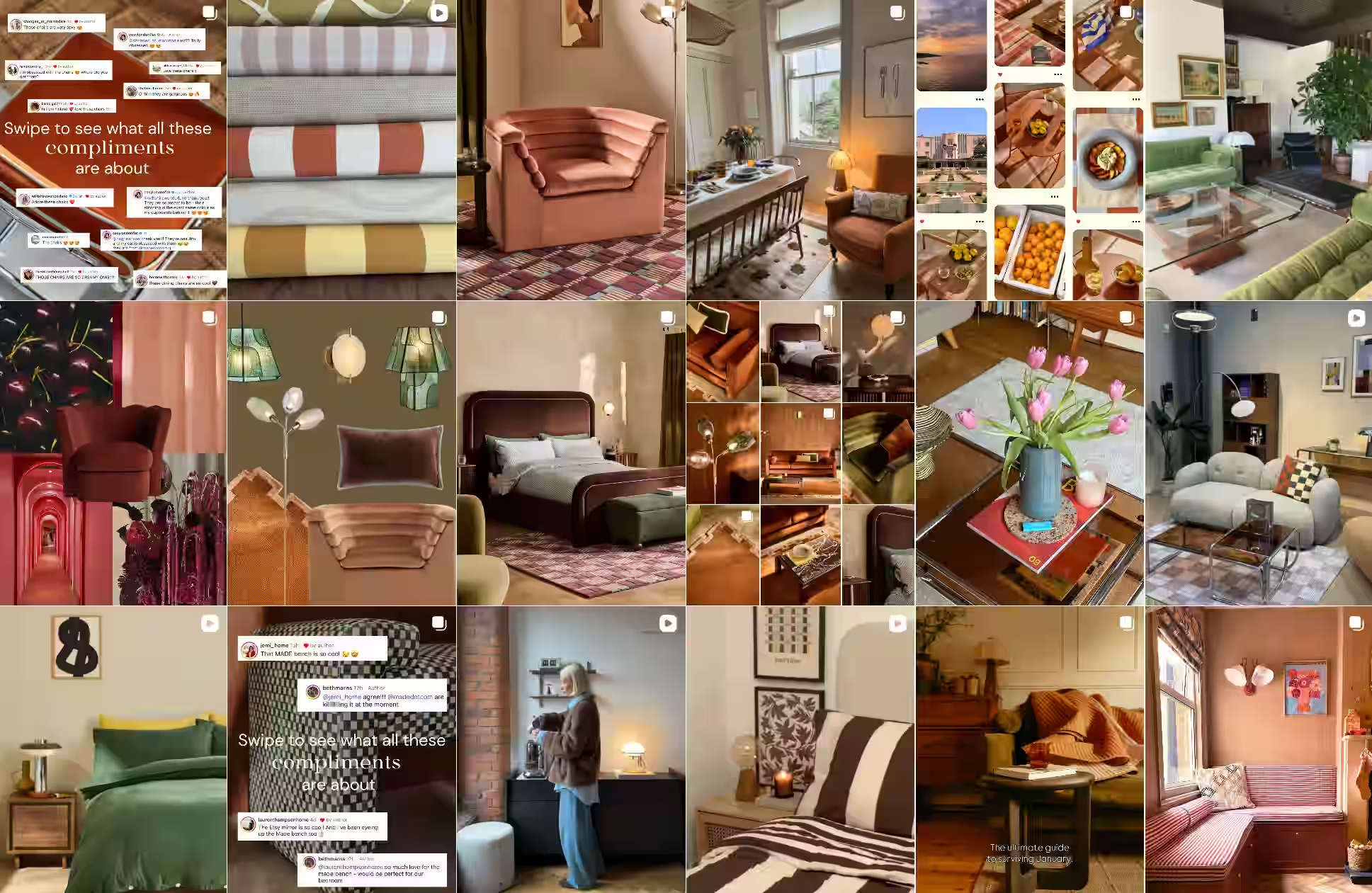
They even stack multiple compliments onto a single image, then use the carousel to show the exact pieces people are talking about.
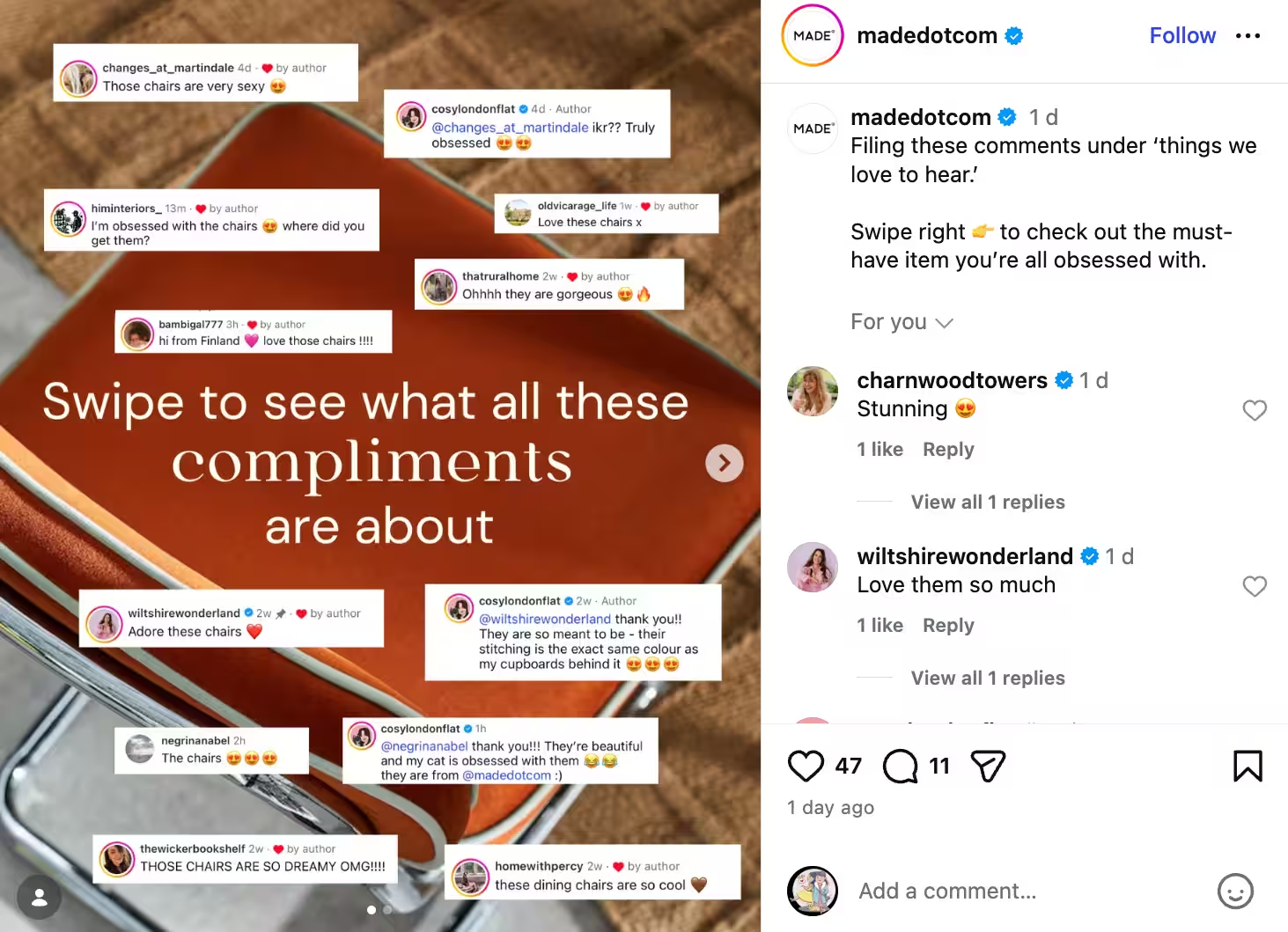
This is perhaps the most natural way to collapse the distance between social proof and product discovery in one post.
✨Get inspired: Open your last 10 posts on both Instagram and TikTok. Which product is getting the same compliment over and over? Screenshot those comments, drop them onto the product image, and build a carousel to redistribute proof that already exists.
3. RJ Living embeds glowing reviews in its product pages
RJ Living is an Australian furniture brand that sells contemporary, design-led pieces like coffee tables, sofas, storage, and dining furniture—beautiful pieces, yes, but expensive and hard to return on a whim.
Their COO, Nathan Oakley, is well aware of that challenge: “When buying furniture online it’s really hard to understand how it looks in your space. It’s not enough to just have a product image against a white backdrop—that won’t do much for a lot of people.”
So RJ Living tackles that hesitation directly on the product page.
Take the Edge Round Coffee Table, for example. The product has 77 reviews at 4.8/5, with customer-uploaded images of the piece living in actual homes. By the time a shopper scrolls to the add-to-cart button, they've already lived with it in a dozen different spaces.
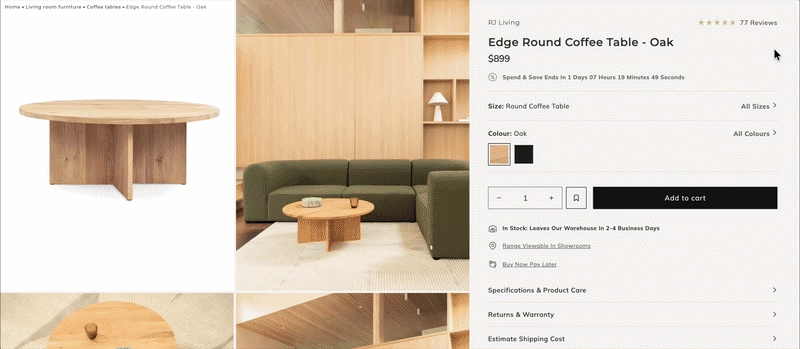
✨Get inspired: According to PowerReviews, there's a 168% conversion lift when shoppers interact with customer-submitted images on a product page. Take a leaf from RJ Living’s digital book and get a sneak peek into how they organise their massive content library in Dash.
4. SYPS partners with micro-influencers on TikTok
SYPS—the brand behind the HydraLamp—is currently riding the wave of a #TikTokMadeMeBuyIt moment, helped along by a recent appearance on Amazon Prime’s Buy It Now.
When I caught up with Daniel Victor, Founder & CEO, over email, he was clear that they don’t just want any home—they want the right home.
“Branding and tone is important, so ensuring that the home your product is being used in matches the vibe you want to sell to your customers is essential," Daniel tells me. "For instance, a luxury good shouldn't be used in a UGC video in a home that isn't, well, luxurious."
Take this video from creator @findsworththebuy—it’s the perfect vibe-match: a clean, aspirational bedside setup that makes the lamp look like a design piece first and a gadget second.
✨Get inspired: Not sure where to start with creator outreach? We've compiled a database of 50 UK content creators across a range of niches—find one whose home already looks like your brand.
5. Haws builds a UGC flywheel with the hashtag #HawsInTheWild
Haws is the world’s oldest watering can manufacturer, hand-crafting cans in the UK since 1883, but their Instagram feed feels more like a modern lifestyle magazine.
They own #HawsInTheWild: a branded hashtag that invites customers to share their cans out in the world, in their homes, gardens and indoor jungles. Haws then reposts the best of it, crediting the original creator and folding their space into the brand story.
Look at this post featuring @my_greener_home's plant-filled apartment—a floor-to-ceiling indoor jungle that makes the Fazeley Flow watering can look less like a garden tool and more like a design object that belongs there. Haws didn't stage that shot, but they did have the good sense to share it.
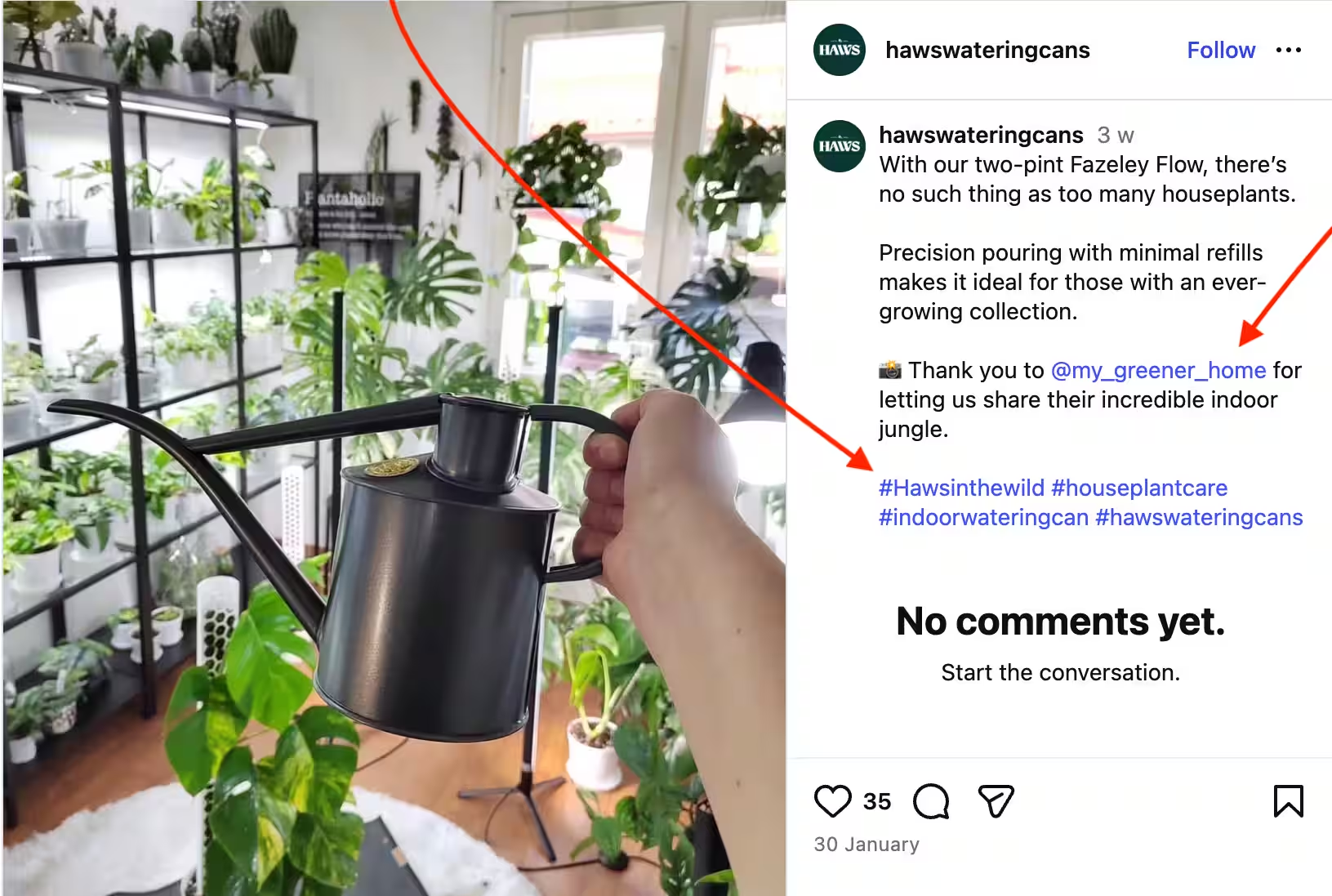
✨Get inspired: Create a branded hashtag that reflects how your product is used, then commit to resharing customer posts consistently—especially those that show the product in action. Over time, the tag becomes a living gallery of proof, and to manage that gallery, take a cue from Haws and use a single place for your brand creatives in a digital asset management tool (DAM) like Dash.
6. Petra Palumbo embeds customer videos on-site with ‘Styled By You’
Petra Palumbo sells decorative tiles, wallpaper, and homeware—products where the entire appeal is in how they transform a space.
I adore their grid of moving customer videos: their ‘Styled By You’ section takes the customer videos already being created on social media, pulls them onto the website, and lets them do conversion work around the clock.
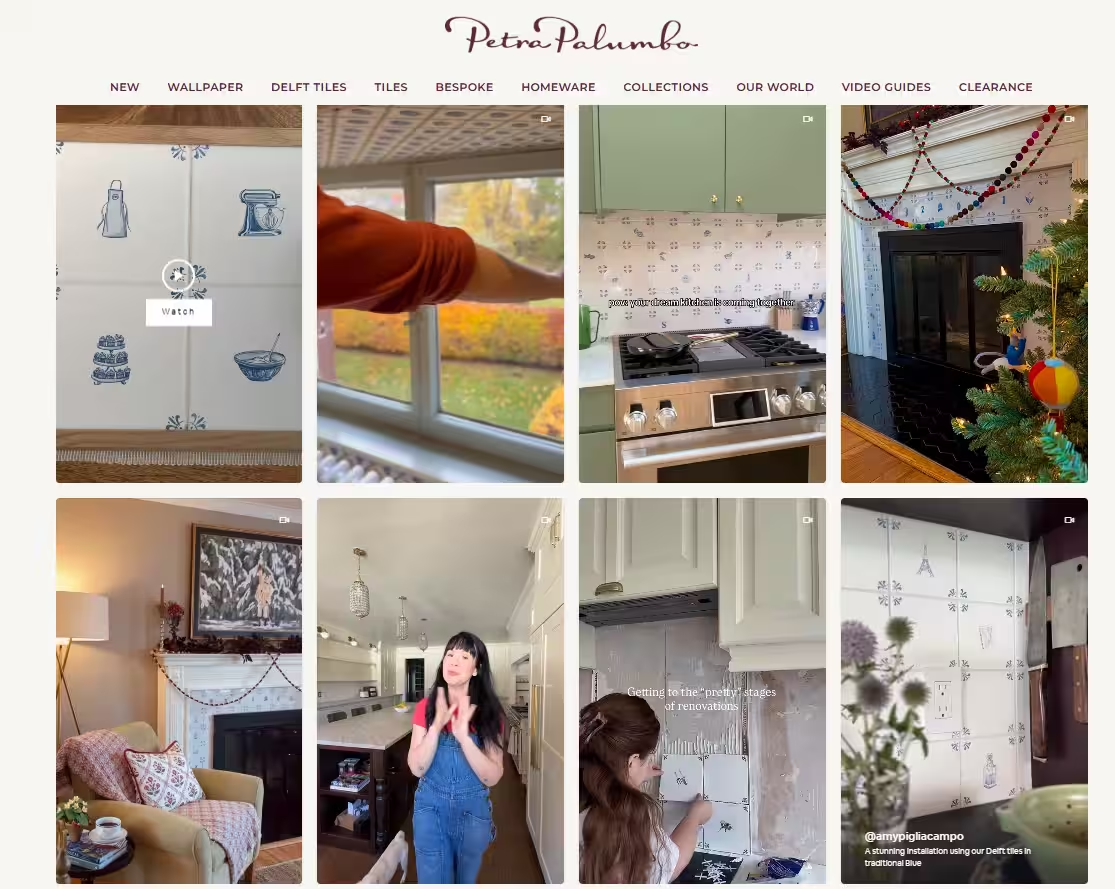
The page is a living lookbook built entirely by customers, sitting right where a hesitant shopper needs it most: on the website, one scroll away from the add-to-cart button.
✨Get inspired: The hardest part of a ‘Styled By You’ page isn't coming up with the idea, it's the moment a customer wants to send you something. Because then what? They DM you on Instagram, you screenshot it, someone emails it to someone else, and it ends up in a folder called ‘UGC misc.’ that nobody opens.
Dash's guest upload links cut through all of that: one public URL, no account needed, content goes straight into your library where you can tag, organise, and use it. Send it in your post-purchase email, pin it to your Instagram bio, add it to your packaging—wherever your happiest customers are, that link should be there too.
7. Late Afternoon lets organic celebrity mentions do the heavy lifting
Late Afternoon sells colourful, design-led tableware; the kind of thing that ends up in photoshoots without anyone asking—which is exactly what happened when style maven @iamlaurajackson was photographed eating eggs with their Burgundy Teaspoons and Knife & Fork set.
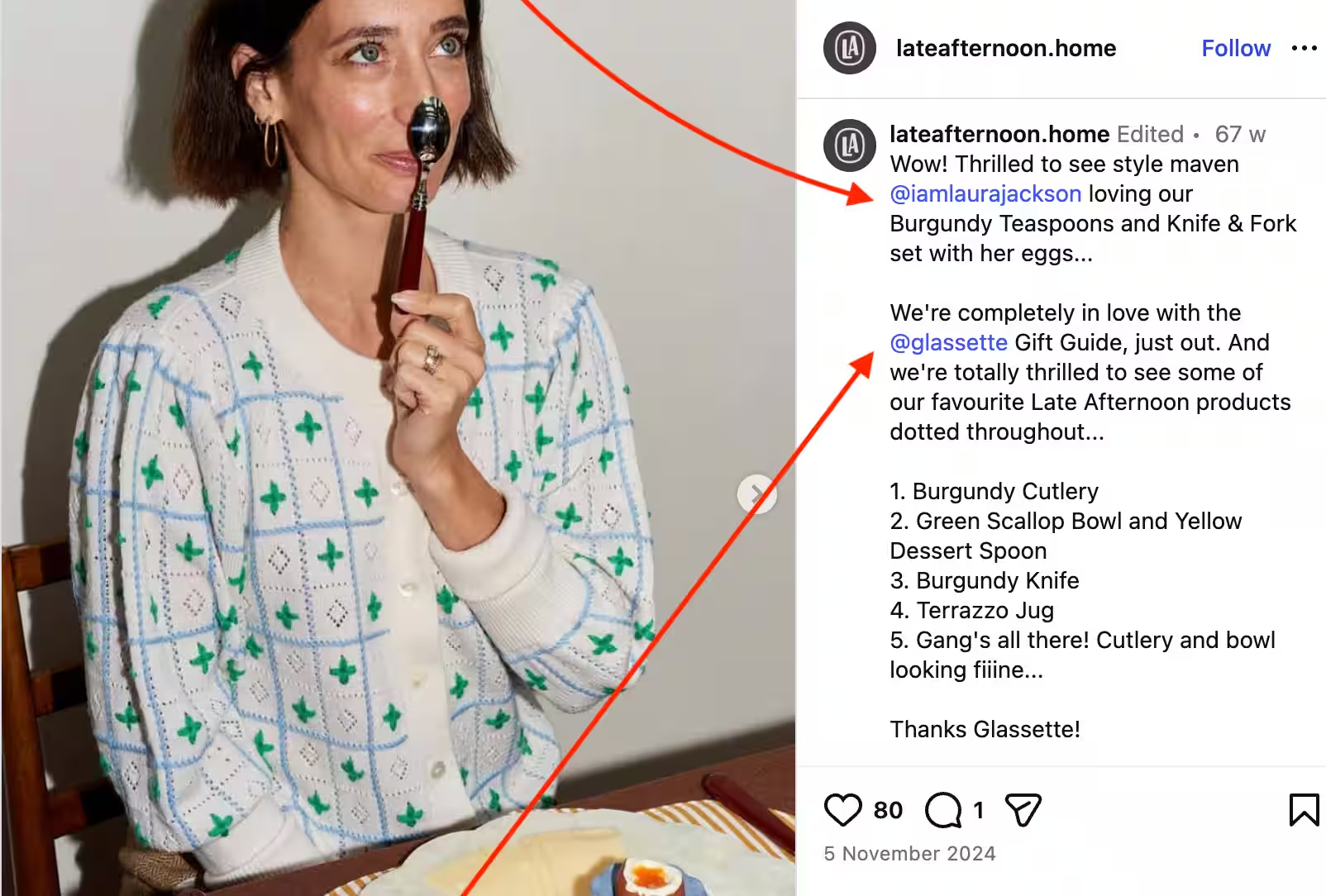
Most brands would have seen Laura Jackson using their cutlery over eggs and thought: nice, maybe hit repost.
But what I like here is how Late Afternoon took a cultural moment and squeezed every drop out of it—the celebrity mention, the gift guide feature in Glassette, and the specific product callouts—all in one post, all pointing back to the same thing.
✨Get inspired: Don’t be afraid to stack your wins! If a creator mentions you in a guide or another publication, make a post out of it. Layering multiple sources of social proof in one post builds a trust premium that’s hard to ignore.
8. COAT builds trust at scale with #CoatPaint
It’s hard to ignore COAT, especially when a brand manages to sit in Elle Decoration, jacks London Fashion Week with its recyclable paint tins, and builds 10,500+ organic tags under #CoatPaint on Instagram.
And unlike a branded hashtag that a marketing team dreamed up and actively promotes, #CoatPaint took off on its own—a community of home-proud customers sharing their real-world results without being asked.
I find it interesting that #CoatPaint isn’t necessarily a hyper-engineered branded slogan, it’s a phrase that also refers to a coat of paint in general. And yet, scroll through it and it’s overwhelmingly COAT.
Take this post from @sandra.ashtonn, who shared her ‘most asked question’ about her West-facing room. She explains why she chose PAMPAS, how the light shifts through the day, and why it reads warm without going muddy:
At this point, COAT has effectively turned its Instagram tag into a digital swatch book where real people and real homes do the selling for them.
✨Get inspired: Encourage your community to highlight problem solvers in their content. Sandra’s post is a solution to a common problem with paint decisions—lighting. Find and feature the UGC that helps other customers solve their own design dilemmas.
9. Emma Bridgewater shows up in memes it never asked or paid for
Emma Bridgewater has been making spongeware and polka dot pottery in Stoke-on-Trent since 1985.
They have just under 20K followers on TikTok, which is modest by viral standards, but more than enough to drive serious engagement. The brand is so deeply embedded in British domestic life that it shows up in UGC it had nothing to do with.
A creator makes a workplace meme: "when there is only one nice mug at work," and notice how the comments don't say nice mug—they say Emma Bridgewater.
That’s what I find most compelling, because this TikTok is neither a paid collaboration nor a tagged post. Heck, it’s not even framed as a product video—it’s a joke about office politics of all things. And yet the mug is recognisable enough that viewers clock it instantly and name the brand without being prompted. Another user comments: “If they touch my Emma bridgwater polka it’s game over 😂”
✨Get inspired: Emma Bridgewater's polka dots are so distinctive that a stranger can identify the brand from a three-second mug shot in a workplace meme. That kind of recognition comes from decades of design consistency. If your product disappeared from its packaging, would anyone still know it was yours? Freelance photographer, Toby Lamborn, shows you how to take great product photographs so that your products don’t fade into the abyss.
10. Rose & Grey makes volume visible
Rose & Grey is a UK homeware retailer selling colourful lighting, furniture and accessories—pieces that are neither cheap, nor impulse buys.
They have a dedicated customer reviews website page where the first thing you see is a 4.8 out of 5 rating based on more than 2,200 verified reviews. I love that it’s clearly marked as an independent service rating, and the platform—Feefo—is named. That small detail signals that the score isn’t self-published or selectively displayed.

Scroll further down the same page and you’re brought straight into their Instagram feed. You can see snapshots of real interiors shared by customers, watch short videos, and even save them to Pinterest without leaving the site.
The shift from star ratings to lived-in spaces happens naturally, without making the shopper start over somewhere else.
.avif)
✨Get inspired: Don’t want to create a reviews page from scratch? Pull in reviews straight onto your product pages instead. If you're on Shopify, Dash's integration lets you pull approved customer photos, review screenshots, and UGC straight into your Shopify product listings without re-uploading them manually—meaning the proof shows up exactly where a hesitant shopper needs it most.
Your UGC deserves a permanent home
You've seen 10 brands doing UGC well, but it’s hard to really make use of your creative if you’re not managing it properly.
So what do brands like RJ Living, Haws, and COAT truly have in common? Their backend is a well-oiled machine powered by a DAM tool: Dash.
Dash gives you one searchable library for every customer photo, creator video, and review screenshot, where you can tag by product, room type, campaign, or usage rights.
That’s one of the reason why COAT’s Abi Moody is a very happy Dash customer:
“The searchability in Dash has been a game changer for us. It’s my favourite feature. It helps spark new ideas—especially since we have so much content, it’s easy to forget what’s available. Being able to dive into these little rabbit holes and discover things we didn’t even know we had is incredibly useful.”
Your UGC is already there, Dash just makes sure you can find it. Get started with a 14-day free trial, no credit card needed.
UGC for homeware brands FAQs
[fs-toc-omit] How do I get UGC content for my brand?
Ask for it—that's genuinely half the battle. Most brands sit back and hope customers post; the ones with great UGC send a post-delivery email, add a nudge to their packaging, and make it easy to share.
A branded hashtag helps too, but you might be sitting on a goldmine of UGC already without any idea of how to search for it—this guide tells you how to deploy your UGC effectively.
[fs-toc-omit] Do brands pay for UGC?
Sometimes, yes. Creator-produced UGC, where you brief someone to make content that looks organic, is increasingly common, and creators charge for it.
[fs-toc-omit] Is UGC just for big brands?
Not at all! Some of the most effective UGC strategies in this article belong to brands you've probably never heard of: a 140-year-old watering can manufacturer, a tile brand, a lamp that went viral on TikTok.
UGC levels the playing field precisely because it doesn't need a big production budget.
.avif)
Brinda Gulati is a fractional content marketer and former thrift store owner who writes, reads, and speaks commerce and SaaS. She has two degrees in Creative Writing from the University of Warwick, and believes that above all, stories are a deeply human endeavour.