Make it and they will come. Right?
If only it were that easy. In a crowded marketplace, it’s not enough to be making great products. You also need a killer ecommerce marketing strategy to build brand awareness, turn site visitors into loyal customers, and keep them coming back for more.
In this article, we’ll cover 20 proven tactics any ecommerce marketer can use right now to create an effective ecommerce marketing plan and grow their business.
What’s changing in ecommerce in 2026 (and why this matters)
Ecommerce isn’t static. The way people discover, research, and buy products is changing fast in 2026. Brands are facing higher acquisition costs, an increasingly crowded digital marketplace, and more selective shoppers - which is pushing marketers to rethink how they grow.
According to our ecommerce experts, we’re seeing a few clear shifts:
- Greater use of AI to personalise marketing and content
- A stronger focus on retention and lifetime value over pure acquisition
- A move towards owned customer relationships (like email, loyalty, and communities) instead of relying solely on rented platforms like paid social.
- At the same time, shoppers expect better experiences — clearer product information, stronger social proof, and more relevant messaging at every stage of the journey.
All of this means ecommerce marketing strategies in 2026 need to be more intentional, more customer-centric, and better connected across channels. The tactics that follow should help you do just that.
The key ecommerce buyer stages (and why they matter)
It’s rare that someone will stumble across your website for the first time and buy your products straight away. Most shoppers don’t work like that. They need to take time to trust your brand and do their own research before parting with their hard-earned cash.
A great ecommerce marketing strategy should be designed to reflect how people actually shop online. Here’s the 4 key ecommerce buyer and consideration stages a potential shopper goes through:
- Awareness: At this point, a prospect is ‘cold’ as they’ve never heard of your products or brand. The goal of marketing activity at this point is to find the right cold audiences, pique their interest and start to have them remember your brand.
- Consideration: You’re now no longer a stranger to a prospect. They know who you are and are starting to consider purchasing from you. However, there’ll still be blockers you need to help them overcome, like a lack of trust in your brand or objections to price.
- Check-out: The holy grail any DTC brand strives for! At this point a prospect has their credit card in hand and is about to become a prospective customer. But your work isn’t done. Here you’ll want to consider your check-out process and whether you might be leaving extra money on the table through lack of product bundles and upselling (we’ll get to that in a bit).
- Loyalty and retention: Here, a customer has become a fan of your brand and starts to tell others about it. As long as they continue to trust you, and feel their loyalty is rewarded in some way, they’ll continue to regularly buy from you.
This is where you’ll see some blogs talk about the ‘ecommerce funnel’. But a funnel implies buyers move through the conversion funnel only to drop out the other end once they’ve bought an item.
It’s inevitable that’ll be the case for the majority of your shoppers: they’ll order something never to be seen again. But you should devote a portion of your marketing effort into boosting customer retention and repeat purchases.
So instead, think of an online shopper’s journey as a forever-repeating cycle. Here’s how the 4 key ecommerce stages work together:

21 real-life ecommerce marketing strategies you can try right now
Now we’ve got the customer lifecycle covered, let’s get to the ecommerce marketing strategies and tactics you can use to boost your online sales. Each of these have been taken from real-life DTC brands just like yours.
1. Target new audiences with ecommerce advertising
Running cold ecommerce advertising campaigns can be an effective way for your DTC brand to get in front of your target market and generate ecommerce sales quickly.
As long as you’re clear on who your ideal customer is, you can use advertising platforms like TikTok, Facebook and Instagram to build new audiences. Just make sure you’ve set up the relevant tracking pixels on your site so you’re able to measure success.
Once you’ve created your audience and tracking, you’ll next want to make your ad assets. As this will most likely be the first time a potential shopper has ever heard of you, be sure to include something attention-grabbing to stop them mid-scroll.
Good news - you don’t need to spend all your marketing budget creating slick and polished ad graphics. Take this example from supplement brand, SULT. They’ve taken a screenshot of a customer’s daily run to emphasise the benefits that their product can offer to people doing fitness.
.avif)
One important thing to note is not to rely on one ‘winning ad’ — build creative diversity
As ecommerce expert Ian put it:
“Creative diversity ... It’s becoming essential to every D2C paid strategy, as long as the testing is set up correctly. I also think more of a full funnel approach to creative is needed to scale on platforms like Meta now, and tapping into creative range instead of targeting will have strong payoff if done well.”
For example, brands like Percival run a mix of creatives designed for different stages of the buyer journey — from scroll-stopping, brand-led ads for cold audiences through to product-led and social proof-driven ads for warmer retargeting. If you want more practical guidance on setting this up, check out Ian’s ecommerce advertising post.
💡 Want more where that came from? Check out our essential ecommerce advertisting strategies.
2. Improve your product photography and videos
The importance of your product visuals cannot be understated. They’re the foundation on which you can build the rest of your visual marketing strategy. Your product photography and videos should be clear, well-lit and visually communicate the distinct attributes and benefits of your product.
If you want to level-up your product photos, you can either take them yourself (check out our DIY product photography guide) or brief a photographer. You can also check out our article covering examples of ecommerce product photography.
For some inspiration, here’s a great collection of product assets that RevAir uses for their flagship product.
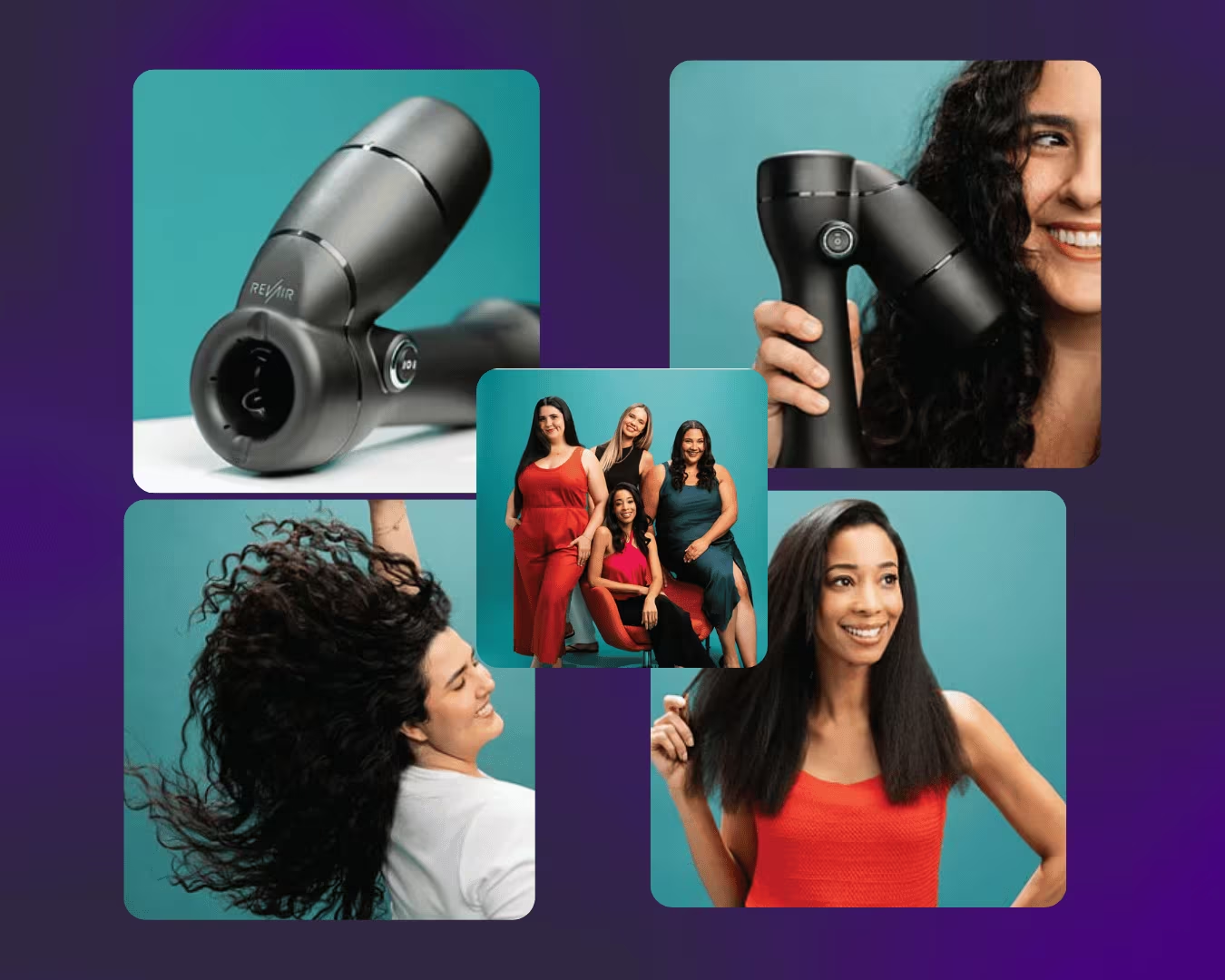
They’ve created a variety of creatives, all of which serve a slightly different purpose like:
- The hairdryer in action
- A full, clean view of the product itself
- A variety of models to indicate the product works on different hair types
Although these are different assets, the brand has made sure they all look good together by using a cohesive colour palette, props and lighting.
Now, think of all the hundreds of photoshoot images that Revair needs to take each time they do a new product promo. It’s a lot. And luckily they have Dash to help them stay organised. Here’s what their product images look like in Dash.
You can also read up on how RevAir saves 20 hours every month, now they’re not managing their content in shared drives.
3. Work on your influencer marketing
Influencer marketing can be a great way for ecommerce brands to successfully engage with new audiences. After all, 63% of shoppers are likely to buy products after a social media influencer they trust recommends them. That's why you'll often find influencers are a key part of a DTC brand's social media marketing.
There’s many ways to create an influencer marketing strategy. You might decide to sign-up big-budget influencers with huge audiences for a set amount of social media posts, or work with micro-influencers instead. Or you could keep an eye on posts from influencers in your niche and engage with them if they ever post about using your products.
Take a peek at this Instagram comment from YesColours.
.avif)
They saw that interior design influencer Maitri Mody picked their paints for a project. They then commented on her post with the specific name of their colours. So now if Maitri’s followers (most of whom are also YesColour's target audience) feel inspired to recreate her look, they know exactly the paint they need to buy.
4. Launch Google Shopping campaigns
Don’t overlook Google Shopping ads - there’s a reason they account for 76% of all search advertising spend in the ecommerce sector. Running Google Shopping campaigns for your brand is an effective way of making sure your items are being considered when prospective customers are deciding what to buy.
Setting them up is relatively easy. All you need is to link your Google Ads account with your Merchant Center. As long as your product information is set up correctly in your Merchant Center, Google Ads can automatically pull information like reviews, product name and images through to your shopping ad.
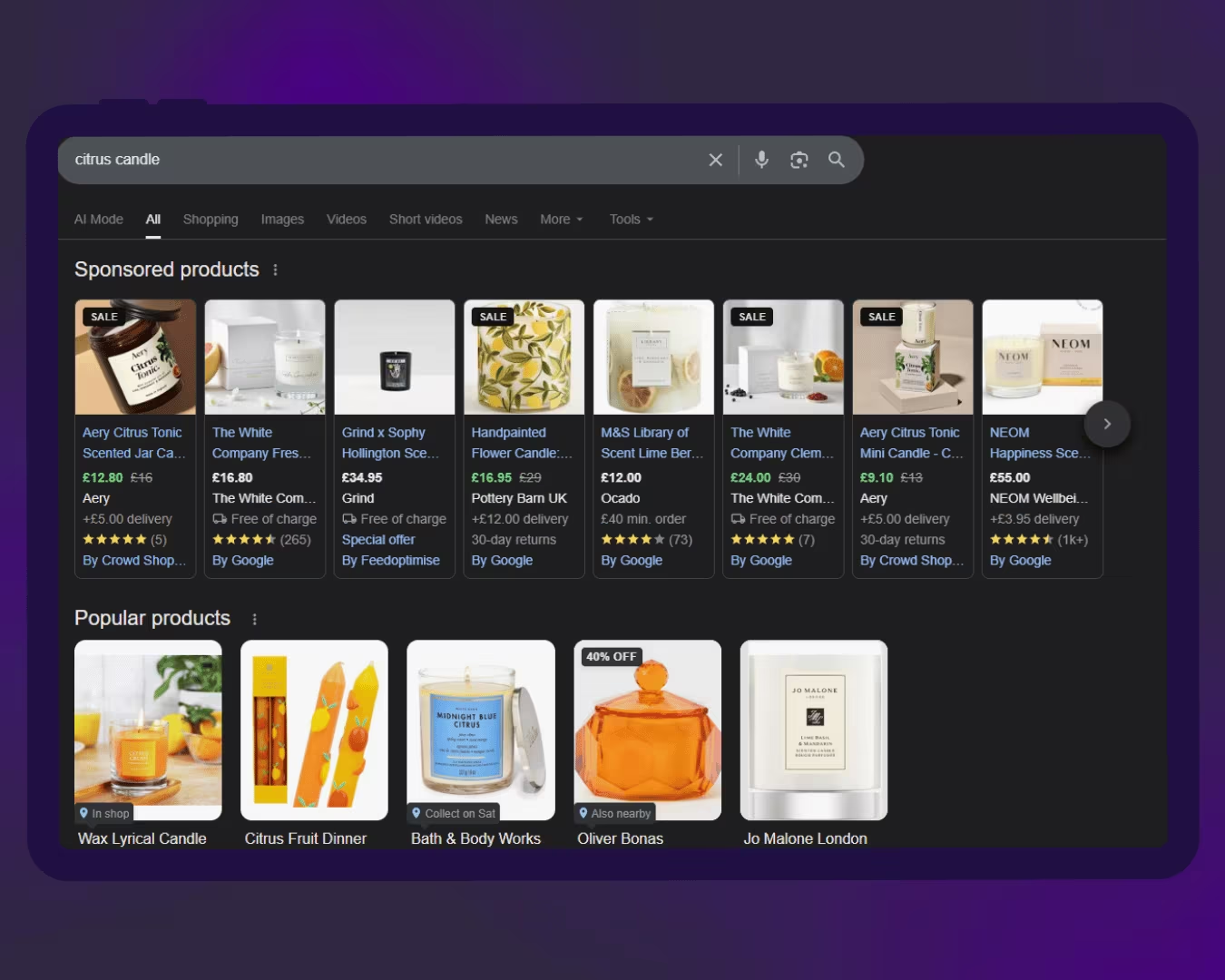
Here’s an example of several brands bidding against the term ‘citrus candle’. You’ll see all brands are using clean, clear product imagery and most opt to highlight their reviews.
Get an in-depth guide on optimising your Google ads account like a pro with Holly from Anicca Digital.
5. Run remarketing advertising
Remarketing campaigns can significantly improve conversion rates by targeting a warm audience that is more receptive to your messaging. By engaging with potential customers who have already shown an interest in you, remarketing advertising keeps you top of mind and increases the likelihood of the person buying from you. Most advertising platforms - like Facebook, Instagram and Google - all offer remarketing options. All you need to do is install the platform’s tracking pixel on your marketing site.
The ad graphics you use for remarketing campaigns will differ slightly from cold prospecting. For remarketing, focus on social proof (more on that later), messages which build trust in your brand, and sales incentives which nudge people on-the-fence to finally take the plunge.
Here’s an example of the latter from drinks brand Served, offering 50% off your first order.
.avif)
We cover remarketing in detail in our guide to ecommerce advertising strategies - check it out!
6. Build a product recommendation quiz
Most brands need to educate potential customers on their different products and guide them toward the best-fit item for them. If you expect a site visitor to do all that work alone, sifting through your different product pages to whittle down their favourites, then… think again.
Take a page from the book of fragrance brand DS & Durga. Rather than making site visitors read descriptions of each scent, their website offers a short quiz so it can recommend your perfect scent. They then make it easy to add recommended samples to baskets with a click of a button.
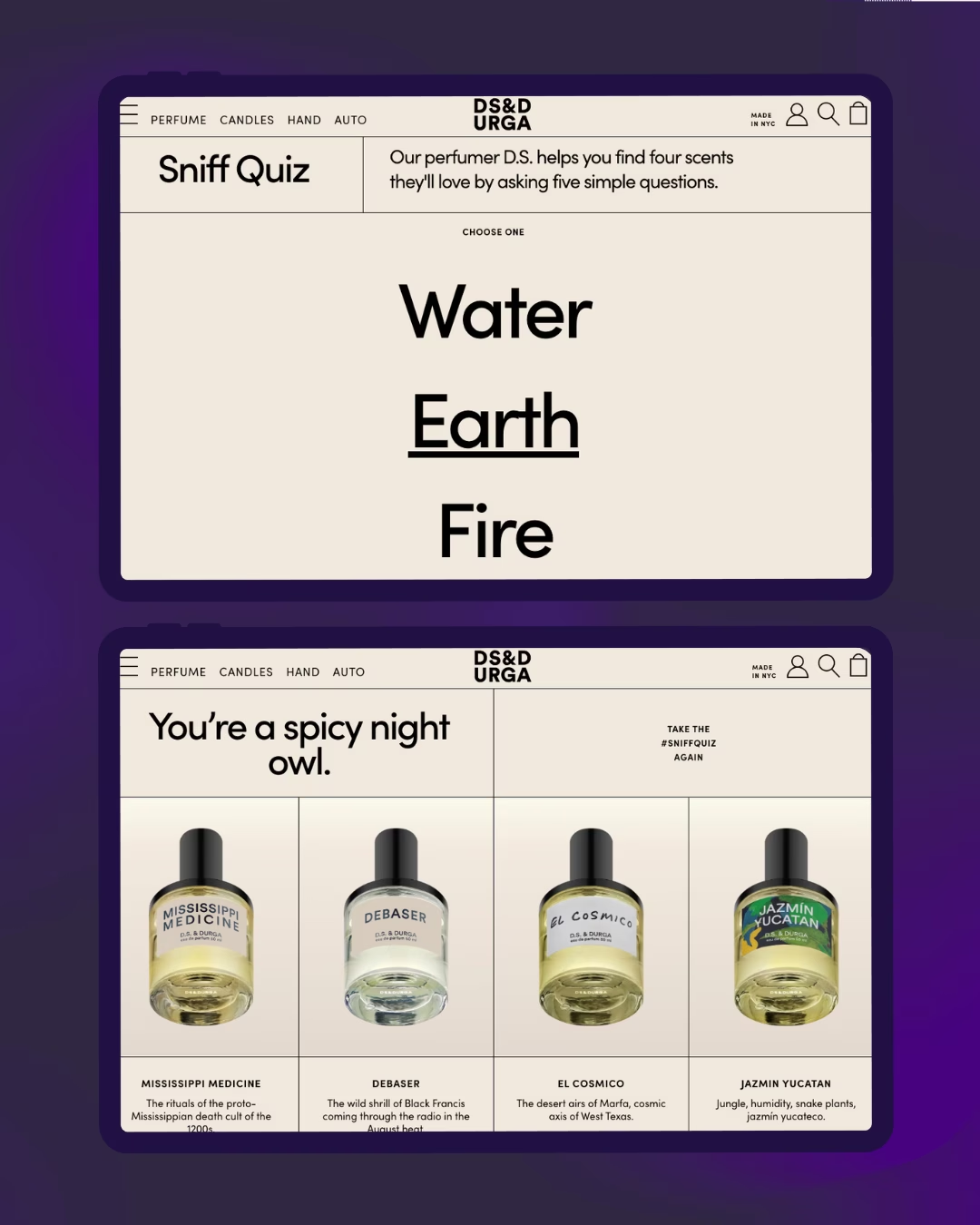
And for those wondering, I’m a spicy night owl. Who knew? 🌜🦉🔥
7. Capture emails with pop-up banners
Not all visitors to your site want to buy straight away. So why not offer them something in exchange for their email address so you can tempt them to buy something later? Designing pop-up banners (like the one below from beauty brand 4.5.6 Skin) is a great way to do this.
.avif)
Here 4.2.6 offer a discount code for first orders, but you could also try time-limited sales or special offers like no shipping fees or a free gift. Test a few and see what gets the best results!
8. Optimise your product pages
Email marketing campaigns remain one of the most effective ways for ecommerce brands to drive revenue, retention, and repeat purchases. Unlike paid social, email is an owned channel — which means you control the relationship with your customers.
A strong ecommerce email marketing strategy is more than a one-off promotion. It includes a mix of campaigns designed to educate, build trust, and stay top of mind, such as:
- Product launches and new arrivals
- Educational or inspirational content
- Social proof, reviews, and customer stories
- Exclusive offers for subscribers
It’s important that each email feels personal and relevant. That means segmenting your audience, tailoring messaging to where customers are in their journey, and ensuring emails feel consistent with the rest of your brand experience.
Once you’ve built a solid email foundation, you can layer in more targeted workflows like abandoned cart emails (which we cover later), post-purchase sequences, and win-back campaigns to maximise results and foster customer loyalty.
To delve further into email strategies, we look at some email marketing mistakes you do not want to be making in 2026.
9. Optimise your product pages
An ecommerce site is only as good as its product pages: these are arguably the most vital content on your entire website. They need to articulate why your product is worth buying, remove blockers a potential shopper might have which prevents them from purchasing (like shipping costs) and prompt a shopper to checkout. These also need to provide a good customer experience (otherwise people will up and leave).
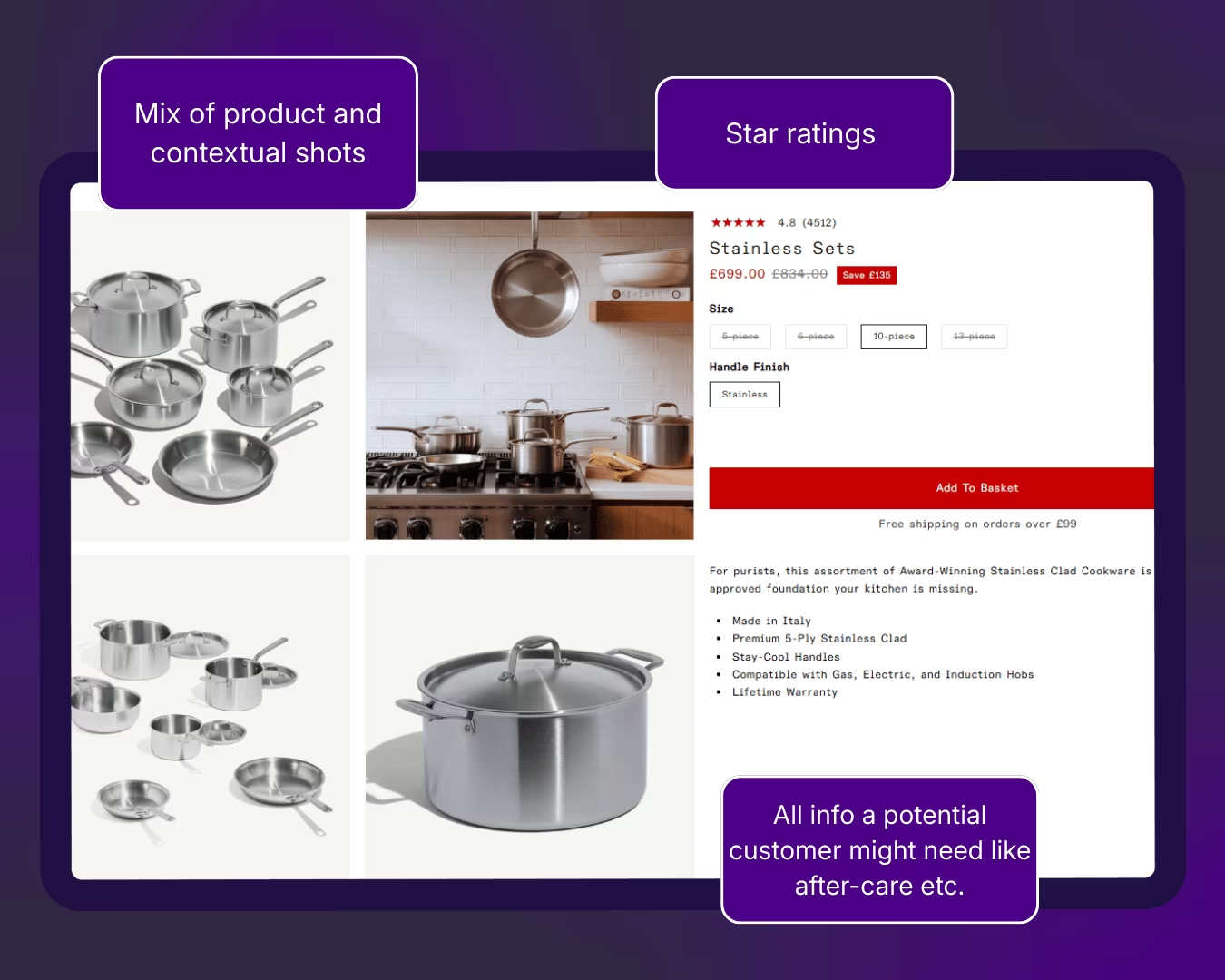
If you’re looking for how to improve your own product pages, take inspiration from Made In Cookware. Their pages are a great example for a few different reasons. They:
- Showcase the brand’s clean, polished product assets
- Use product descriptions written with search engine optimisation in mind to increase organic traffic
- Include contextual and lifestyle images of how their pans can be used
- Establish trust with the audience by featuring reviews and star ratings prominently
- Have tailor-made product bundles to increase the overall order value
- Use a pop of colour to guide visitors to the purchase CTA button
- Include information a potential shopper might need before parting with their money, like how to care for the product
💡 Looking for a way to speed up adding images to your Shopify product listings? Just use Dash's Shopify integration. It's perfect for ecommerce teams - just drop assets from Dash straight into your product listing and the integration takes care of the rest (including Shopify image optimisation).
10. Optimise your ecommerce store for mobile users
Mobile optimisation isn’t optional. A large proportion of ecommerce traffic now comes from mobile users, and for many shoppers, their phone is the primary way they discover, research, and buy products.
If your ecommerce website isn’t easy to use on mobile, you’re adding friction at the exact moment customers are deciding whether to buy. Slow load times, hard-to-tap buttons, cluttered layouts, or unclear product information can quickly derail an otherwise effective ecommerce marketing strategy.
Mobile optimisation goes beyond simply having a responsive design. It includes:
- Fast-loading pages optimised for mobile networks
- Clear navigation and simple menus
- Product pages that are easy to scan on smaller screens
- Prominent calls to action that are easy to tap
- A checkout experience that works seamlessly on mobile
A great example is Away Travel.
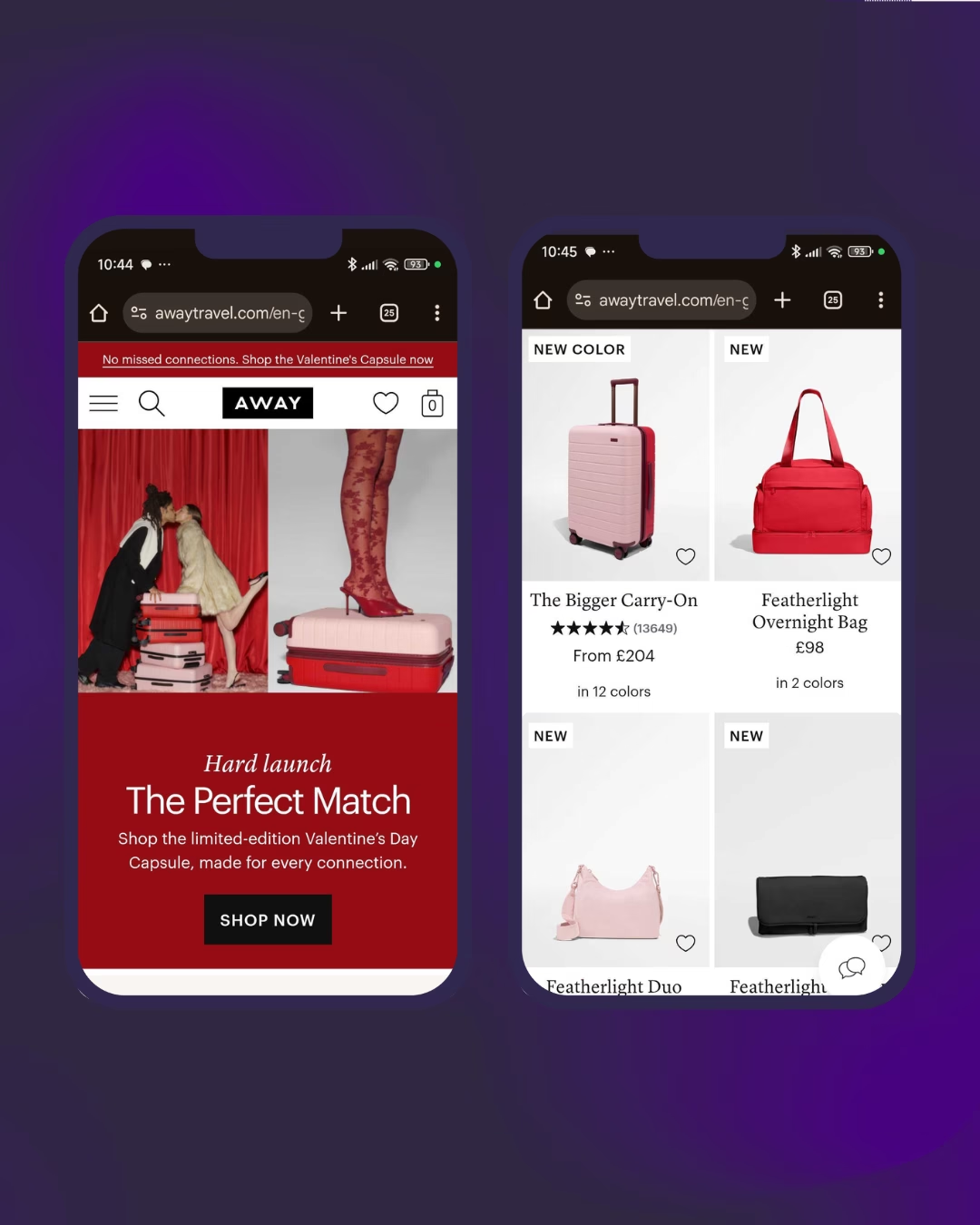
Their mobile homepage immediately nudges you towards a small number of clear product choices, which makes decision-making feel simple on a small screen. On mobile product pages, Away prioritises what matters most: strong imagery, upfront pricing, delivery info, and a prominent sticky ‘Add to cart’ button. Secondary details like specs and FAQs are still there — but they’re tucked neatly into expandable sections, so the page stays clean and easy to navigate.
11. Build a trade marketing strategy for resellers, distributors and stockists
As ecommerce brands grow, it’s rare to rely solely on selling through your own website. Most brands also work with wholesalers, distributors, online retailers, marketplaces, and brick-and-mortar retailers to reach new customers and increase revenue.
This is where trade marketing comes in.
Trade marketing focuses on helping your retail partners sell your products more effectively. That means giving them the right product imagery, specs, brand guidelines, and campaign assets — so your products show up consistently wherever they’re sold.
But those partnerships only work if you make it easy for stockists to work with you.
Examples of effective trade marketing tactics include:
- Supplying retailers with retail-ready product imagery and videos
- Sharing up-to-date product specs, pricing, and usage guidelines
- Providing marketing campaign toolkits for seasonal launches or promotions
- Making it easy for partners to find and download approved assets
Haws, who make best-in-class watering cans, found a smart way to manage their 100+ resellers. For each partner, they set up a Dash portal, added a tailored welcome message, and selected the folders of product assets each reseller needed access to.
Here’s what a Haws reseller portal looks like in Dash:
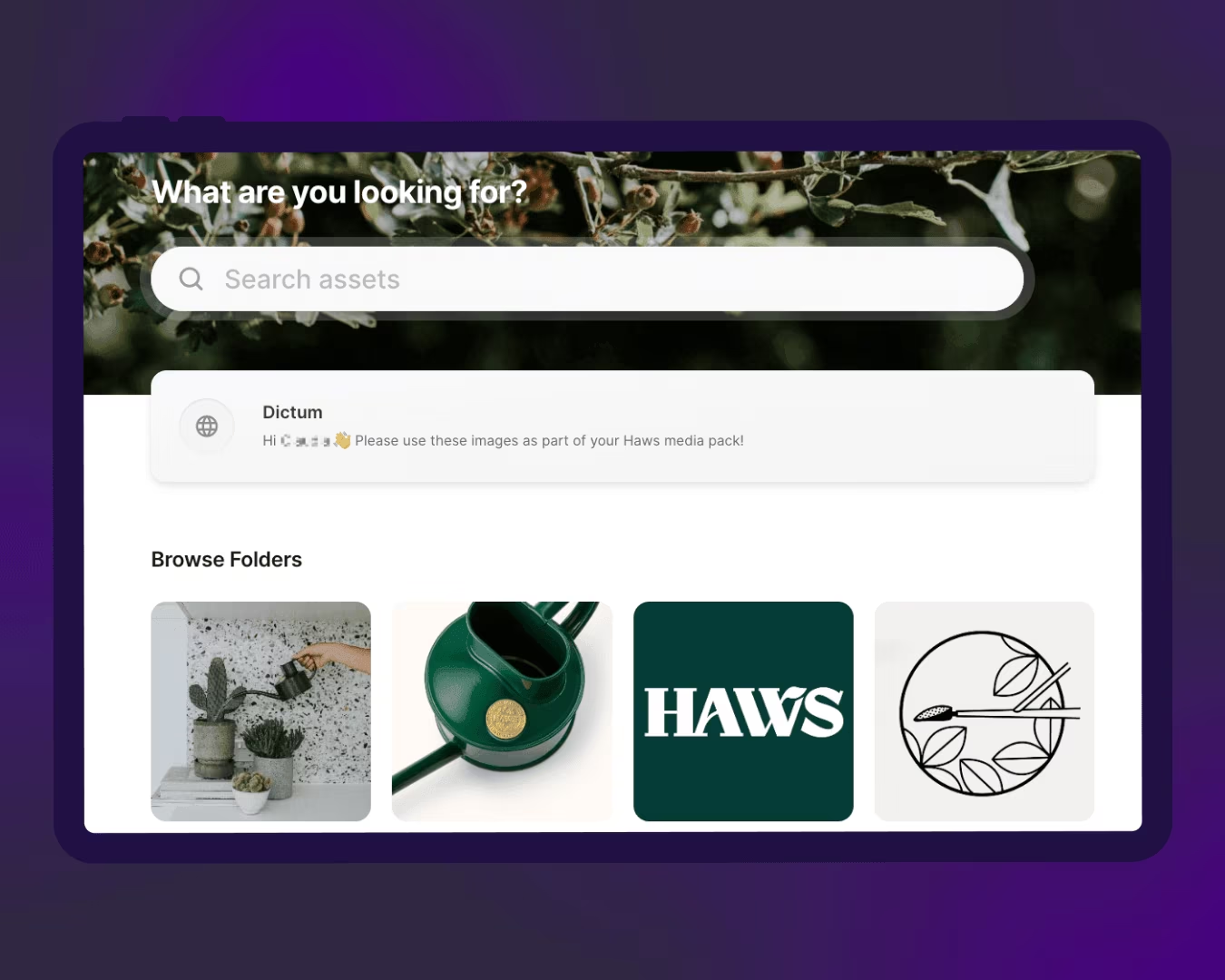
Using a Dash portal, a reseller can log in, search for the exact product images or specs they need, download them instantly, and get on with selling.
12. Capture UGC and reviews from happy customers
Customer reviews and user-generated content (UGC) should be an essential part of your digital marketing strategies. Think of social proof like MSG - it makes your marketing taste just that little better. Featuring social proof is a clear indicator that your company has happy customers full stop, and can therefore be trusted with would-be shoppers’ hard-earned cash. But not only that, it’s a chance to show your prospective customers that people just like them have similar motivations and are using your products for similar reasons that they might.
Reviews and UGC can be a rich mine of content marketing. Take inspiration from men's make-up brand War Paint. They’ve used a mix of reviews and video UGC of their Daily Essentials Kit on their product page, posted them on social media platforms like Instagram and featured them in their promotional email campaigns.
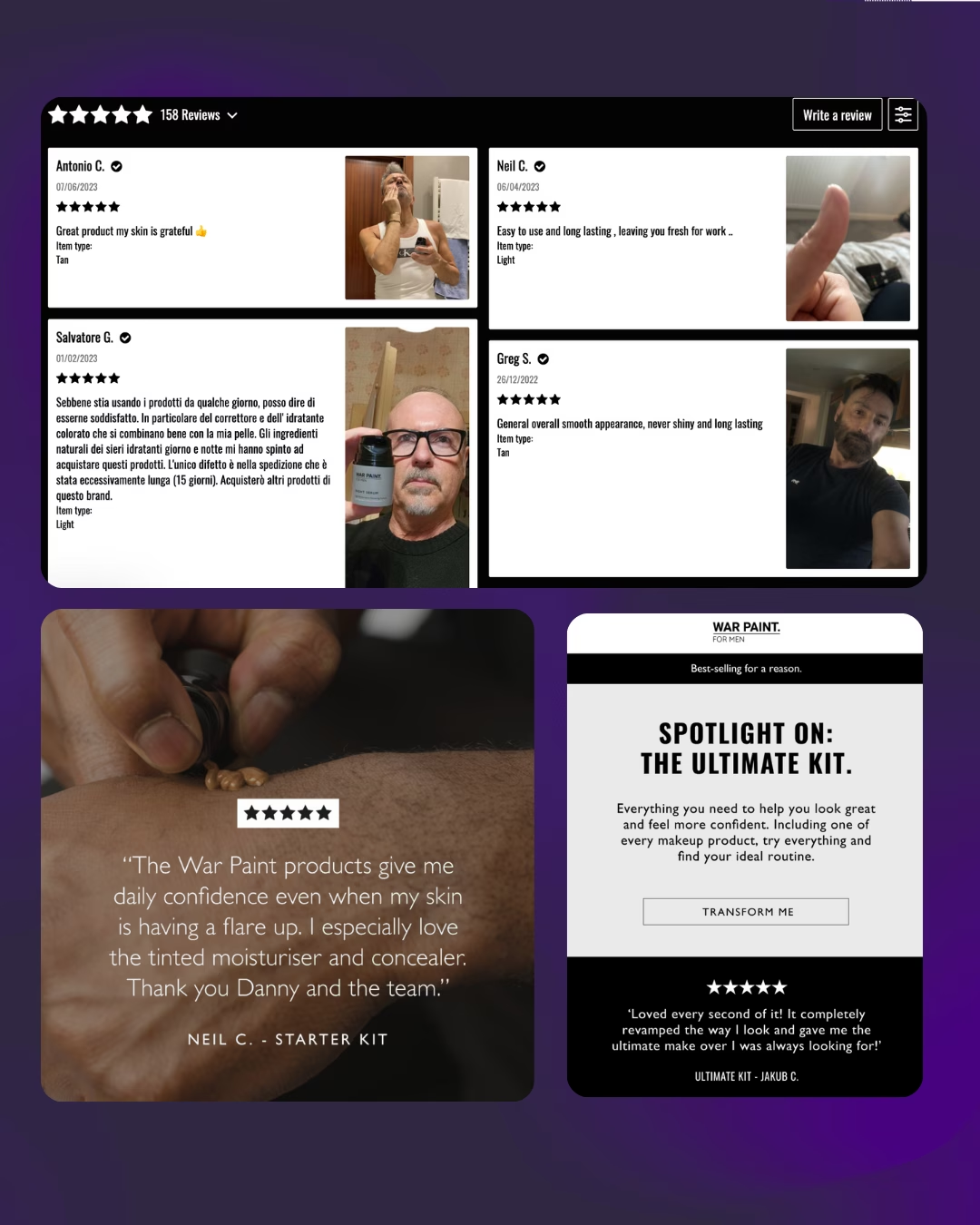
There are some great tools out there for capturing reviews, like Yotpo, which you can integrate with your website. And it’s easy to set up a guest upload link in Dash to get UGC from customers, then neatly organise it ready for you to use on your channels and social media campaigns.
13. Level-up your Amazon Store profile
As our experts predicted in their post about ecommerce trends for 2023, marketplaces (like Amazon) have never been more important. With advertising costs spiralling, wily DTC brands are going where their shoppers already are - and for most, that’s Amazon.
Take this as your cue to properly optimise your brand’s Amazon Store vendor profile. Amazon now gives you a tonne of customisation features to brand your Store and highlight your VIP products.
Check out this real-life Amazon Store from haircare brand Remilia Hair.
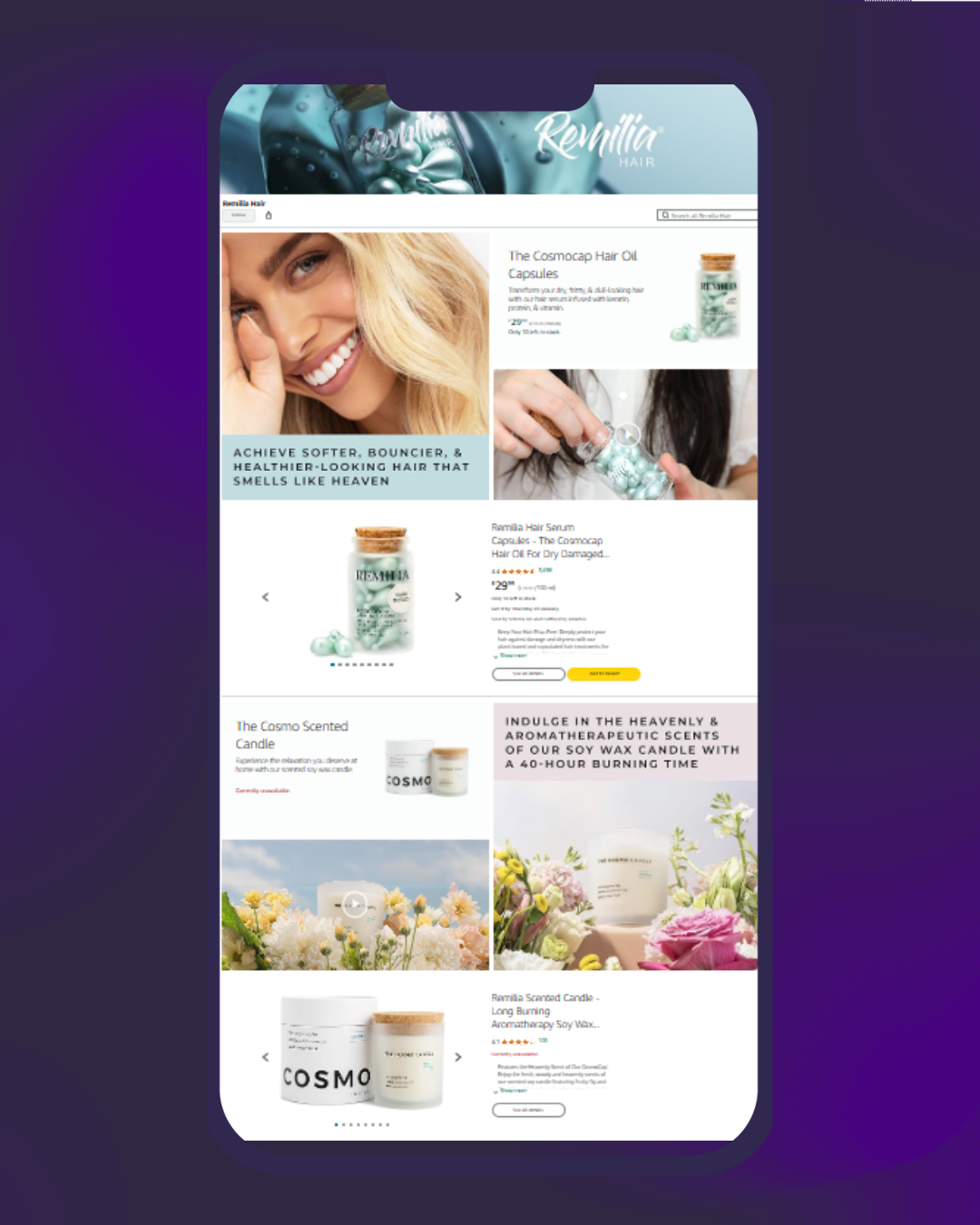
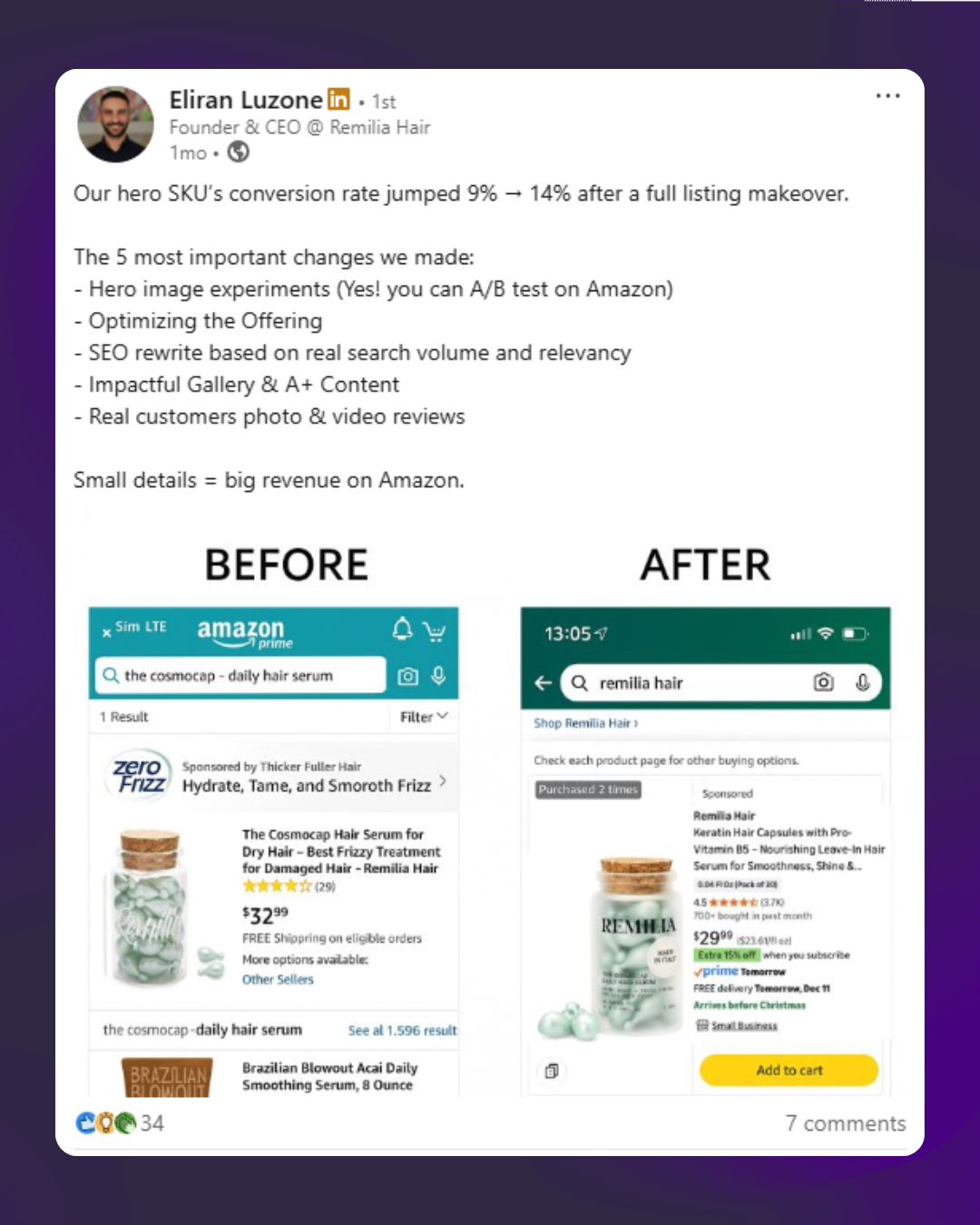
It’s well-branded and gives store visitors clear sign-posts of where to go in order to shop the different types of products they make. And, to top it all off, they end the store with compelling social proof. You can follow Remilia’s founder, Eliran Luzone, who regularly posts about how they’ve managed to get success on Amazon.
14. Create an out-of-home strategy
Out-of-home (OOH) advertising helps ecommerce brands reach people in the real world through formats like billboards, transit ads, and digital screens (DOOH). For DTC brands, it can be a fantastic way to build brand awareness and credibility, especially in crowded categories.
OOH has also become easier to test and measure. With digital and programmatic DOOH, brands can target specific locations and audiences, adjust campaigns quickly, and reduce wasted spend by only showing ads when the right people are nearby.
For example, dog food brand Bully Max reported a measurable uplift after running OOH campaigns in key cities — including increased website visits and higher conversion rates in the areas they targeted.
To measure impact, start with a clear goal (usually awareness), then track signals like location-based website traffic, brand search volume, QR code visits, or regional sales lift.
Learn more about OOH marketing here. 👈
15. Build an affiliate marketing program
Affiliate marketing is a performance-based ecommerce marketing strategy where partners earn a commission for driving sales. For growing ecommerce brands, it can be a cost-effective way to reach new audiences — because you only pay when a purchase is made.
Affiliate partners often include creators, bloggers, publishers, and niche websites that already speak to your target audience. Rather than running ads yourself, you’re tapping into trusted voices who can recommend your products in a more authentic way.
- A strong affiliate marketing strategy focuses on:
- Partnering with affiliates who are genuinely aligned with your brand
- Providing clear incentives, such as commission rates or exclusive offers
- Giving partners easy access to product information and approved assets
Beardbrand is a great example of affiliate marketing done well. Their affiliate program allows partners to earn commission by promoting Beardbrand’s grooming products through their own content. Affiliates are supported with clear program terms, reliable tracking, and marketing resources — making it easy for them to recommend products confidently and consistently.
When set up properly, affiliate marketing can become a scalable revenue channel that complements paid advertising, influencer marketing, and content marketing. It also helps you reach customers you might not otherwise access.
16. Optimise your checkout process for extra revenue
Are you leaving money on the table? Just because you’ve got a visitor about to purchase an item, doesn’t mean your job is done. Instead, optimise your checkout process to help increase your average order value (AOV).
Just take a look at this ✨ masterclass ✨ in checkout optimisation courtesy of Huron, a hair and body care brand for men.
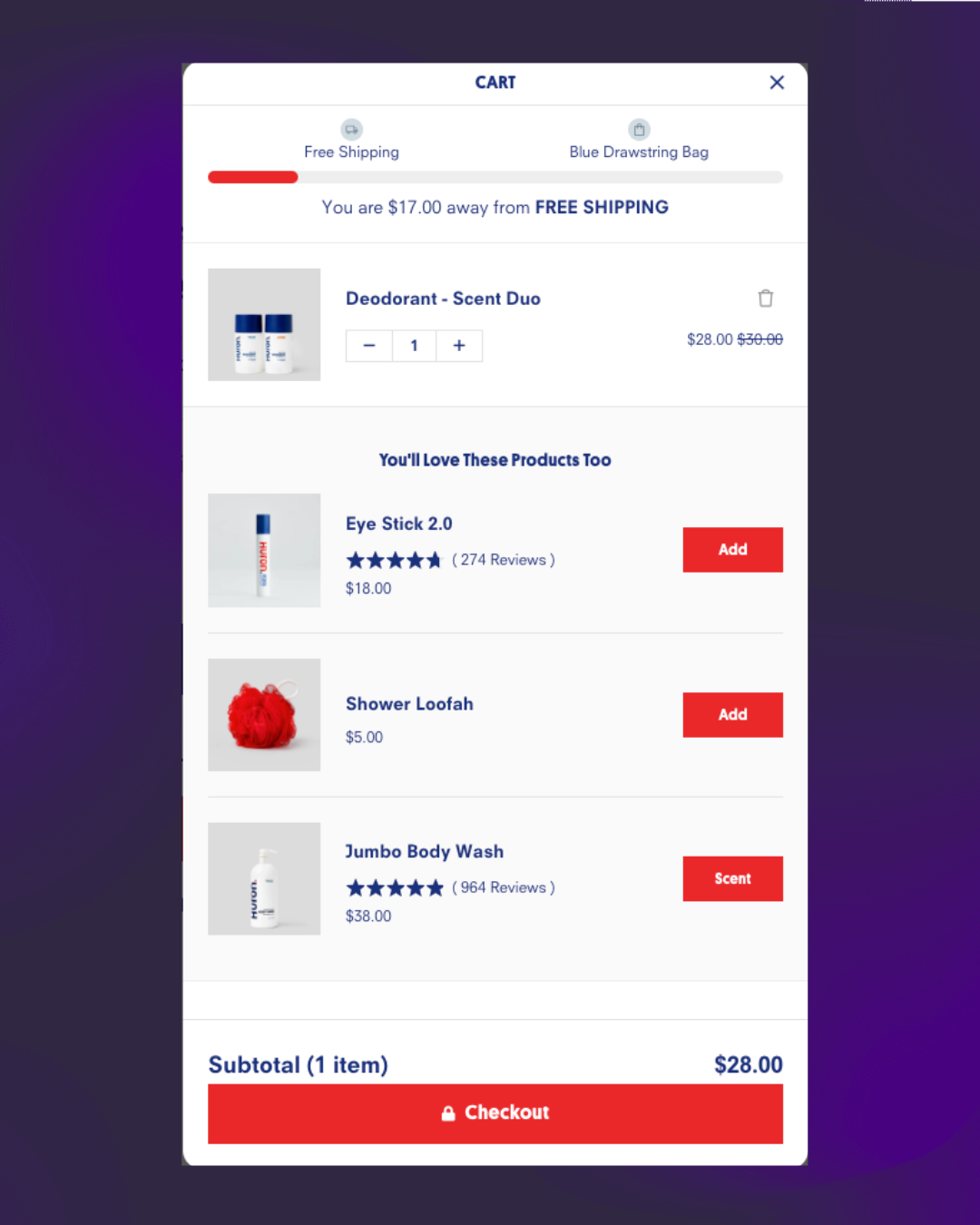
There’s a tonne of tips and tricks you could take away from this. Let’s break it down:
- A progress bar up top tracks how far away a customer is from getting free shipping and a free gift.
- You can get money off the same item in your bag if you purchase more than 1 of them.
- It’s simple to add related items to your cart - and Huron feature star ratings as an extra prompt.
- The design of the cart is clean and easy to understand (even though there’s a lot going on).
And they've managed to pack all of that into the checkout process without sacrificing the user experience. Genius!
17. Send abandoned cart emails
Here’s a statistic that’ll bring any ecommerce brand out in a sweat - almost 70% of shopping carts are abandoned. Ooft, that hurts.
Luckily there’s a whole network of tools out there, like Klaviyo, which make it easy to set-up personalised abandoned cart email workflows. These email nurture journeys are designed to prompt a would-be customer to pick up where they left off and complete their purchase.
Check out this abandoned cart email from consumer goods brand Nomad.
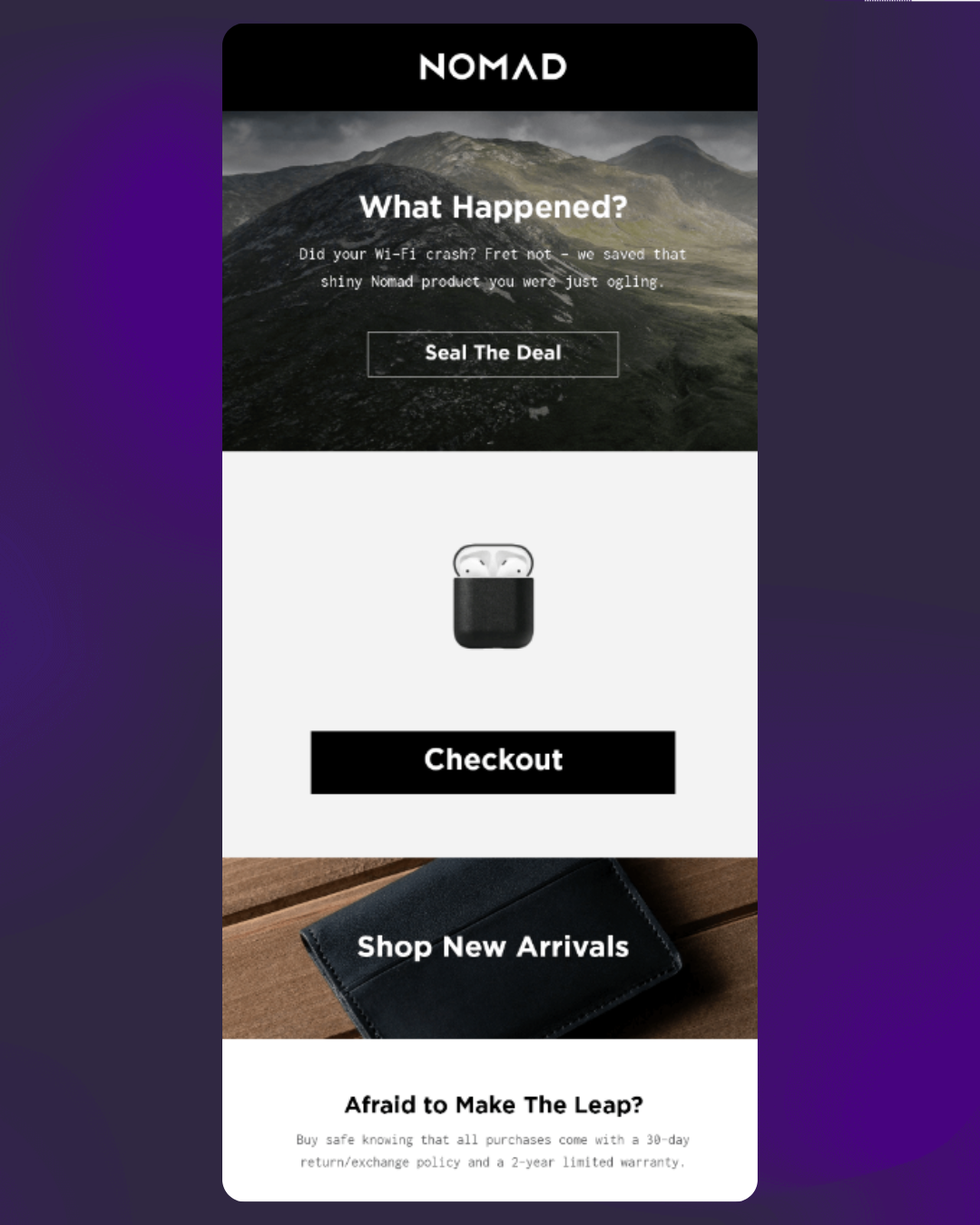
There’s a lot of tricks you could try here, from the subject line which introduces an element of time pressure to the final section of the email which tries to deal with some potential purchase blockers a would-be customer might have.
18. Offer product subscriptions for recurring revenue
Prompting customers to opt for a repeat subscription to a product (rather than a one-off purchase) is a trend that’s become increasingly prominent in the past few years. Having a good chunk of your customers paying via monthly subscription can smooth over unpredictable peaks and troughs in your revenue that can come from one-time purchases. It can also help an ecommerce business better predict what inventory they’ll need in order to fulfil orders.
So it’s no wonder it’s become popular and, thanks to tools like Relo's subscription converter, it’s easy for DTC businesses to get started with it.
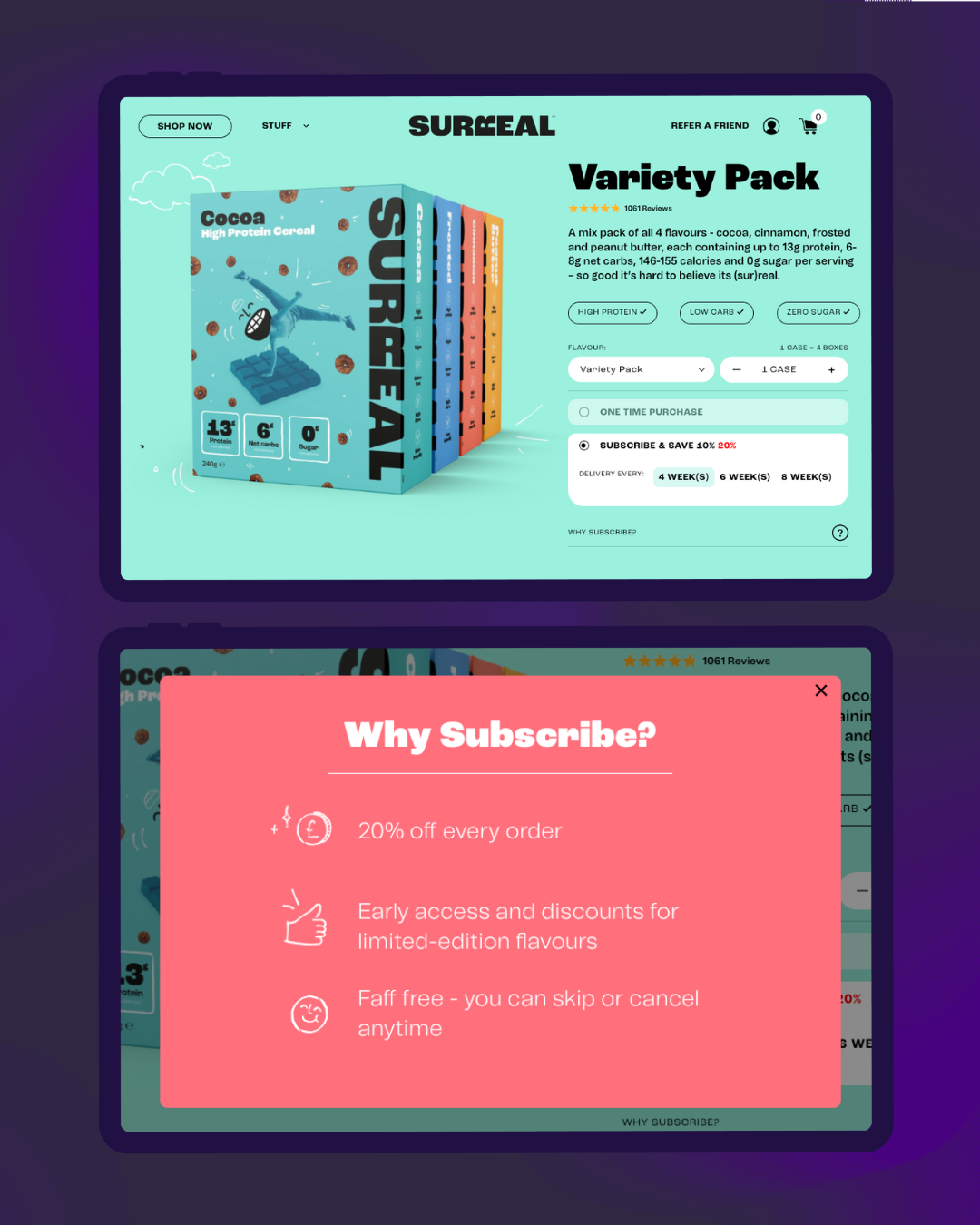
Let’s stick with Relo and see how they managed to help cereal brand Surreal grow their subscribers. First off, they plugged Relo into their Shopify to create a list of target customers who it predicted were likely to make the switch to monthly subscriptions. Next, it ported that list over to the brand’s Klaviyo account so it could send personalised SMS and email marketing to those customers.
Surreal also does a great job of promoting the benefits of subscribing on their product pages.
Inspired? Find out more in Relo’s Surreal case study.
19. Create after-care campaigns for customers
Making sure a current customer is getting value from the product they’ve bought can help turn them into a loyal advocate for your brand. Spend some time thinking about how you could show them just that. If you’re a beauty brand, for example, you could send an email after someone buys your eyeliner showing them how to perfect their winged eye flicks.
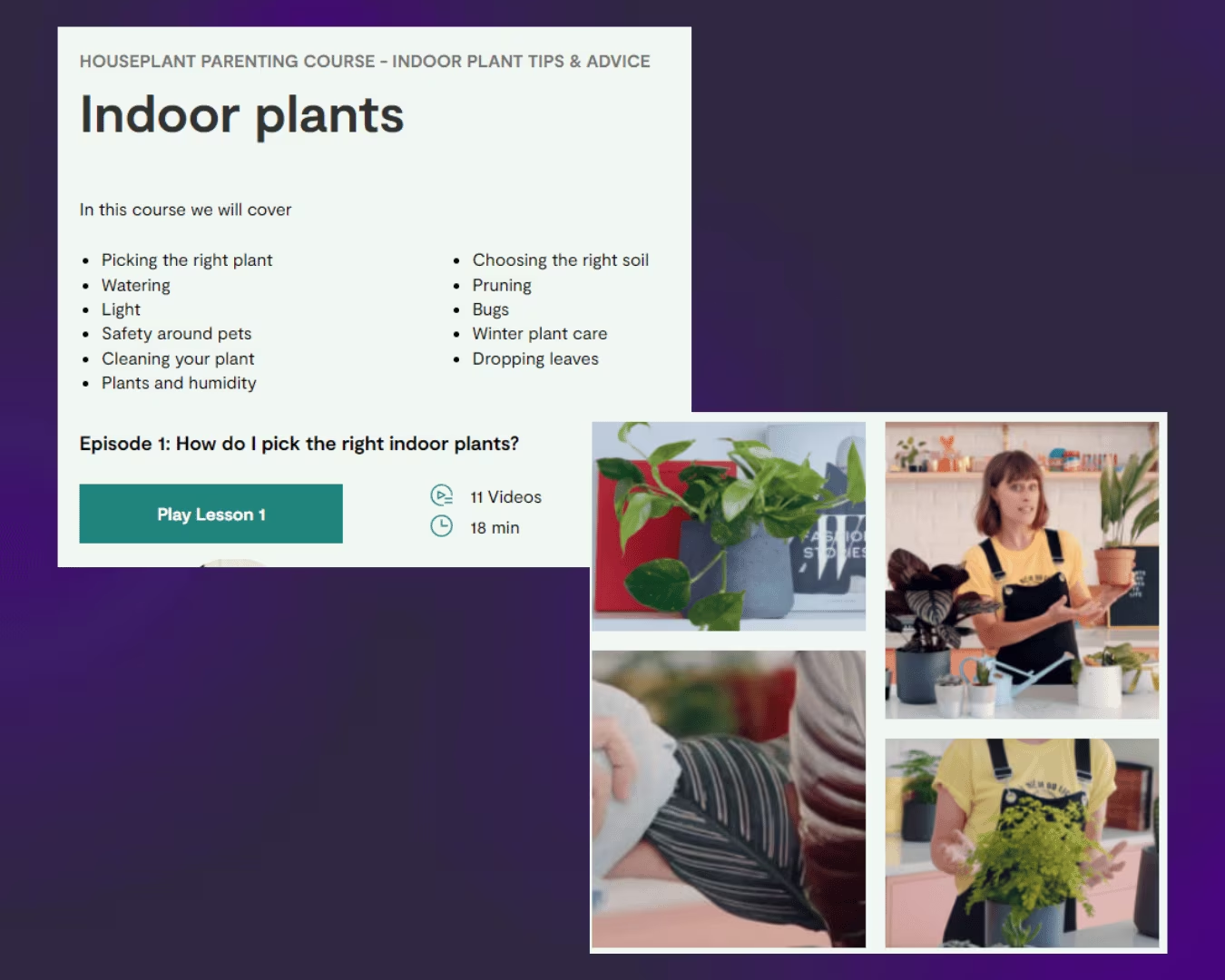
Or, like houseplant brand Patch, you could take it a step further. They know that customers becoming confident in their plant parenting skills is key to repeat purchases. So they offer a free plant care video course you can take with an expert. Inspired!
20. Launch a customer loyalty marketing program
Working on customer loyalty marketing should be an important part of your overall ecommerce marketing strategy. After all, it’s in your interest for current customers to recommend your product to their friends. So why not incentivise them to do just that and build a loyal customer base?
Here’s a great example of a customer loyalty program, courtesy of noodle company Omson.

Their loyalty scheme works through acquiring points. Not only do you earn these through buying noodles, you also get extra points for following them on social media channels. Once you’ve saved up enough, you can get money off your next order!
21. Create a search optimisation strategy
Building a bank of educational content that’s optimized for search engines helps people find your brand organically. Say you sell natural deodorant: you could write content that targets search terms like 'plastic free deodorant' and 'vegan deodorant'. This not only helps you move up the search engine results pages, but it cements your brand as an authority in your particular niche which can help inform your prospective customer's purchase decisions.
So how do you launch a blog? A good place to start is to use search engine optimization (SEO) tools like Ahrefs. Use the keywords explorer to do keyword research and find search terms within your niche. For example, when you search 'natural deodorant' you get lots of related keywords and an indication on the amount of organic traffic it could generate. You could then collect all these keywords together to start building a content marketing strategy. Over time, you'ld hope to attract organic traffic to your site frequently which should help increase sales. 📈
A good example is AKT London who use their blog to create educational articles that are tailored for search engine optimization. They have different types of content that cover topics like 'sodium bicarbonate in deodorant' and the 'disadvantages of roll-on deodorant'. This content can then be used across social channels, newsletters and repurposed for video marketing.
Setting up your ecommerce marketing strategy for success
We’ve shown you ecommerce marketing strategies and tactics to use across your marketing channels which you can use to grow your online business. But your ecommerce marketing efforts quickly come unstuck if you don’t have the right tools in place.
Let’s face it: you’re going to need a lot of assets to run all your marketing channels and grow your ecommerce brand. So to have any success with the below strategies, you first need to collect your visuals together.
Sure, you can store all of that on Google Drive or Dropbox. But when multiple teams and external partners need access to your images and videos, that’ll get messy fast.
The smartest DTC brands, like Passenger Clothing and COAT Paints, use Dash instead. Dash is a digital asset management tool designed specifically for ecommerce brands. With it, you can:
- Store, organise and search for all your brand assets
- Share images and videos with other teams and external partners (like you distributors)
- Crop, resize and download images for different channels (like social or your website)
- Use upload approvals to manage your content creation workflows - from photoshoots to user-generated content
- Drop product shots stored in Dash straight into Shopify product listings
- Integrate with relevant content creation tools like Canva, Figma and Adobe Creative Suite
Here’s a sneak peek of what COAT Paint’s Dash looks like.
To quickly get on top of your visual content and product photography right now, try Dash, our ecommerce DAM. Take it for a spin with a no-strings free trial.

Barney is the Marketing Lead for Dash. He writes about small business marketing strategies and how DTC brands can boost sales.