Since launching Jolene on Shop app in 2024, 123 customers have discovered our brand through the platform. It’s also generated 38 orders to date. I know it's not a huge number—not yet, anyway. But with a storefront I'm actively optimising right now, I'm expecting both to climb significantly over the next few months.
👋I'm Rebecca Hunter, founder and CEO of Jolene, a premium silicone nipple cover brand. I started Jolene as a side hustle with £2,500 and a spare corner of my flat to store inventory. Eighteen months later, I went all in and we did just under £100,000 in our first year. I'm targeting half a million this year and a million by 2027.
Here is exactly how I’m optimising my Shop app presence to hit that one-million-pound milestone.
What is Shop app?
Shop app is Shopify's consumer-facing shopping app that lets customers discover brands and check out in one tap.
Shop app lets shoppers search for products from over 5 million online stores, with an AI assistant to help them find exactly what they're looking for. For shoppers, it's a single place to discover brands and buy products. It offers delivery tracking, tailored product recommendations and lots more. Forty-eight percent of all orders on Shop are someone's first purchase from that brand, which makes it a legitimate discovery channel.
For online-first Shopify merchants like me, it's a free channel that plugs directly into Shopify.
Why I chose Shop app for Jolene
When I launched Jolene in 2024, the nipple cover category on platforms like Amazon was saturated with brands run by male founders—it made zero sense to me. The target audience is women, yet there was fundamental lack of understanding of the customer's pain points like skin sensitivity or the frustration of visible edges.
Amazon tends to flatten everything. For us, we couldn’t efficiently get across our brand story, our 10% donation to breast cancer charities, or the reason we started this in the first place. None of it survives a platform that reduces you to a price point and a delivery estimate.
I didn't launch Jolene to out-price them. I launched it because I understood the problem from the inside—and that story is the product.
%20(7).avif)
I wanted Jolene to be findable by the woman who already knows she needs nipple covers and is trying to figure out which brand actually deserves her trust. That's a very specific shopper, fed up with bad options and ready to pay for something that works. The Shop app meets her there.
Shopify’s VP of Product, Arpan Podduturi, describes the Shop app not as a marketplace, but as a digital mall. This distinction is exactly why I’m betting on it.
In a traditional marketplace, the platform owns the customer. They hide the data, they control the communication, and they force you into a race to the bottom on price. But on Shop…
“You can merchandise the way you want. You can customize your storefront. You can offer specific offers to buyers,” says Arpan.
“One of the main differences between what we offer and what other large marketplaces offer is that merchants own the customer. They get the email address at the end, and they can build that customer experience from that first sale.”
For Jolene, that's the whole point. A male-run dropshipping operation can compete on price but it can't compete on a female founder origin story and community-first brand in a market dominated by women.
6 Shop app listing upgrades that take under two hours
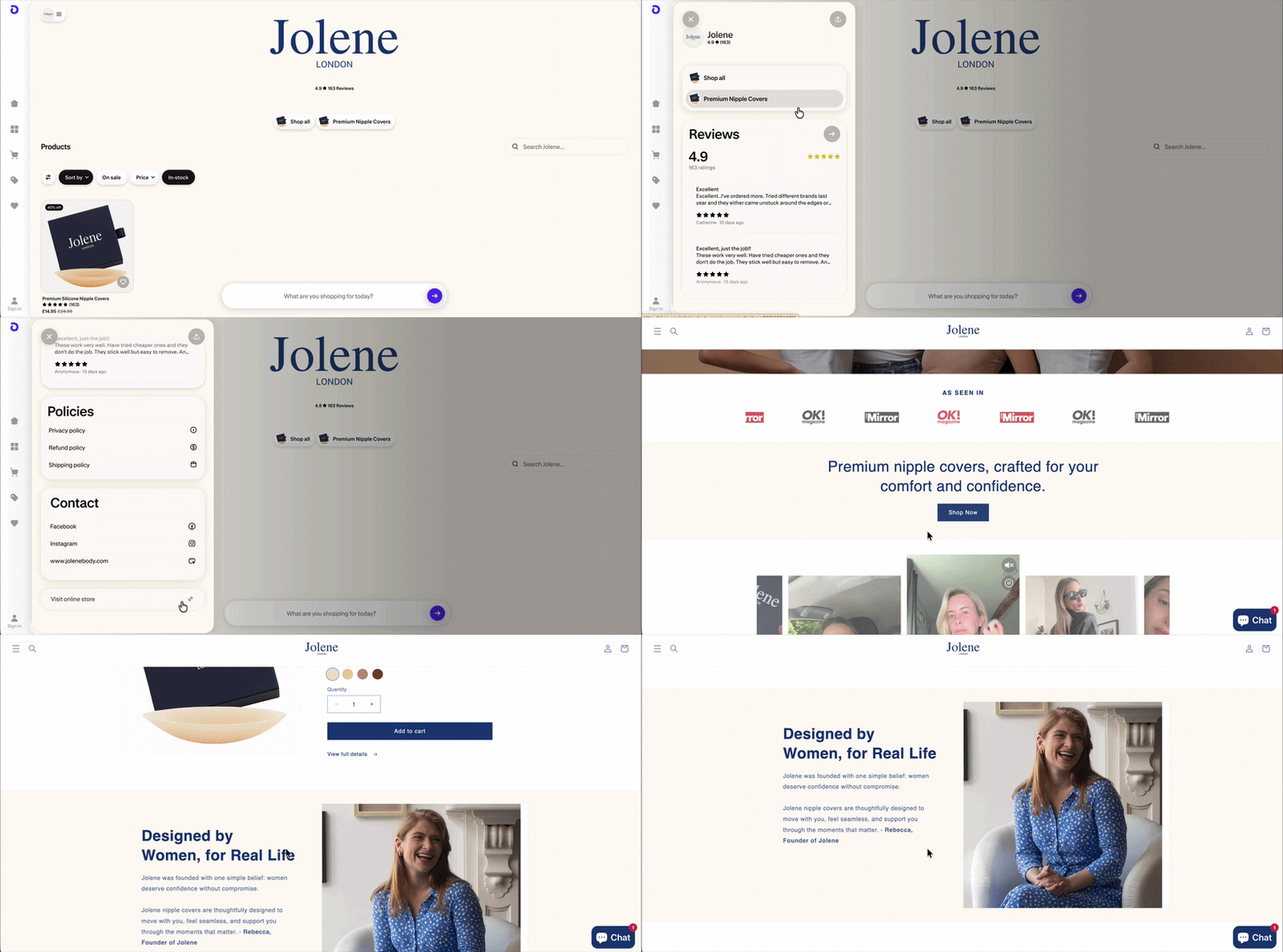
Although I've barely touched my Shop app listing since I launched—it's just there, plugged into Shopify, ticking over. I'm now fixing it in real time.
Let me walk you through exactly how I'm optimising my Shop App listings right now.
1. Treat Shop app like a search engine and own the high-intent search
Silicone nipple covers are a keyword-heavy product. Most women don't start their journey by searching for a specific brand; they start by searching for a fix. They know they need nipple covers; they just don't know which brand offers the best quality or won't leave a sticky residue on their skin.
Write your product title and description as a direct answer to a search query.
Look at my listing below. The title is ‘Premium Silicone Nipple Covers’—it’s literal, it’s high-intent, and it’s exactly what someone types in when they’re in a panic over a sheer wedding dress.

In 2026 and beyond, you’re also writing for the Shop AI assistant. This uses ChatGPT to offer product recommendations, and can be found next to the search bar. So when a user asks the app for ‘nipple covers that don’t hurt to remove,’ the AI looks for the most authoritative match in the metadata.
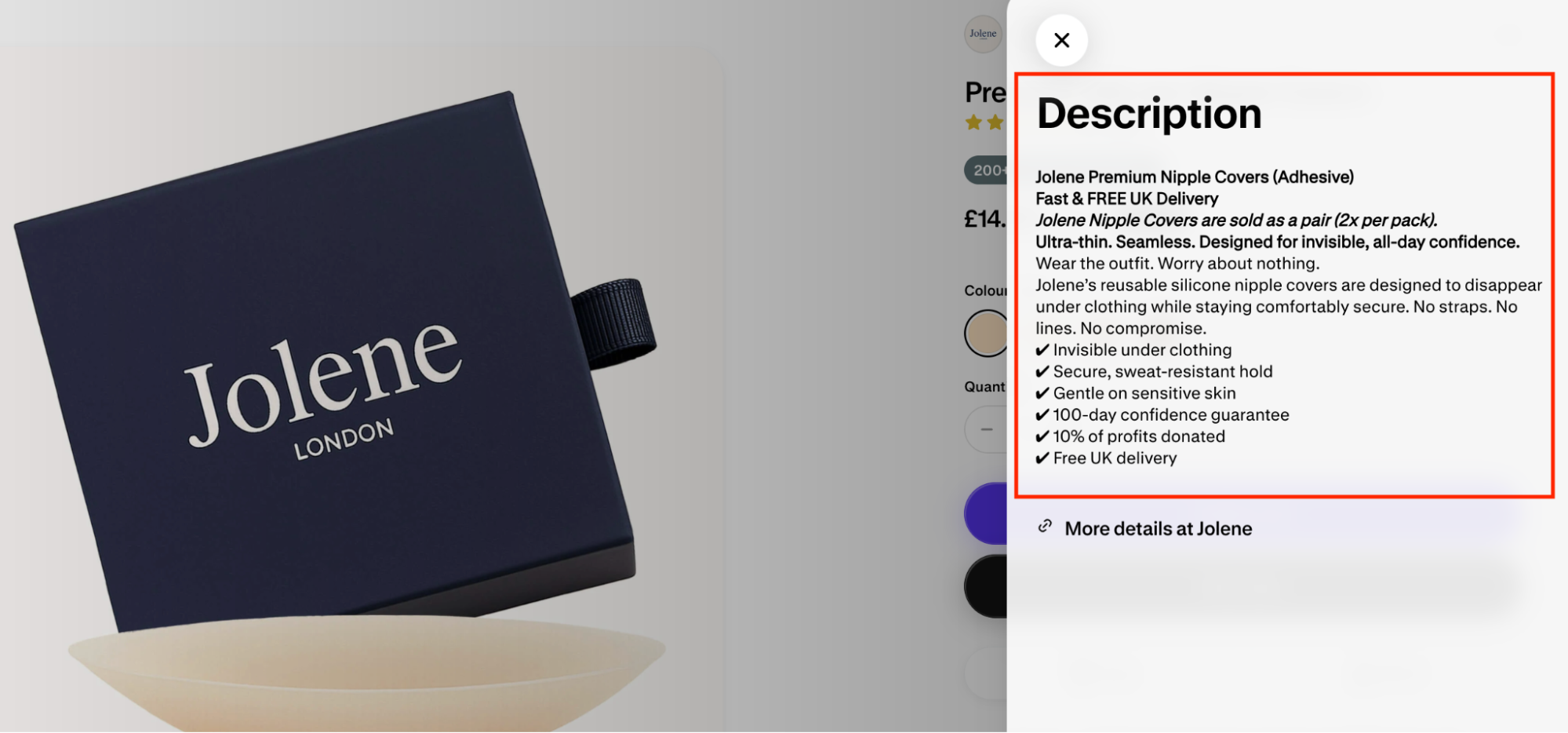
I realised my original description was a wall of text. Neither the AI or a busy shopper will read that, so I'm breaking it down into machine-readable snippets that match my screenshot:
- Lead with the logistics: ‘Jolene Premium Nipple Covers (Adhesive) Fast & FREE UK Delivery.’ I'm putting the delivery promise in the first line.
- Kill the ambiguity: ‘Jolene Nipple Covers are sold as a pair (2x per pack).’ This alone saves me three customer service emails a day.
- The emotional hook: ‘Wear the outfit. Worry about nothing.’ That’s the mission—we sell confidence.
- Use semantic stacking: Semantic stacking is the practice of layering related keywords, phrases, and concepts naturally within your content so that AI systems and search engines can build a complete picture of what your content is about. Rather than one generic description, stack the specific scenarios your product solves, so each use case is a separate search query someone might ask the AI assistant.
Your Shop app storefront is now also indexed by search engines by default, which means your listing has organic visibility beyond the app itself. So a shopper who Googles ‘nipple covers UK’ could land on my Jolene Shop store directly.
But the most powerful search engine optimization (SEO) signals are off-platform. The PR, the blogs, the schema, the reviews, the Reddit mentions, the social content—all of it feeds through. The Shop app doesn't exist in isolation; every piece of credibility you build elsewhere makes your listing more discoverable inside it.
2. Add your social links to your Shop app profile
If a shopper finds Jolene on the Shop app, they’re usually in research mode. They like the product, but they want to know if the brand is legitimate before they fork over their credit card details.
The social links live in the contact section of your Shop app profile and it takes five minutes to add them.

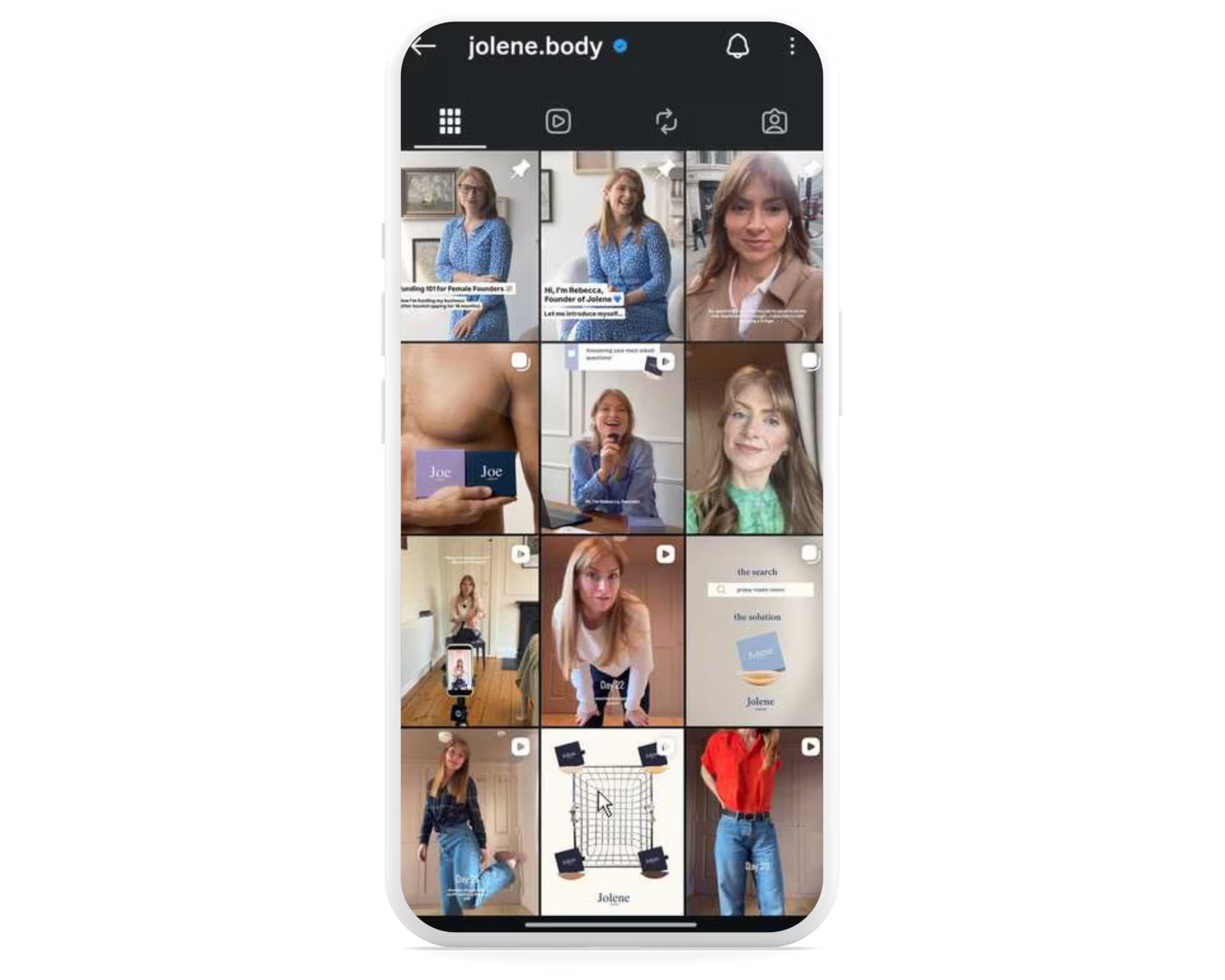
For example, if a customer is on the fence about Jolene’s legitimacy, one click to my Instagram proves we aren't some faceless Amazon dropshipping scheme; Jolene is a real brand, backed by a real person.
3. Claim your custom Shop URL
Shopify typically assigns you a generic, auto-generated URL when you first join the Shop channel.
You can change it—and you should.
Jolene's is shop.app/m/jolenebody, which mirrors jolenebody.com exactly.
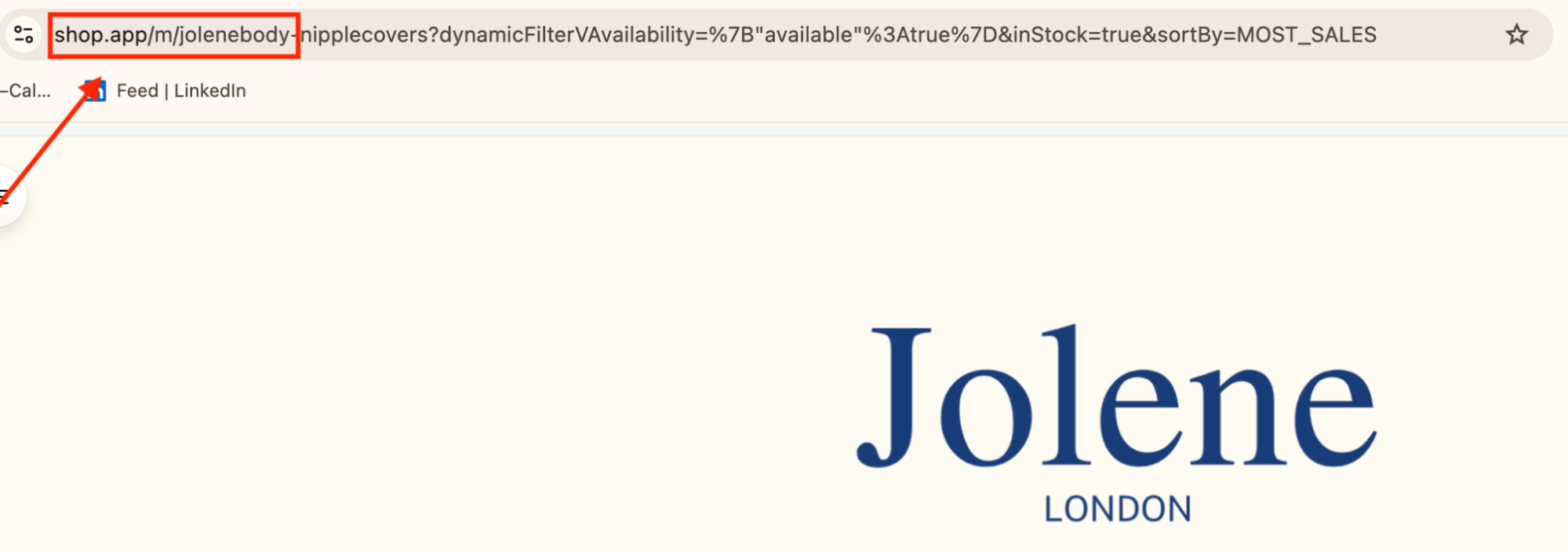
When your customers see that the URL in the Shop app matches the name on your website exactly, it confirms they’re not on a scam site or a third-party reseller.
A few things to remember if you haven’t yet claimed your Shop URL:
- Stay away from hyphens, underscores, or strings of numbers unless they’re a literal part of your brand name, like 7-Eleven.
- If you can’t get an exact match for your domain, try to match your Instagram or TikTok handle. For example, if my customers follow @jolenebody on Instagram, they’ll instinctively look for jolenebody on the Shop app.
- If your brand name has a double-letter collision, look at it on a phone screen. If it looks like a typo, consider a slight variation. For example, for ‘shop.app/m/glassslipper,’ is that three 's's or two?
⚠️Note: You can only change this once every 30 days. Shopify will redirect your old URL for a month, but after that, you’re on your own.
4. Take professional-looking product photos for under £50
The product shot you see on Jolene's listing cost under £50. Here’s a breakdown of my costs:
- The gear (cost: £0): Your smartphone. Find a window with indirect natural light—direct sun creates harsh shadows that even AI struggles to fix. I took a photo of the Jolene box against a neutral background.
- The AI polish (cost: ~£10): I fed that photo into an AI image tool and told it to make it look polished. I focused on the logo; it has to be razor-sharp for brand consistency.
- The pro touch (cost: ~£30-£40): I paid a graphic designer for one hour of their time to create a 3D render of the silicone nipple cover sitting underneath the box.

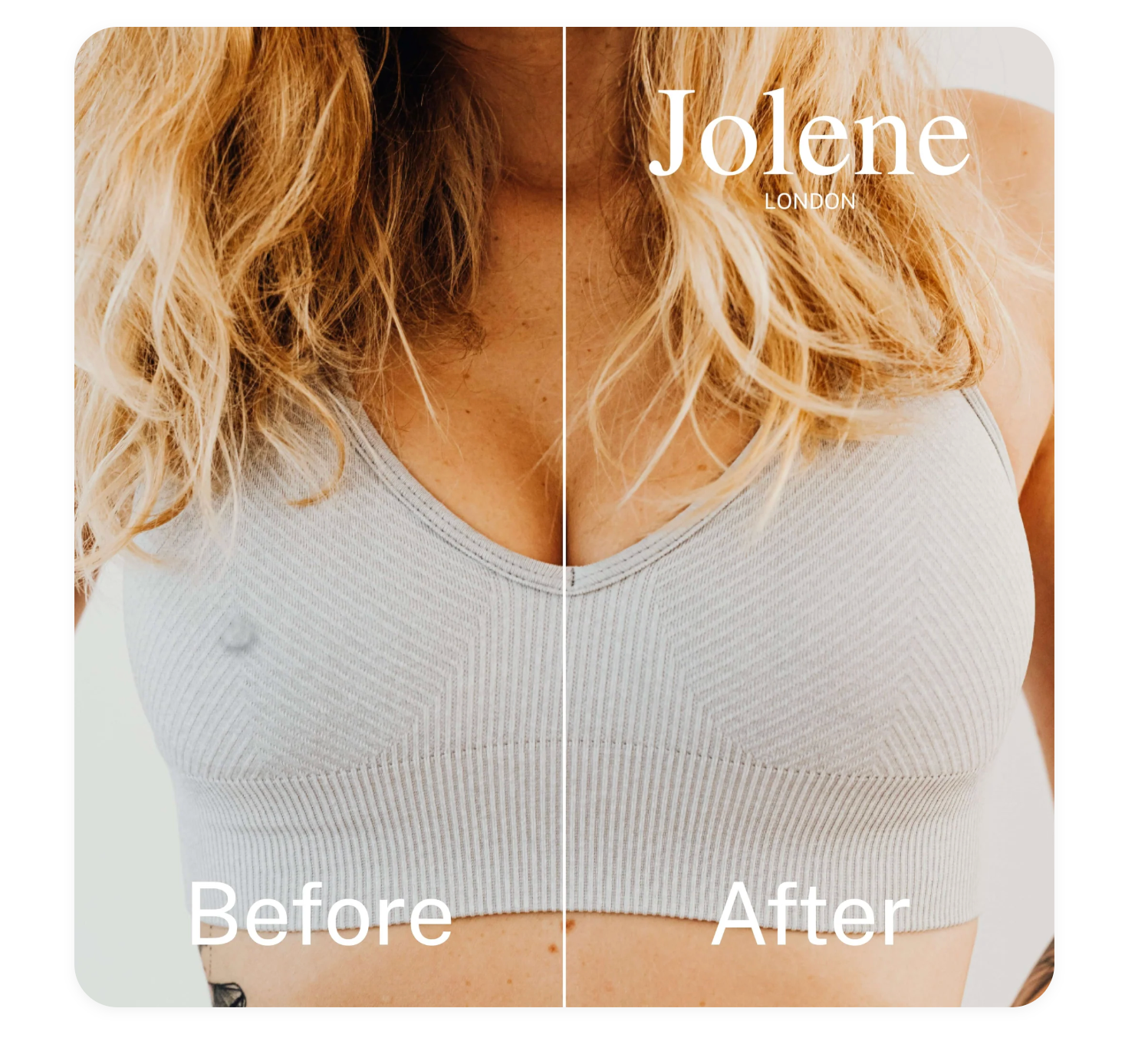
The before and afters are user-generated content (UGC): content from customers and friends that I didn't pay for. I think it does more for conversions than anything I could have staged. A real woman, a grey ribbed top, one very visible nipple on the left and absolutely nothing on the right.
The idea here is for the product to sell itself. If your customers are already sharing results, ask permission and put it on your listing. It's the most honest marketing you'll ever do.
💡Pro tip: Repurpose everything. The same images you shoot for your Shop app listing can go on your website, Amazon, and social; shoot with all channels in mind and your cost-per-asset drops to almost nothing.
5. Let your reviews do the selling
Jolene currently has 163 reviews and a 4.9 rating on the Shop app. In a category crowded with cheap, male-run brands selling on price, that social proof is a competitive moat for us.
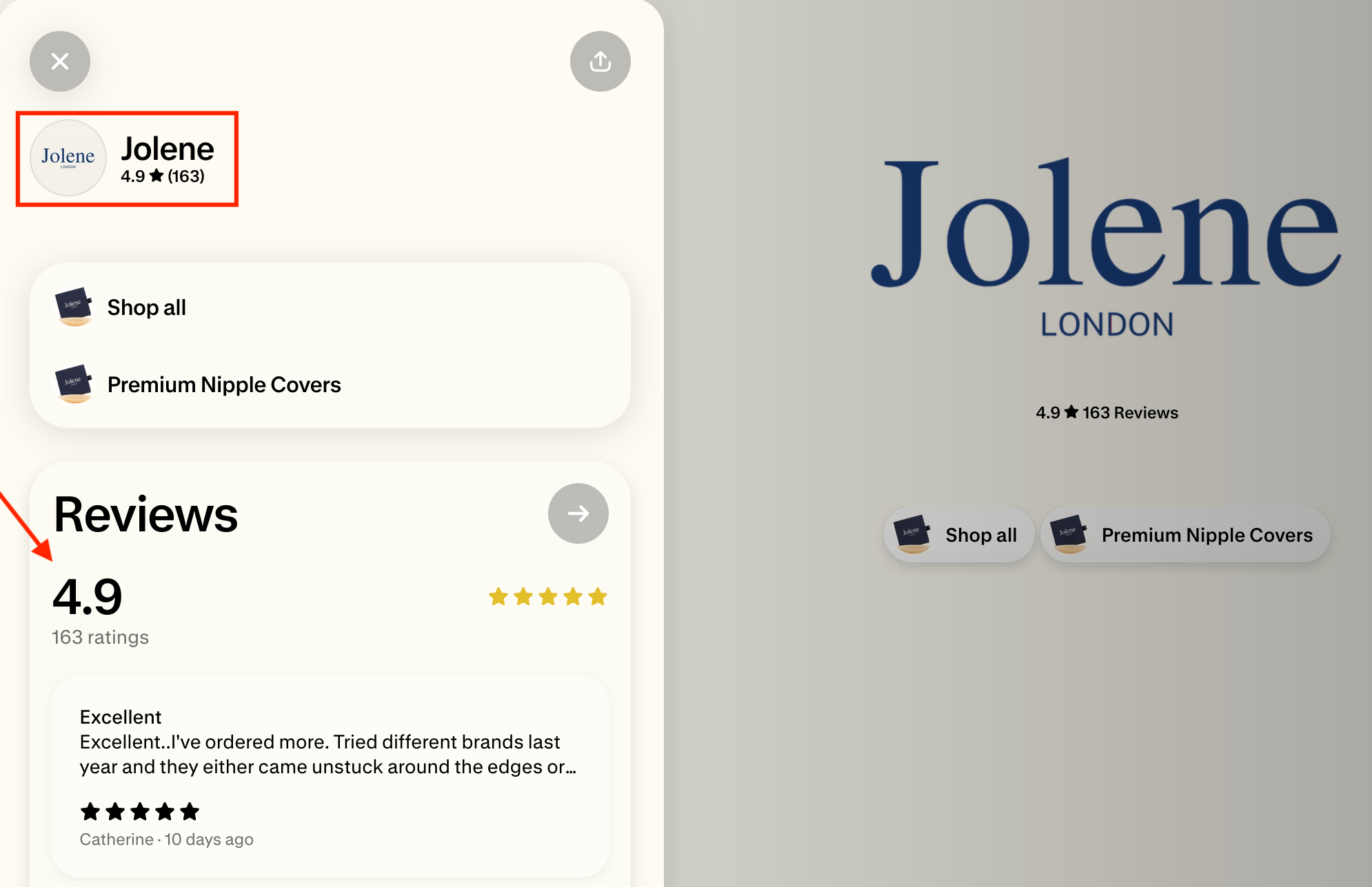
Advertising at the top of the funnel is expensive. Competing for nipple covers on Google Ads or TikTok is a bidding war. But at the bottom of the funnel—the high-intent level—reviews do the heavy lifting for free. You don't want to be strong for half this season only to lose the sale because a competitor had a more visible 5-star badge.
If you're using a review tool like Judge.me, it pushes all your reviews to Shopify as metaobjects. Enable Display reviews from partner apps in your Shop channel settings, and your qualified reviews automatically appear on your Shop app product listings.
The sync works both ways: Shop app reviews feed back into Judge.me automatically, so your social proof stays consolidated in one place.
6. Kill hesitation with a 100-day confidence guarantee
A 100-day return policy might sound like a race to bankruptcy, but for Jolene, it’s one of our biggest conversion drivers.

The return rate is low enough that the window barely registers—if someone genuinely loves the product, they're not coming back in 30 days or 100.
But what the policy does is remove the last remaining reason not to buy. A shopper on the fence, looking at an unfamiliar brand, sees 100 days and thinks: I have nothing to lose.
You don't have to offer 100 days, but you do have to answer the question every new or hesitant shopper is asking: what happens if this doesn't work for me?
Your refund policy is also a trust signal for the Shop app's AI assistant. A clearly stated, machine-readable returns policy makes your listing more complete, and a complete listing is a more recommendable one.
Your two-hour Shop app audit
Here’s my two-hour audit checklist I used for Jolene:
- Is your product title a direct answer to a search query?
- Have you written your store description as if it's the first thing a high-intent shopper will read?
- Are your social links live in the Contact section? Have you claimed your custom Shop URL?
- Are your reviews syndicated?
- Is your refund policy visible, generous, and written in plain English?
- Do your product images look like they belong on a premium brand's website?
If you can’t tick all six, you know what to do. 😉
And have a look at these quick-start guides for your Shopify store:
- The complete guide to ecommerce product photography in 2026
- The 30 best Shopify apps to grow your ecommerce store
- Shopify digital asset management: the essential guide for 2026
Shop app FAQs
[fs-toc-omit] Is the Shop App legitimate?
Yes. The Shop app is a legitimate platform backed by Shopify, a publicly traded company, with security measures in place to protect your payment and personal information.
The platform is designed to streamline the online shopping experience for customers and provide independent brands with a free, additional sales channel.
[fs-toc-omit] Are there fake sellers on Shop?
The Shop app itself is legitimate, but not every store it connects to is. Fraud usually happens when fake merchants use Shopify's platform to host their sites and accept payments through legitimate-looking interfaces.
As with Amazon or any open platform, it's worth checking both positive reviews and negative reviews, plus the contact details, before buying from a brand you haven't heard of.
[fs-toc-omit] What is a Shop App account?
A Shop app account is a shopper's personal profile within the app that stores their payment details for one-tap checkout via Shop Pay, tracks all their orders across Shopify stores in one place, and builds a personalised recommendations feed based on their shopping habits and the independent brands they follow.
[fs-toc-omit] Is Shop app safe?
Yes. Shop app is safe for both shoppers and merchants. For shoppers, payments are processed through Shop Pay, Shopify's own checkout system, which uses industry-standard encryption and never shares your full card details with individual merchants. Your payment information is stored securely and used only to power one-tap checkout.
[fs-toc-omit] Do you have to pay for Shop app?
No. Shop app is free for both shoppers and merchants.
Shoppers can download the app, create an account, and buy from any brand on the platform at no cost. There are no subscription fees or membership tiers.
For merchants, Shop app is a free additional sales channel that comes built into Shopify. If you're already running a Shopify store, your products are eligible to appear on Shop app at no extra cost — no listing fees, no commission taken on sales.
The only costs you might encounter are the standard Shopify subscription and transaction fees you're already paying, but those exist regardless of whether you use Shop app.

Rebecca Anne Hunter is the founder of Jolene, a London-born brand creating premium nipple covers. She's a creative and entrepreneurial marketing leader with over ten years of experience scaling direct-to-consumer beauty and wellness brands internationally. Rebecca is passionate about blending purpose with profit and building brands that do good as well as perform commercially.